TOMMY JOHN REHAB TIMELINE: WHAT HAPPENS MONTH BY MONTH?
The short version
A month-by-month Tommy John timeline is useful for orientation, but tissue healing, strength, throwing response, position, and surgeon guidance decide when an athlete progresses.

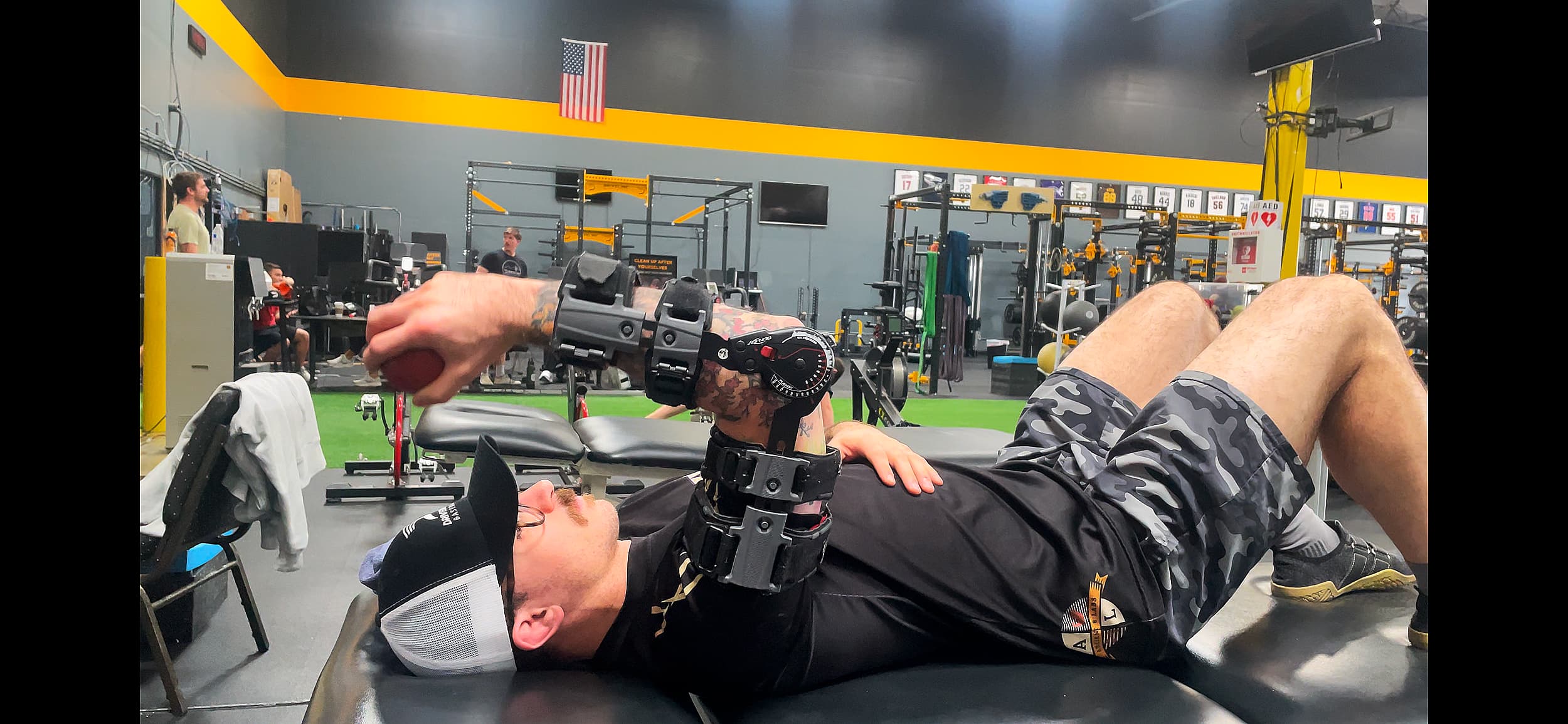
Table of Contents
- Weeks 0 to 6: Protect the Reconstruction and Restore Motion
- Months 2 and 3: Build a Strength Base
- Months 3 and 4: Prepare for Throwing
- Months 4 to 8: Rebuild the Throwing Base
- Months 7 to 10: Higher Intent and the Mound
- Months 10 to 14: Bullpens, Hitters, and Game Preparation
- Months 12 to 18 and Beyond: Return to Competition
- The Calendar Is a Map, Not a Test
The first question after Tommy John surgery is usually the simplest one: when can I pitch again?
The truthful answer is less satisfying than a date. Return to competition often takes well over a year, and the path is not a straight line. A calendar helps families understand the order of events. It cannot tell us whether a particular elbow is ready for the next stress.
A 2024 systematic review of 105 UCL reconstruction studies found wide variation in rehab protocols. Across those studies, active motion began at an average of 15 days, full motion around 40 days, strengthening around 32 days, and throwing around 120 days. Those are descriptions of published practice, not automatic clearance dates.
Weeks 0 to 6: Protect the Reconstruction and Restore Motion
The early phase centers on healing, swelling, incision care, and controlled range of motion. Bracing and motion limits vary with the surgeon and procedure. Wrist, hand, shoulder, and scapular work can often begin while the graft is protected.
The athlete should keep training what is safe. Lower-body strength, trunk work, and conditioning can prevent the entire body from becoming deconditioned while the elbow heals.
Chasing extension aggressively is not always the right move. We want steady motion without creating an irritable elbow. Numbness, increasing swelling, drainage, fever, or a sudden loss of motion should be communicated to the medical team.
Months 2 and 3: Build a Strength Base
As motion normalizes and healing allows, resistance grows. The program addresses grip, finger and wrist flexion, pronation, elbow strength, shoulder rotation, pulling and pressing, and full-body force production.
Light “arm care” is not the endpoint. The athlete needs enough progressive load to regain meaningful capacity. We use side-to-side and baseline data when available, but we also care about absolute force and how well it holds up across repeated efforts.
The athlete is not ready to throw just because daily life is painless. Throwing will ask much more of the elbow than opening a door or completing a band circuit.
Months 3 and 4: Prepare for Throwing
Later strength work becomes faster and more specific. Medicine-ball throws, plyometrics, deceleration drills, and higher-rate forearm work begin bridging the gap between the gym and catch play.
Before throwing, we want the elbow quiet, motion acceptable, strength trending toward meaningful targets, and the arm able to tolerate fast work without a delayed flare. Surgeon clearance remains part of the process.
Some protocols begin throwing around four months. Others wait longer. When throwing starts after Tommy John should be a criteria and tissue-healing decision, not a race against another athlete's social-media update.
Months 4 to 8: Rebuild the Throwing Base
The first throws are intentionally easy. Volume and intent rise in controlled steps, with recovery days that let us evaluate the full response.
Distance alone is a poor description of stress. A firm 90-foot throw can ask more of the arm than an easy 120-foot arc. We track the variables we can: number of throws, distance, velocity or intent, drill type, and how the athlete feels during and after.
The throwing plan sits beside strength training, not after it. We adjust lifting volume as throwing demand grows so the athlete can adapt instead of living in constant fatigue.
Months 7 to 10: Higher Intent and the Mound
The exact window varies. This is where flat-ground intensity rises and mound work begins once the athlete has earned it.
The slope changes timing and the demands of the delivery. Early mound sessions use controlled fastballs at submaximal intent. Bullpen volume, intensity, and pitch mix progress separately. Returning to the mound is a phase, not an event.
Pain, persistent loss of command, declining velocity within a session, or poor next-day recovery should slow the progression and trigger reassessment.
Months 10 to 14: Bullpens, Hitters, and Game Preparation
Pitchers begin facing more realistic demands: full bullpens, recovery between outings, live hitters, fielding responsibilities, and eventually simulated or controlled game innings.
Completing a bullpen does not prove readiness for a season. A starter needs volume and recovery capacity. A reliever needs to warm up, sit down, and sometimes throw on consecutive days. The rehab has to reflect the actual role.
Breaking balls may return during this stage depending on age, surgeon preference, symptom response, and command. They should not be added merely because the calendar reached a certain month. Read when breaking balls belong in rehab for the full reasoning.
Months 12 to 18 and Beyond: Return to Competition
A systematic review of pitchers after UCL reconstruction found return to competition averaged about 17 months in MLB pitchers, and many studies reported fewer innings or reduced velocity afterward. A later review of return to play reported that return to the same level generally lagged behind return to any play.
That distinction matters. Appearing in a game is not the same as handling a full competitive workload. Rehab continues through the re-entry to competition as innings and recovery demands build.
The Calendar Is a Map, Not a Test
Time protects healing tissue. Criteria tell us whether the rest of the athlete is prepared. A good Tommy John rehabilitation program uses both.
The goal is not to win rehab by throwing first. It is to return with the strength, workload tolerance, pitch progression, and recovery capacity to keep pitching after the first outing.
THE NEXT STEP
Follow the complete path from postoperative protection through strength, throwing, mound work, and competition.
Explore Tommy John RehabRELATED POSTS
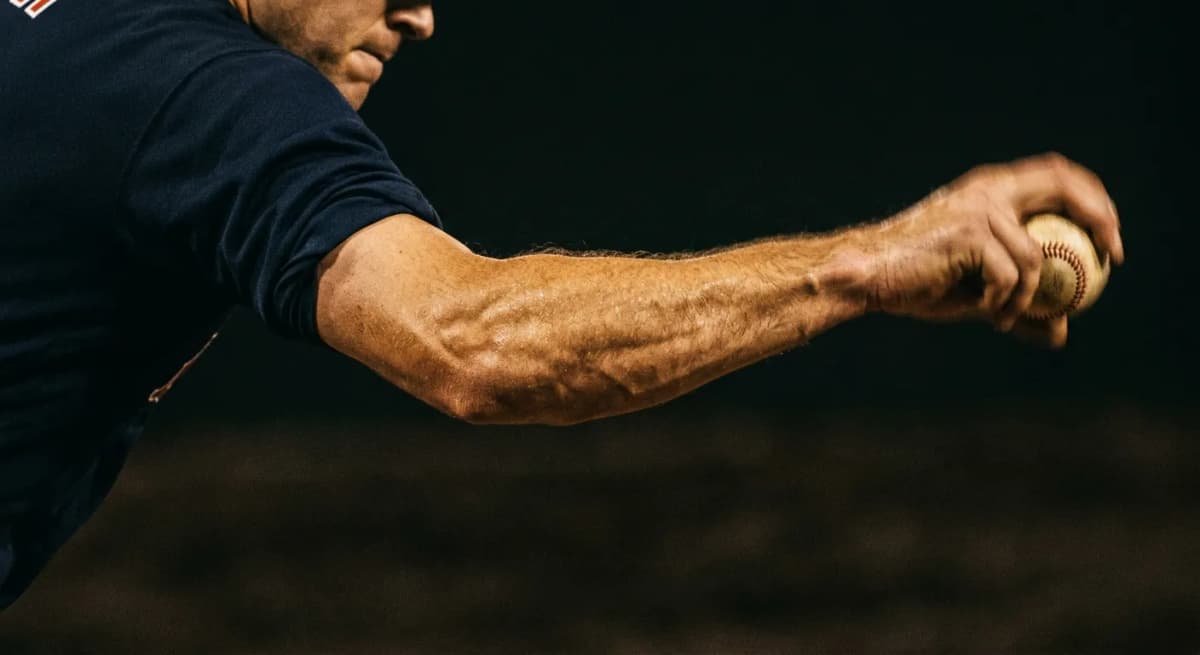
What Does a UCL Injury Feel Like?
UCL pain is usually felt on the inside of the throwing elbow, but location alone cannot tell you whether the ligament is irritated, partially torn, or the wrong suspect entirely.
 By Dylan Newcomer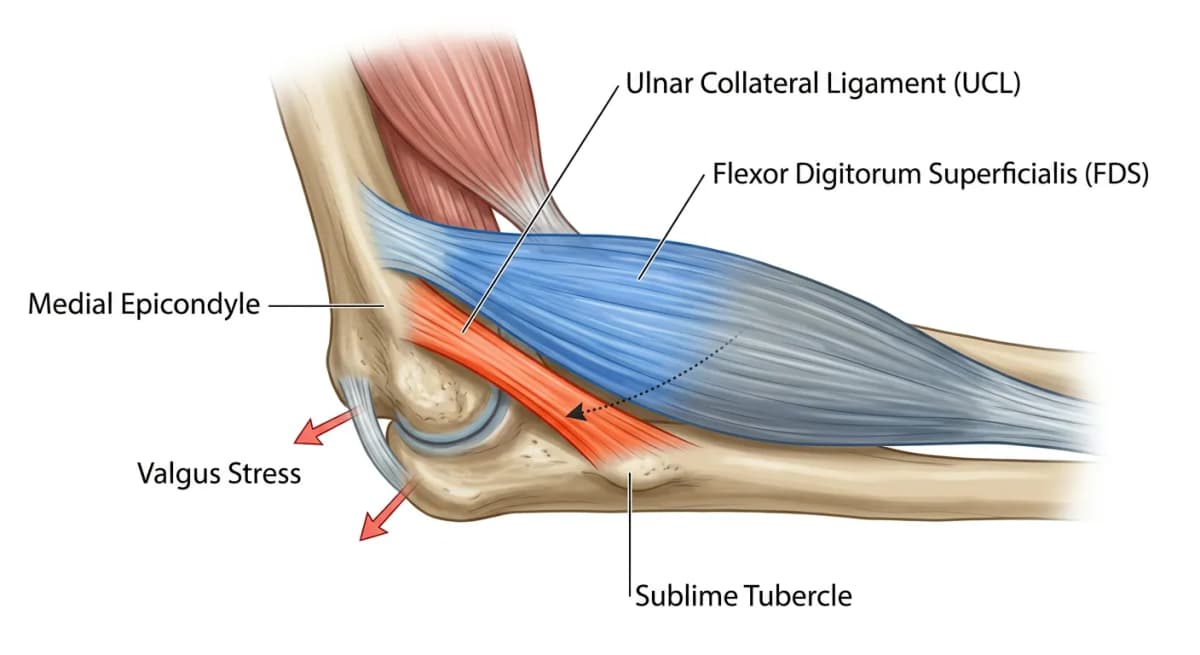
Can a Partial UCL Tear Heal Without Surgery?
Some partial UCL tears can return to high-level throwing without surgery. Tear location, tissue quality, symptoms, timing, and the demands of the athlete all change the answer.
 By Jason Modafari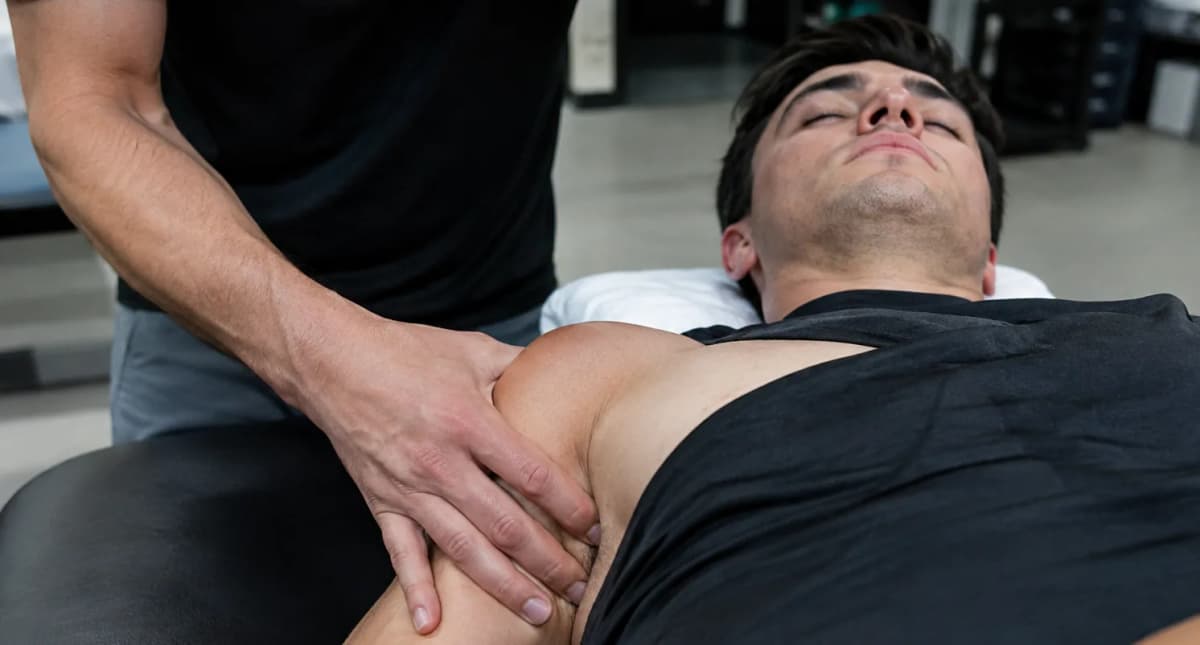
Dry Needling for Throwing Shoulder Pain: Creating a Better Window to Train
Dry needling can reduce pain and guarding in a throwing shoulder, improve motion, and make strength work more productive. We use that response inside a full return-to-throwing plan.
By Jason Modafari