Throwing Shoulder Rehabilitation
SHOULDER PAIN HITS DIFFERENT.
KEY FACTS
- Does shoulder pain in a thrower mean surgery?
- No single pain pattern or imaging finding answers that question. The decision should combine symptoms, a clinical exam, throwing demands, and imaging when it is appropriate.
- Should an MRI finding worry a throwing athlete?
- Not automatically. Imaging can reveal changes in pain-free throwing shoulders, so the finding needs to be interpreted alongside symptoms, exam findings, and function.
- How do pitchers do after shoulder surgery?
- Outcomes vary by diagnosis, procedure, competitive level, and how a study defines return. That is one reason the surgical decision should be specific to the athlete rather than based on an MRI phrase alone.
- What is the most common cause of posterior shoulder pain in throwers?
- Internal impingement is one possibility, but labral, rotator cuff, workload, motion, and other factors can produce a similar pain pattern. A focused exam is needed to separate them.
- What is the biggest predictor of shoulder injury in throwers?
- Rapid changes in throwing volume or intensity are one important risk factor. We review workload together with strength, motion, recovery, symptoms, and the athlete's role.
- When should throwing shoulder pain be evaluated?
- A sudden injury, marked weakness, loss of motion, persistent catching, numbness, or worsening pain should be evaluated. Ongoing symptoms that are changing how you throw also deserve a closer look.
“Is my labrum torn?”
This is the first question every throwing athlete with shoulder pain asks. And the answer is probably not what you expect.
Labral changes can appear on MRI in overhead athletes who throw without pain. The finding still matters, but it needs clinical context. The exam, pain pattern, workload, and loss of function help determine whether the image explains the athlete's current problem.
This does not mean labral tears are irrelevant. A significant SLAP tear or a tear that causes mechanical catching needs to be addressed. But the presence of a labral finding on MRI does not automatically mean surgery. It means you need someone who understands the difference between pathology and adaptation, and more importantly, whether the imaging finding actually explains your symptoms.
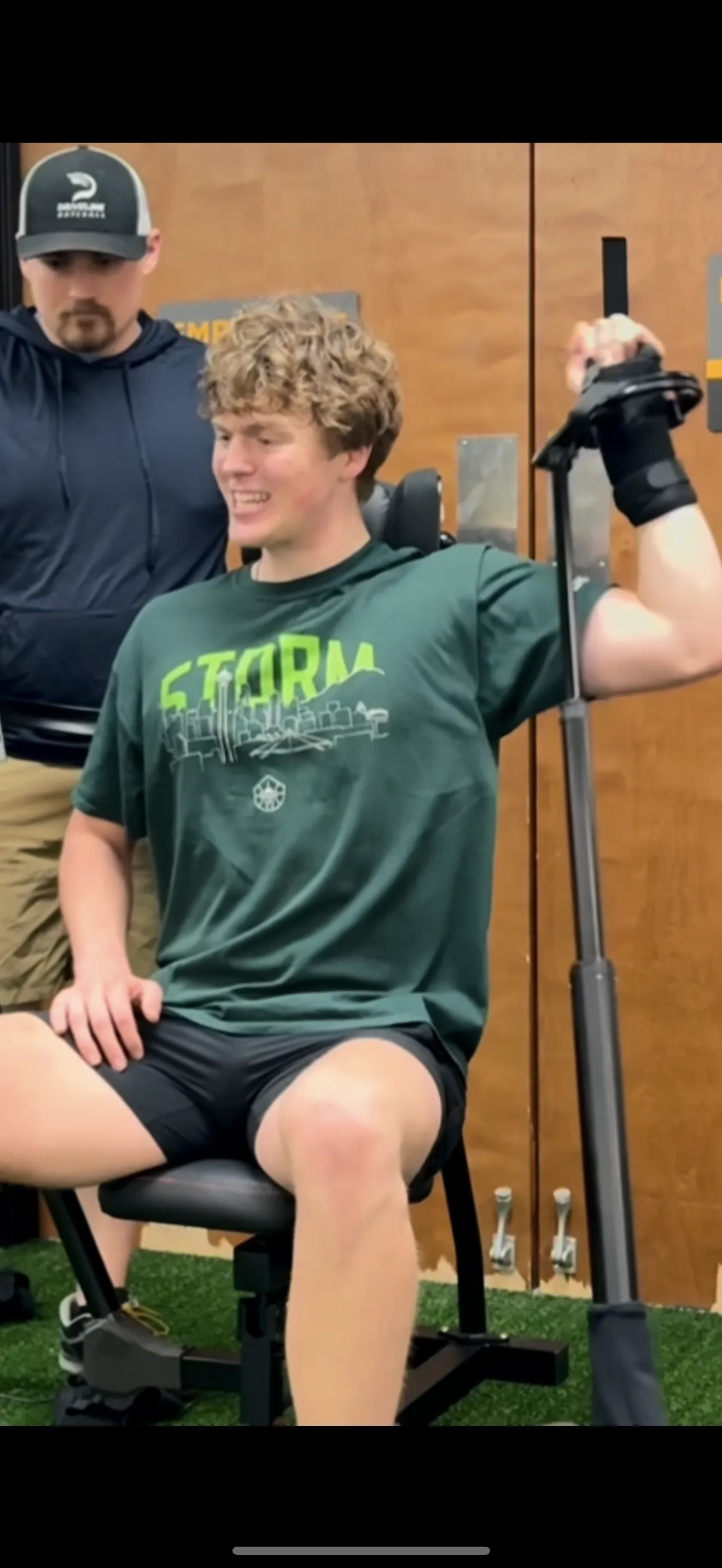
Internal impingement in the throwing shoulder
Internal impingement is one possible source of deep pain in the back of a throwing shoulder. It can occur when the underside of the rotator cuff contacts the back of the joint as the arm reaches maximum layback.
The clinical question is why that position became painful. Shoulder motion, rotator cuff capacity, scapular control, trunk movement, throwing volume, and recent intensity changes can all matter. The same symptom can come from different combinations of those factors.
What athletes often report: a deep pinch or catch during late cocking that settles when throwing stops. An exam helps separate this pattern from labral, rotator cuff, and other shoulder problems before the plan is built.
Posterior shoulder motion: what we look for
The back of a throwing shoulder adapts to repeated deceleration forces. Some loss of internal rotation can be normal. The important question is whether the athlete has lost useful motion, strength, or control relative to what their delivery requires.
We compare range of motion with the other arm, look at total rotational motion, and test the shoulder in positions that resemble throwing. If posterior restriction is part of the problem, mobility work is paired with cuff loading, scapular control, and a throwing progression so the change holds under speed.
Rotator cuff capacity under throwing load
General practitioners hear “rotator cuff” and think of a 50-year-old with degenerative tearing from decades of overhead work. In a 19-year-old pitcher, the rotator cuff problem is completely different.
Throwing athletes typically develop rotator cuff issues from workload that exceeded the tissue's capacity (too much volume, too fast a ramp-up) or from specific mechanical faults that create localized tissue irritation: posterior capsule tightness shifting the humeral head, poor scapular upward rotation, or both. These are different problems with different interventions, but the cuff is the tissue that breaks down in both cases.
Treatment that focuses only on the cuff (the classic band exercises everyone does) misses the point entirely. You need to address the actual cause: manage the workload if it was a volume problem, correct the specific mechanical fault if one exists, and build the tissue's capacity through heavy loading, not light resistance band work that produces no meaningful tendon adaptation.
Where does the pain show up?
Front of the shoulder
Often biceps tendon irritation or anterior capsule laxity. Common in throwers with excessive external rotation and poor scapular stability.
Back of the shoulder
Usually posterior capsule tightness, internal impingement, or infraspinatus fatigue. The most common location for throwing-related shoulder pain.
Top of the shoulder
May indicate SLAP involvement, AC joint issues, or supraspinatus problems. Less common in pure throwing injuries, more common in athletes who also lift heavy overhead.
Deep inside the joint
Labral tears, loose bodies, or capsular pathology. Described as a “deep ache” that is hard to localize. Often accompanied by catching or clicking.
When throwing demand outruns capacity
Pain can appear when throwing demand rises faster than the arm's current capacity, even when imaging does not reveal a clear surgical problem. Three patterns show up often.
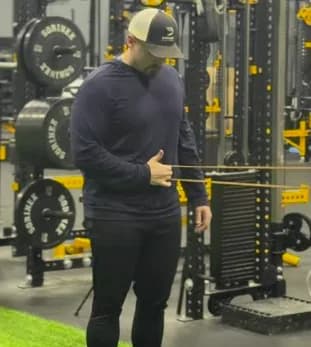
Workload changed
Volume, intensity, pitch mix, or recovery changed faster than the shoulder could adapt.
Capacity dropped
Time away from throwing or strength work reduced the arm, trunk, and lower body qualities that support the delivery.
Training missed the demand
The program did not prepare the shoulder for end-range speed, deceleration, or the weekly rhythm of practices and games.
When to get your shoulder evaluated
Not all shoulder pain is benign, and you should not convince yourself otherwise just because this page told you about workload spikes. Here is when to get evaluated quickly:
A sudden, sharp pain during a single throw, especially with an audible or palpable pop
Inability to raise your arm overhead after a throwing session
Persistent catching, clicking, or locking sensation in the joint
Night pain that wakes you up, specifically when lying on the affected side
Progressive velocity loss over multiple outings despite feeling otherwise healthy
Numbness or tingling radiating down the arm
Pain that does not improve with two weeks of rest and modified activity
Any of these warrants a clinical evaluation, not another week of polling teammates and searching symptoms. A 45-minute session with someone who treats throwing shoulders will give you more clarity than months of wondering.
Why this matters
Put the imaging and surgery numbers in context.
Shoulder surgery outcomes vary by study and by how each study defines return. Imaging findings also need clinical context. These cohorts show why symptoms, examination, throwing demands, and imaging belong in the same decision.
79%
Labral abnormalities across 28 shoulders in 14 asymptomatic professional pitchers
Miniaci et al., 2002These are small, specialized cohorts with different definitions of success. They should inform a conversation, not replace an individual evaluation.
We use the evidence to ask better questions about the athlete in front of us.
Athletes we've worked with
Back to throwing. In their words.
Kenji Price
College, LHP
“AP has been awesome to work with the past year as I have been rehabbing from labrum surgery in my throwing shoulder. The programming for my rehab and strength, along with the data driven tools in my return to throw have been essential to how I have been able to progress the way I have.”
Kylar Larson
College, RH Infielder
“I had labrum surgery and knew it was going to be a tough battle to get my shoulder back to 100%. I had tried general PT in my home town first, but it was not enough. Fortunately, I found Athletic Potential and got a more specific baseball approach that helped me regain the strength and throwing confidence in my shoulder and return to the field.”
Carson Ackermann
College, RHP
“Athletic Potential is a fantastic resource to have as a baseball player. They have a great in depth knowledge of not just the rehab, but how to develop a baseball player as a whole. I spent years battling a bone fracture injury before seeking them out, but they helped me finally return to the game.”
What we measure
Objective data, tied to a decision.
A throwing assessment can combine the clinical exam with objective measures of strength, velocity, workload, and arm response. We select the tools that fit the athlete and the question we are trying to answer.
Stalker & Pocket Radar
Velocity on every throw helps flag performance changes worth reviewing.
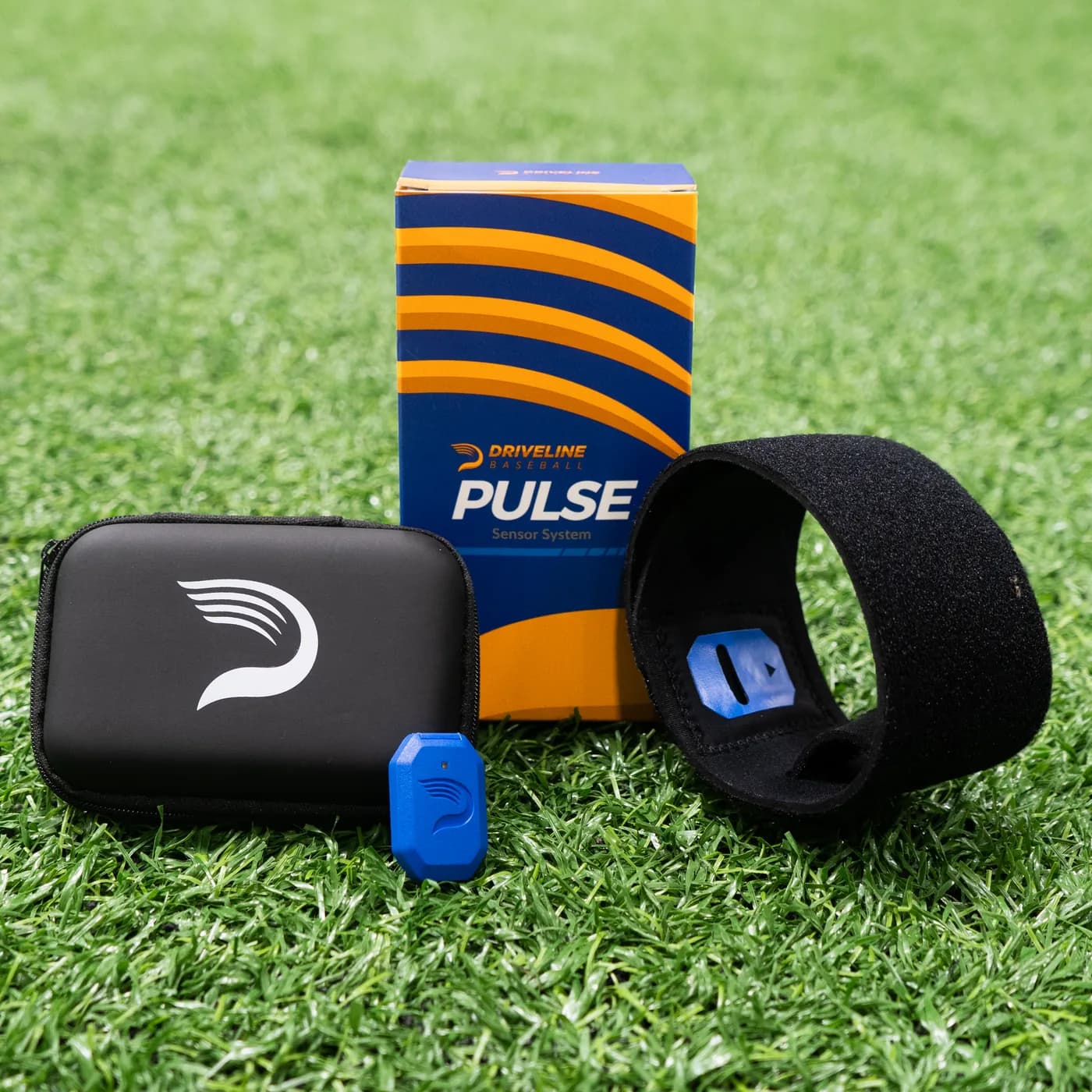
Driveline PULSE
Arm speed and throw counts. Workload tracking week to week.
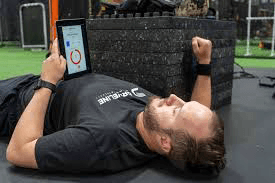
ArmCare
Isometric IR/ER and scap strength testing, tracks symmetry over time.
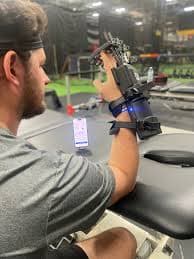
FlexPro Grip
Forearm capacity testing, often telling for the broader chain.
What it costs
One plan for rehab, throwing, and strength.
PT, throwing, and lifting are coordinated on one schedule, with full Driveline facility access.
Tier 1
2 × 30 min or 1 × 60 min weekly
$160per week
60 minutes of one-on-one care each week
Tier 2
2 × 45 min or 3 × 30 min weekly
$240per week
90 minutes of one-on-one care each week
Tier 3
3 × 45 min weekly
$320per week
135 minutes of one-on-one care each week
PT visits, strength programming, and daily gym access are included. Custom return-to-throw programming is added when you are ready. No fixed-term commitment.
INDIVIDUAL VISITS
Tune-ups, second opinions, and care between plans. No commitment.
See individual visit details- $135
- 45-minute visit
- $180
- 60-minute evaluation or extended visit
HSA and FSA cards are accepted for eligible expenses. Eligibility and reimbursement depend on the plan and service. Superbills may be available for eligible PT visits. Program fees are not PT encounters.
Both run with Dylan in Kent, WA or Jason in Tampa, FL. Cash-based practice; superbills available for out-of-network reimbursement. HSA/FSA cards are accepted for eligible expenses.
Common questions
QUESTIONS ATHLETES ASK US
If you're deciding whether this fits, start here.
About the pain
About the program
Pricing
About the facility
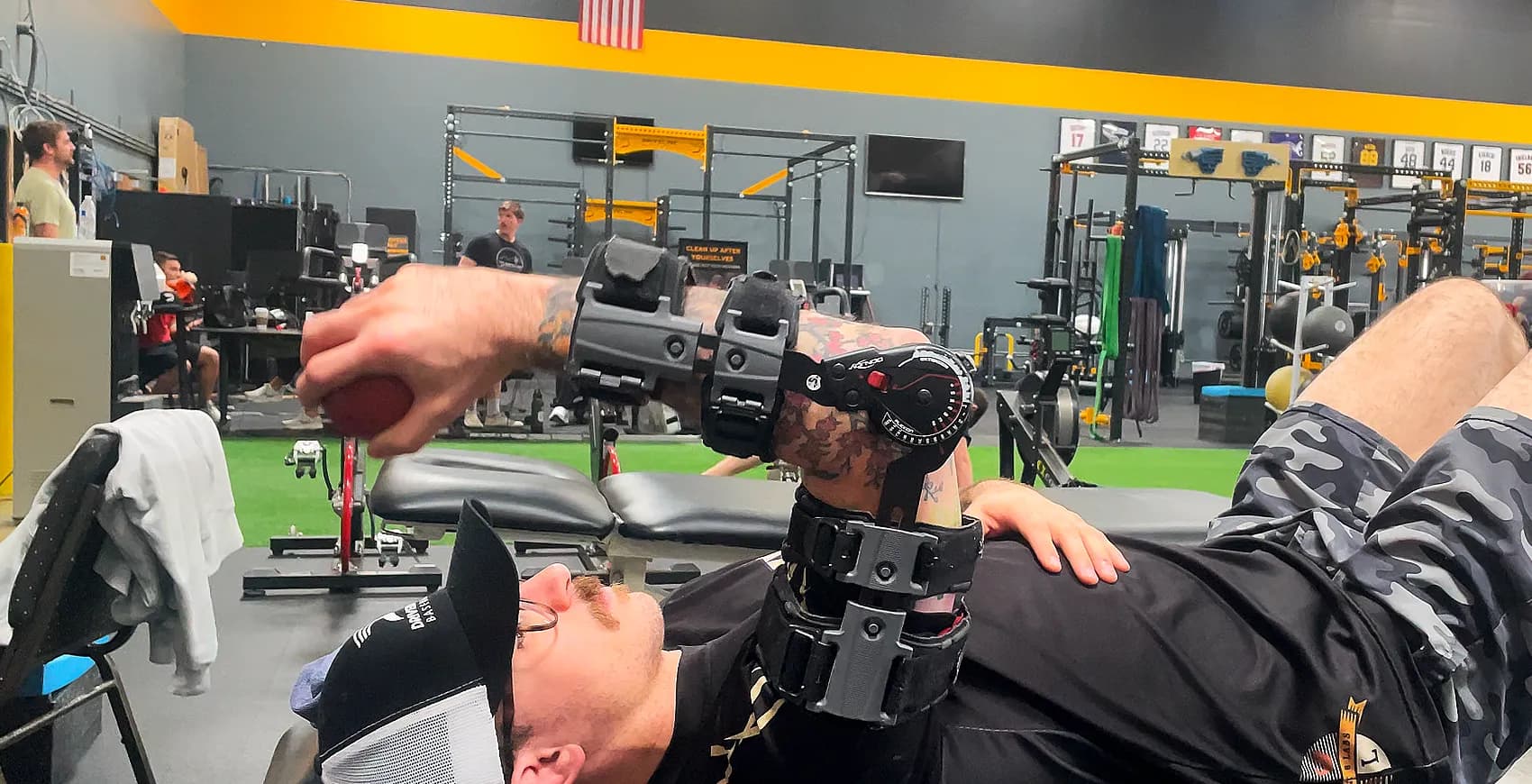
Get a clear plan
The worst part of shoulder pain is not knowing. An evaluation gives you a clinical explanation, a plan, and clear next steps for rebuilding the arm and returning to the level your sport requires.
Work with Dylan at our Kent throwing rehab clinic or Jason at our Tampa throwing rehab clinic.
Book a Free ConsultBaseball clinical guides
Continue learning about the throwing shoulder
Follow the injury from diagnosis through strength, throwing, mound work, and the return to competition.