Shoulder Labrum Rehabilitation
THAT DEEP CLICK IN THE BACK OF YOUR SHOULDER.
Conservative
When surgery is not the first step
Post-Op
Repair protection through full loading
Throwing-Specific
End-range strength and deceleration
Bullpen Ready
Mound intensity, workload, and recovery
KEY FACTS
- Do all labral tears require surgery?
- No. Many labral tears (especially Type I and some Type II SLAP tears) respond well to conservative rehab. Plenty of pitchers compete with labral tears that are managed, not surgically repaired.
- How long is recovery from labrum surgery for a pitcher?
- A return to competitive pitching often takes roughly 9-12 months or longer after labral repair. The timeline varies by procedure, surgeon protocol, associated findings, role, and response to rehab.
- Can you pitch with a labral tear?
- Sometimes. Some athletes compete effectively with known labral tears by maintaining shoulder strength, optimizing mechanics, and managing workload. It depends on tear type and symptoms.
- What does a labral injury feel like in a thrower?
- A deep posterior shoulder ache with a click or clunk, worse in the late cocking position, that eases with rest and returns under load. A 2-3 mph velocity drop is often an early sign.
- Why does standard shoulder rehab fall short for throwers?
- Standard rehab targets pain-free daily function at mid-range. A pitcher needs 170-180 degrees of total arc with massive rotational force at end range, a demand those protocols were never designed to meet.
You Probably Already Know
Velocity dropped first, maybe 2-3 mph, enough to notice but not enough to panic. Then the aching started, deep in the posterior shoulder rather than on the surface where you can point to it, and it gets worse in the late cocking position: arm back, shoulder externally rotated, ready to fire.
You tried rest, and it was still there when you came back. You tried the rotator cuff exercises: band work, side-lying external rotation, Ys and Ts, and they helped a little, until you threw hard again and ended up right back where you started.
That pattern (feels better at rest, returns under load) is the signature of a labral injury in a throwing shoulder. Standard shoulder rehab rarely fixes it, because those protocols were never designed for an arm that moves at 7,000+ degrees per second.
Types of Labral Injuries in Throwers
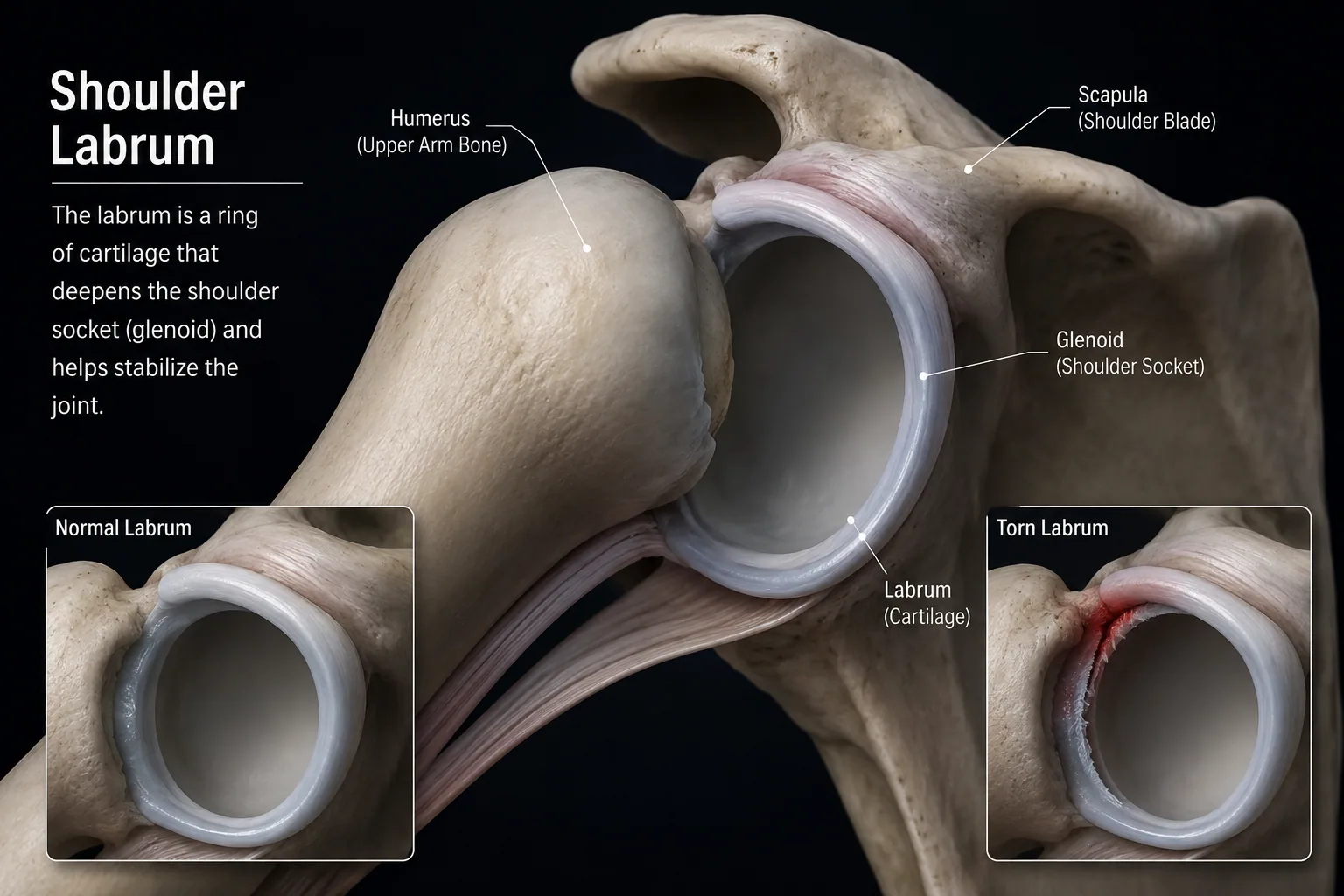
The type of tear shapes everything downstream: the treatment, the prognosis, and whether you can compete through it.
Type I SLAP
Superior labrum
Fraying and degeneration of the superior labrum. Common in overhead athletes over time. Often manageable without surgery through shoulder strengthening and mechanical optimization.
Favorable with rehab
Type II SLAP
Superior labrum + biceps anchor
The biceps tendon anchor peels away from the glenoid. This is the most common SLAP tear in throwers and the most debated surgically. Can respond to conservative care but some require repair.
Variable, depends on instability
Posterior Labrum
Posterior-inferior labrum
Caused by the "peel-back" mechanism during late cocking, when the humeral head drives into the posterior labrum at extreme external rotation. A mechanism specific to throwers. You will not see it in a gym-goer.
Often responds to conservative rehab
Combined Lesion
Multiple labral regions
SLAP tear with posterior extension, or labral tear with associated rotator cuff pathology. More complex. Requires thorough evaluation to determine the primary pain driver.
Individualized approach needed
Standard Shoulder Rehab Wasn't Built for Throwers
Standard shoulder rehab is designed to get someone to 90 degrees of abduction and functional overhead reaching. A pitcher needs 170-180 degrees of total arc of motion, with the ability to generate massive rotational force at end range.
Those demands have almost nothing in common, and the rehab that meets them cannot look the same either.
The thrower's shoulder needs to be both extremely mobile AND extremely stable at extreme positions. Standard rehab builds stability at mid-range, but a thrower's program also has to train the posterior cuff to decelerate the arm after ball release, restore scapular upward rotation timing, and account for a shoulder that lives in a completely different biomechanical world than a desk worker's with impingement.
Standard Shoulder Protocol
- + Band external rotation at the side
- + Scapular squeezes against a wall
- + Rotator cuff in neutral positions
- + Goal: pain-free daily function
Throwing-Specific Labrum Rehab
- + Posterior cuff strengthening at 90/90
- + Eccentric deceleration training
- + Scapular upward rotation under load
- + End-range rotational stability
- + Thoracic rotation and hip mobility
- + Biomechanical analysis during throwing
- + Goal: sustained competitive output
Free phone consultation. No commitment, no insurance needed.
How We Actually Rehab This
Find the Driver
Is the labral injury the primary problem or a downstream consequence of scapular dyskinesis, thoracic stiffness, or hip mobility restrictions? We assess the entire chain because treating the labrum in isolation often means treating a symptom.
Build Capacity
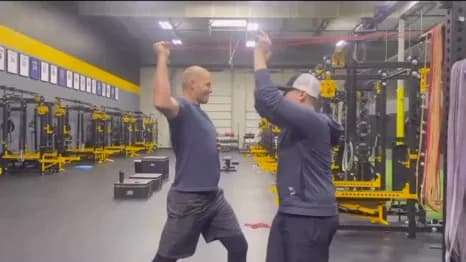
Progressive posterior cuff and scapular strengthening at throwing-specific positions. We do not just get you strong at neutral. We build rotational capacity at the end ranges where your shoulder actually operates during a pitch.
Full-Effort Bullpens & Handoff
Your return-to-throw progresses through velocity, mound work, pitch mix, and full-effort bullpens. We track arm response and workload, then send current benchmarks to the athlete's team, private coach, or Driveline staff for live hitters and game exposure.
Labral injuries in throwers
FREQUENTLY ASKED QUESTIONS
If you're deciding whether this fits, start here.
Find Out What That Click Actually Is.
The first call is free. Cash-based practice, one-on-one sessions, superbills available.
Book a Free Consult