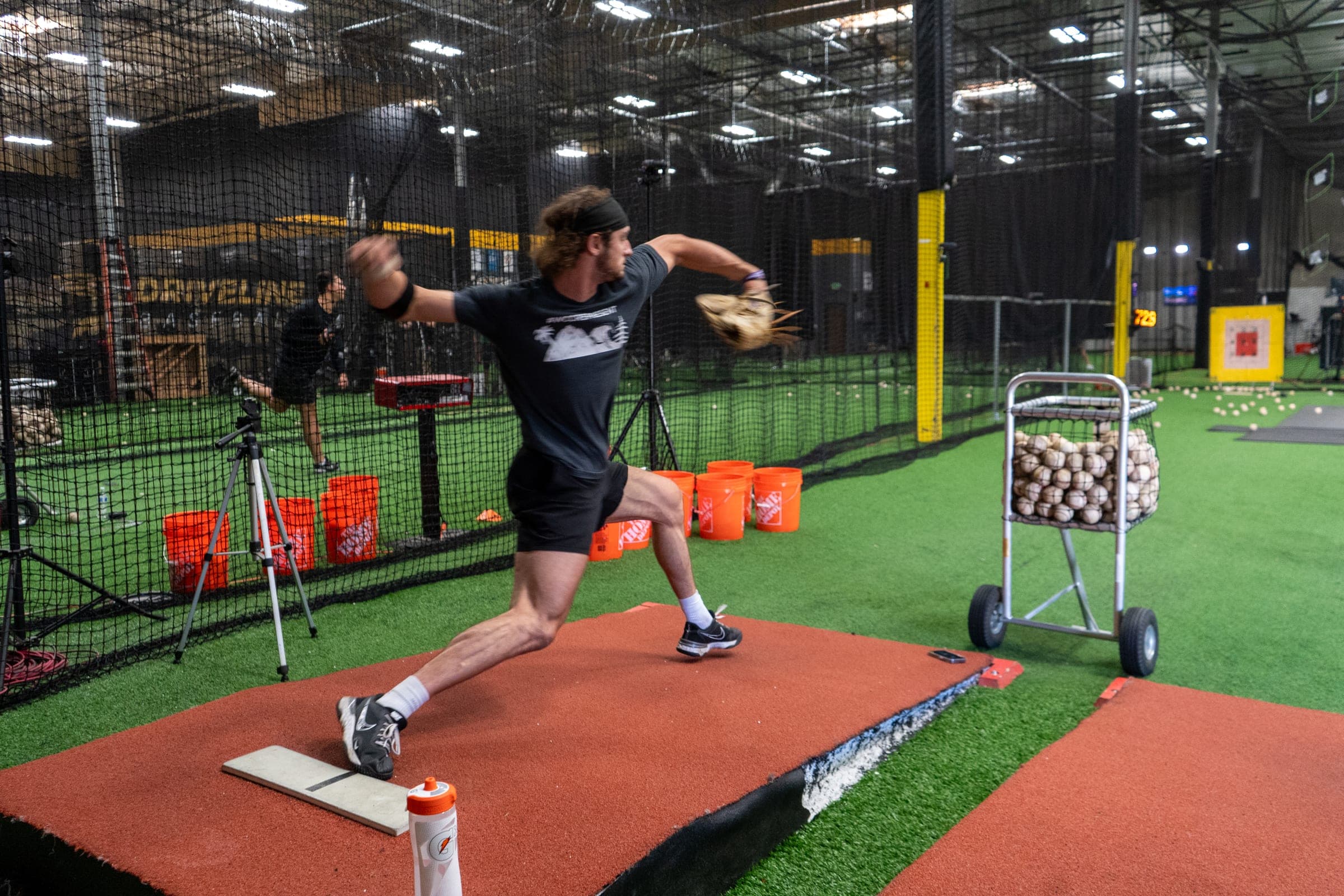
Throwing workload, strength, and recovery all matter across a season
THROWING INJURIES AREN'T ALWAYS RANDOM
The program builds capacity for throwing and tracks changes that may support a workload or training adjustment.
Book a Free ConsultTHE VALUE OF STAYING AVAILABLE
The goal is more consistent availability across the season. That requires enough physical capacity for the workload and a plan that can change when the athlete's response changes.
A Tommy John surgery costs 12-18 months, a shoulder injury can cost a season, and even a “minor” flexor strain costs 6-8 weeks. Add up the missed time across a career and the math is brutal.
Set against those numbers, a season spent building durability is one of the highest-return investments a pitcher can make.
THE NUMBERS
- 26%of professional pitchers will undergo Tommy John surgery
- 5xhigher injury risk for pitchers who specialize before age 15
- 36xhigher reported odds among youth pitchers who regularly pitched with arm fatigue
- 12-18months: the average return timeline after UCL reconstruction
ARM CARE VS ARM HEALTH
These are not the same thing. Confusing them is one of the biggest mistakes in baseball performance.
ARM CARE (Necessary but not sufficient)
- Band work for rotator cuff
- PlyoCare routines
- Pre-throw warm-up
- Stretching and mobility
- 10-15 minutes before throwing
ARM HEALTH (The full system)
- Full-body strength training program
- Workload tracking and management
- Mechanical screening for localized tissue irritation
- Recovery planning and monitoring
- Year-round periodized approach
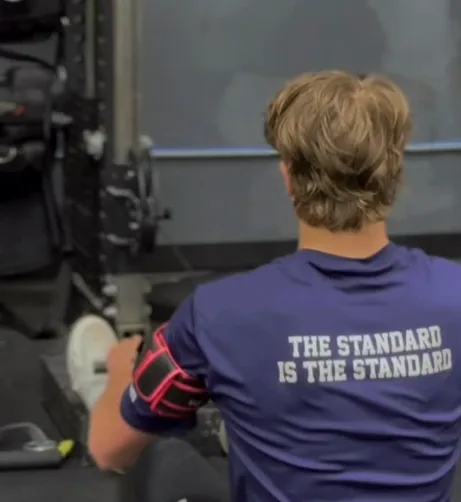
Match the Tool to the Phase
Capacity is built on purpose
Heavy strength work, plyometrics, conditioning, and workload planning do most of the long-term work. When appropriate, options such as blood-flow restriction let us train useful capacity with lower external loads during a restricted or high-fatigue phase.
THE 5 PILLARS OF ARM DURABILITY
No single measure predicts or prevents injury. The five areas help us organize training and workload decisions across the year.
WORKLOAD MANAGEMENT
Workload trends, not just pitch counts
Pitch counts are one part of workload management. We also review bullpen sessions, long toss, weighted-ball work, warm-up throws, positional play, symptoms, strength, and recovery. Measures such as acute-to-chronic workload ratio can add context, but no single number acts as a universal safety threshold. The plan is adjusted to the athlete’s recent workload and response.
MECHANICAL SCREENING
Localized tissue irritation, not global optimization
Research has not established mechanics as a stand-alone predictor of UCL injury. Specific movement patterns may still contribute to localized irritation for an individual athlete. We use video to look for those patterns, not to chase one ideal arm action.
HEAVY LOADING FOR TENDON STIFFNESS
The flexor-pronator group is your UCL's real protection
FDS provides 46% anatomical coverage of the UCL, and FCU overlaps 21%. These muscles contribute to dynamic stability at the elbow. Building their capacity often requires progressive resistance beyond light band work. We use grip and forearm loading alongside full-body strength work.
RECOVERY ARCHITECTURE
What you do between sessions matters more than the sessions
Recovery is not passive: sleep quality, nutrition timing, soft tissue work, active recovery sessions, and periodized deloads are all part of the plan. We structure recovery into the program the same way we structure training: with intention and measurement.
VELOCITY TRACKING & MONITORING
Because velocity correlates with valgus torque
Velocity relates to elbow varus torque, and one prospective study found an association between higher torque and UCL surgery. We track velocity, workload, grip, and range-of-motion trends. Changes give us a reason to review the plan; they do not predict an injury.
Free phone consultation. No commitment, no insurance needed.
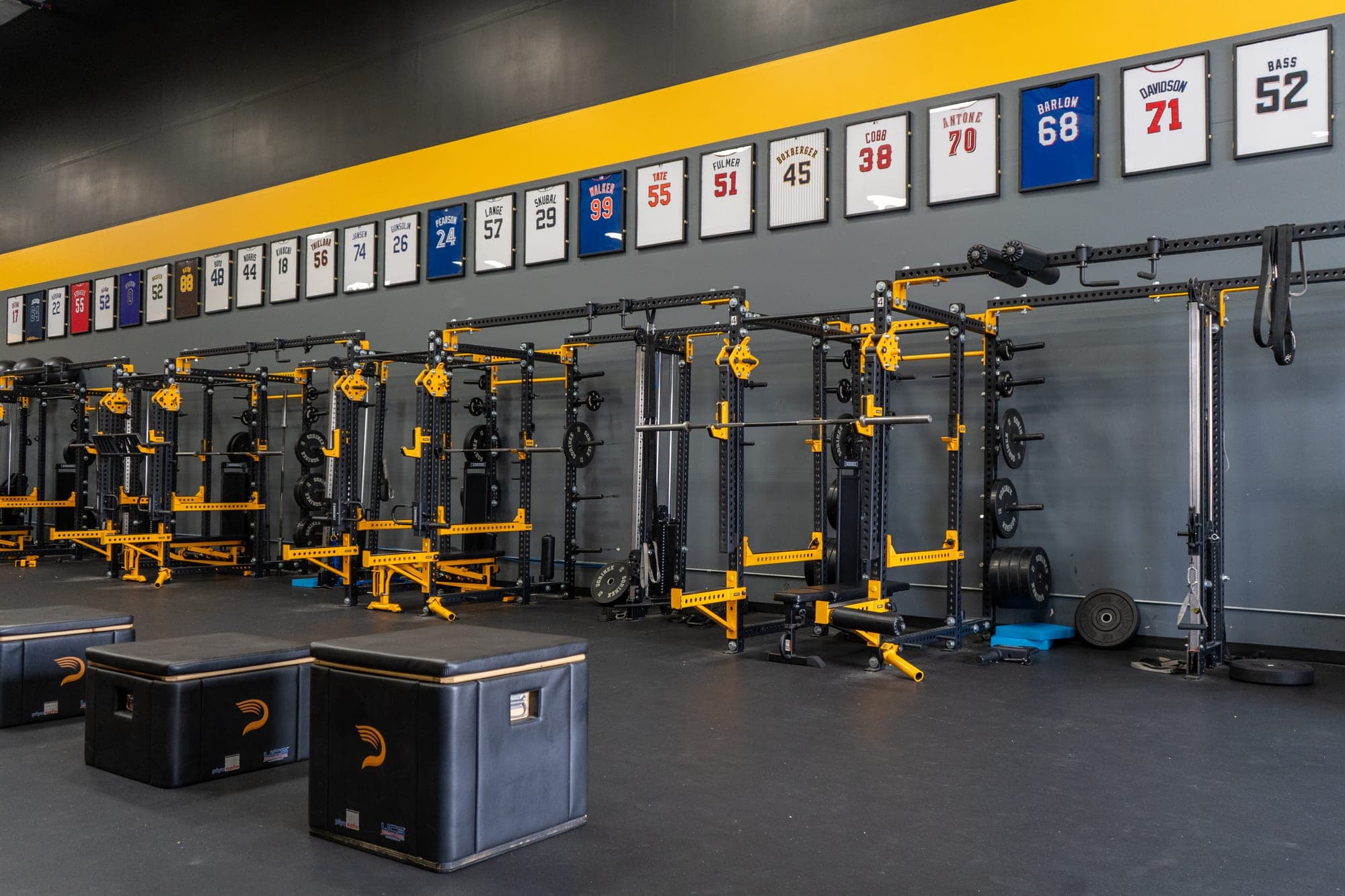
DATA FOR ARM HEALTH
Operating inside Driveline Baseball gives us access to PULSE arm speed tracking, ArmCare screening, high-speed video, radar guns, and workload monitoring systems.
At our Kent, WA facility inside Driveline, we can run a thorough assessment using these tools, identify stress accumulation patterns, and build an arm-health program around the athlete's current workload and physical needs. Athletes who want performance motion capture, pitch design, command work, or velocity development can transition to Driveline's coaches.
That data turns “staying healthy” from a hope into something you can actually measure and manage across a season.
Pitching health
COMMON QUESTIONS
If you're deciding whether this fits, start here.
Program Design
Data & Technology
Results & Expectations
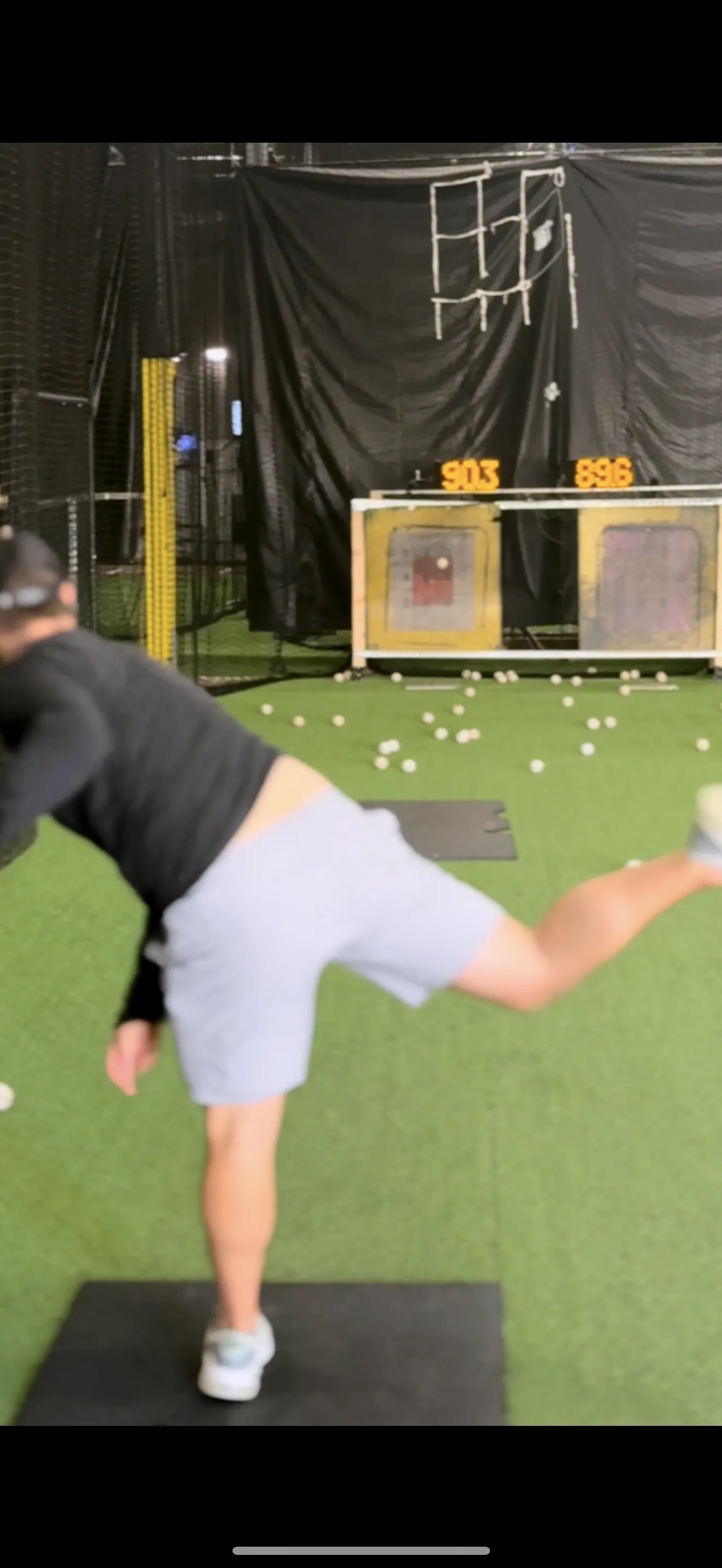
STOP HOPING YOU STAY HEALTHY
A structured program supports workload management, strength, and regular review across the season. Book a free call to discuss what that could look like for you.
Book a Free Consult