WHEN IS A PITCHER READY TO THROW OFF A MOUND AGAIN?
The short version
A pitcher earns the mound by tolerating flat-ground velocity and volume, restoring usable force and motion, and recovering on schedule. Time alone cannot answer it.

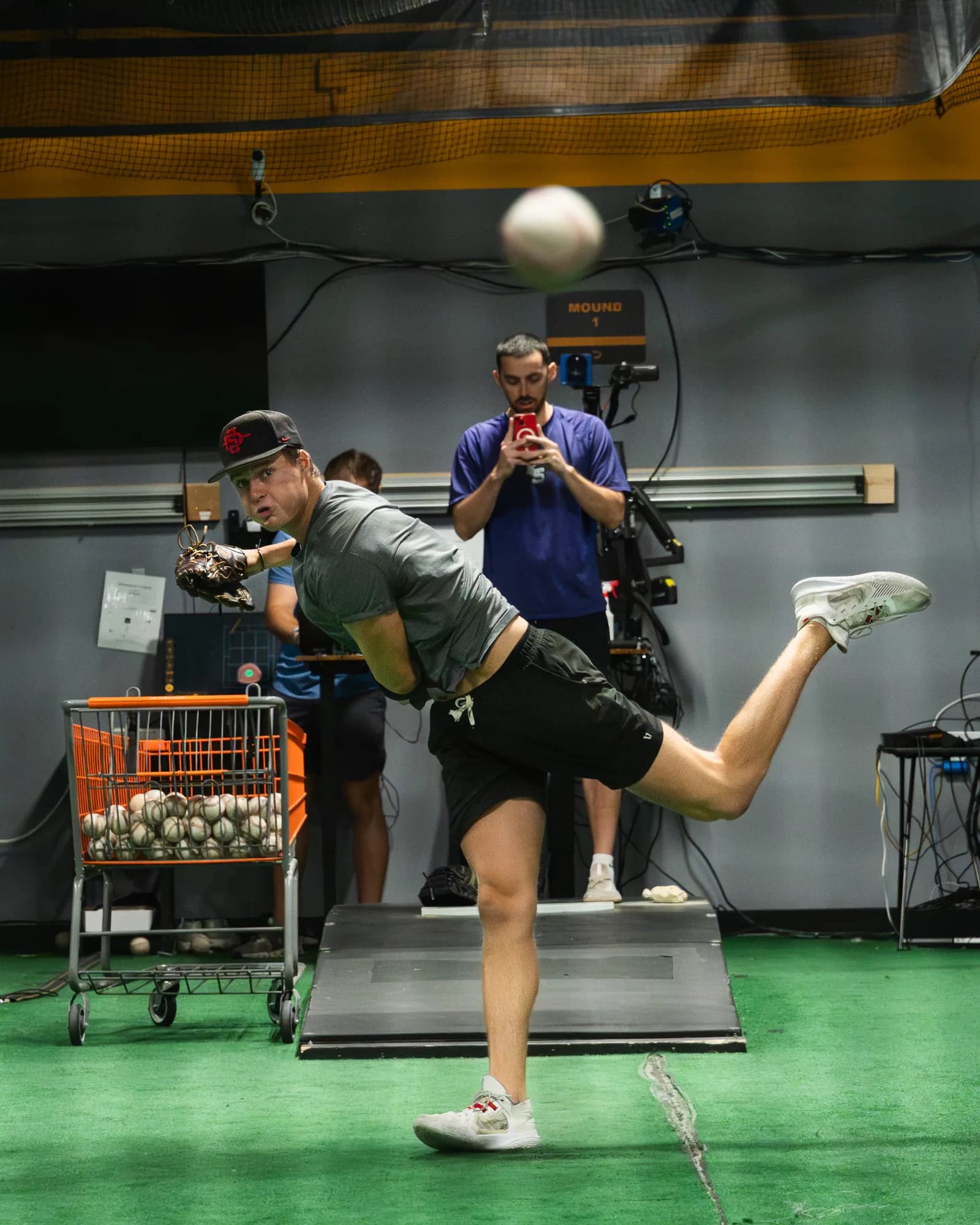
The mound is not dangerous because it is six or ten inches high. It matters because the task becomes unmistakably pitching.
Intent rises. Timing changes down the slope. The catcher gives a target. The athlete starts judging every throw. That combination deserves a readiness decision rather than an arbitrary date.
The Medical Constraint Comes First
After surgery, the surgeon's protocol and tissue-healing timeline establish the boundary. After a nonoperative injury, the diagnosis and stability of the tissue shape the progression.
No amount of good flat-ground throwing should override an unhealed fracture, an unstable ligament, or a postoperative restriction.
A 2025 clinical review of return-to-play throwing programs describes criteria before throwing and progressive sport-specific exposure afterward. The literature supports a staged process, but it does not supply one validated mound-readiness score for every injury.
Flat Ground Should Already Be Productive
Before a mound, the pitcher should tolerate meaningful flat-ground volume and intensity. The arm should handle firm throws without focal pain, declining command, protective mechanics, or poor next-day recovery.
Radar data can verify that intent has actually risen. An athlete living at 55 percent has not prepared for an 80 percent bullpen no matter how long he has played catch.
Strength and Motion Need Context
We look for stable elbow and shoulder motion, adequate forearm and shoulder force, and the ability to produce and absorb faster movements. We also assess trunk and lower-body capacity.
Perfect symmetry is not required. Pitchers are asymmetrical athletes. The findings need to make sense for that athlete, the injury, and the planned bullpen dose.
Build a Readiness Profile, Not a Single Cutoff
No validated test battery can guarantee that a pitcher is ready for the mound. That does not justify guessing. We combine several imperfect signals that answer different questions.
Range testing tells us whether the arm has returned to a usable baseline. Dynamometry quantifies force in the shoulder and forearm. Repeated efforts show whether output drops quickly. Plyometric drills expose the arm to faster loading. Throwing records show the volume and velocity the athlete has actually tolerated.
One weak area does not always stop progression, but it should change the dose. A pitcher with good flat-ground tolerance and a small force deficit may begin a very limited mound exposure while continuing to train the deficit. Focal pain or worsening instability deserves a different response.
The First Mound Session Is an Exposure
Start with a limited number of fastballs at controlled intensity. Track velocity, command, symptoms, and recovery. Avoid adding a full pitch mix, high intent, and large volume on day one.
The athlete can then progress pitch count and intent in steps. Holding one variable steady while another rises makes it easier to understand the response.
Readiness Continues After the First Bullpen
One good session proves only that the athlete tolerated one session. Pitchers need repeated bullpens, a growing pitch mix, hitters, simulated innings, and role-specific recovery.
The recovery schedule should gradually resemble the athlete's future role. A starter builds volume and learns to recover between longer outings. A reliever may eventually need shorter, higher-intent work with less predictable use. Both need warm-up volume counted, not only pitches thrown from the mound.
Command also belongs in readiness. A pitcher spraying the ball while chasing a target velocity may be creating an exposure he cannot yet organize. We would rather see a controlled first bullpen than a radar high followed by several lost weeks.
Warning Signs During the Mound Progression
Focal elbow or shoulder pain, declining velocity, loss of command, guarding, a meaningful loss of motion, or soreness that persists beyond the expected recovery window should change the plan. The response may be a small reduction, more recovery, targeted strength work, or medical reassessment.
The correct adjustment depends on the pattern. Automatically returning to the previous step without asking why it failed can reproduce the same problem.
After Tommy John surgery, read the specific guide to returning to the mound after reconstruction. For other injuries, the same principle applies: build from catch play to velocity, from velocity to the slope, and from the slope to competition.
Our return-to-throwing program ties those decisions to measurable strength and workload rather than using the mound as a hopeful test.
THE NEXT STEP
See how we progress velocity, volume, pitch mix, mound work, bullpens, and readiness for competition.
Explore Return to ThrowingRELATED POSTS
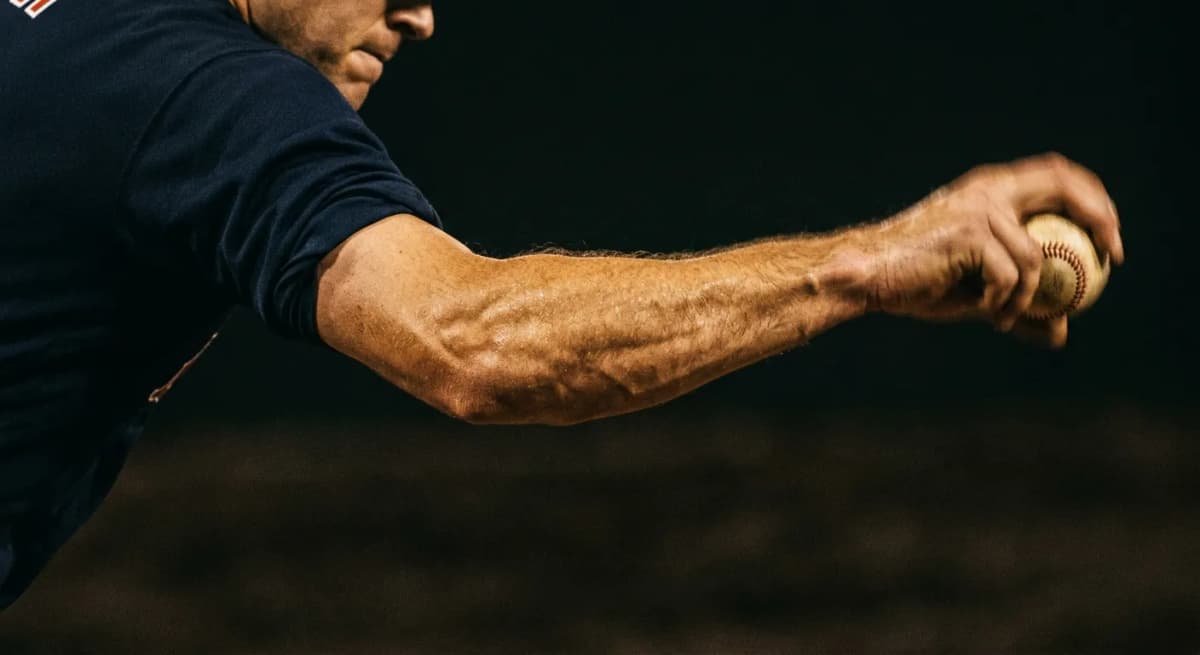
What Does a UCL Injury Feel Like?
UCL pain is usually felt on the inside of the throwing elbow, but location alone cannot tell you whether the ligament is irritated, partially torn, or the wrong suspect entirely.
 By Dylan Newcomer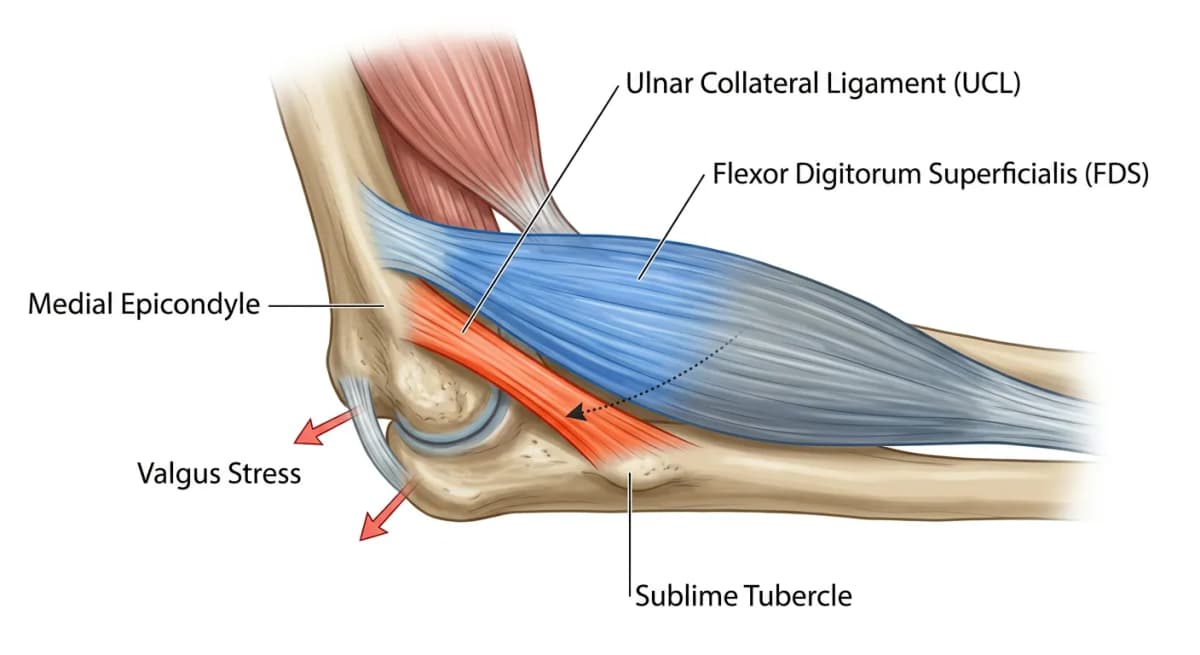
Can a Partial UCL Tear Heal Without Surgery?
Some partial UCL tears can return to high-level throwing without surgery. Tear location, tissue quality, symptoms, timing, and the demands of the athlete all change the answer.
 By Jason Modafari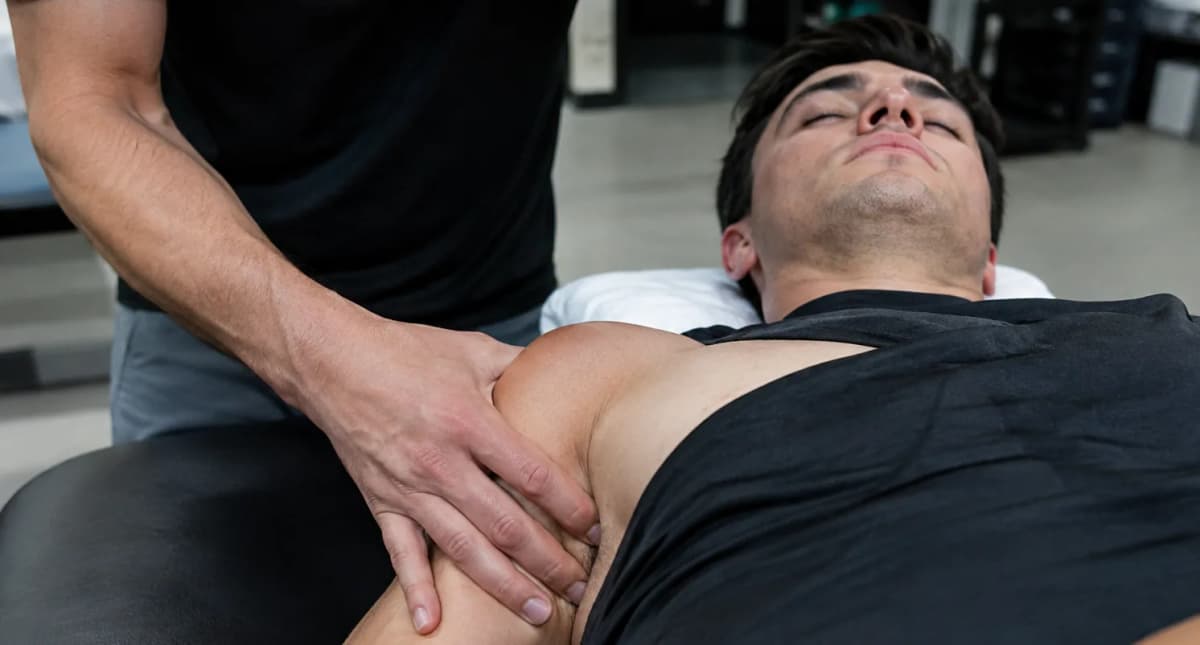
Dry Needling for Throwing Shoulder Pain: Creating a Better Window to Train
Dry needling can reduce pain and guarding in a throwing shoulder, improve motion, and make strength work more productive. We use that response inside a full return-to-throwing plan.
By Jason Modafari