PATELLAR TENDON PAIN DURING SQUATS AND LEG TRAINING
The short version
Pain below the kneecap does not always require shutting down leg training. Load, range, exercise choice, and the next-day response show us where to start.

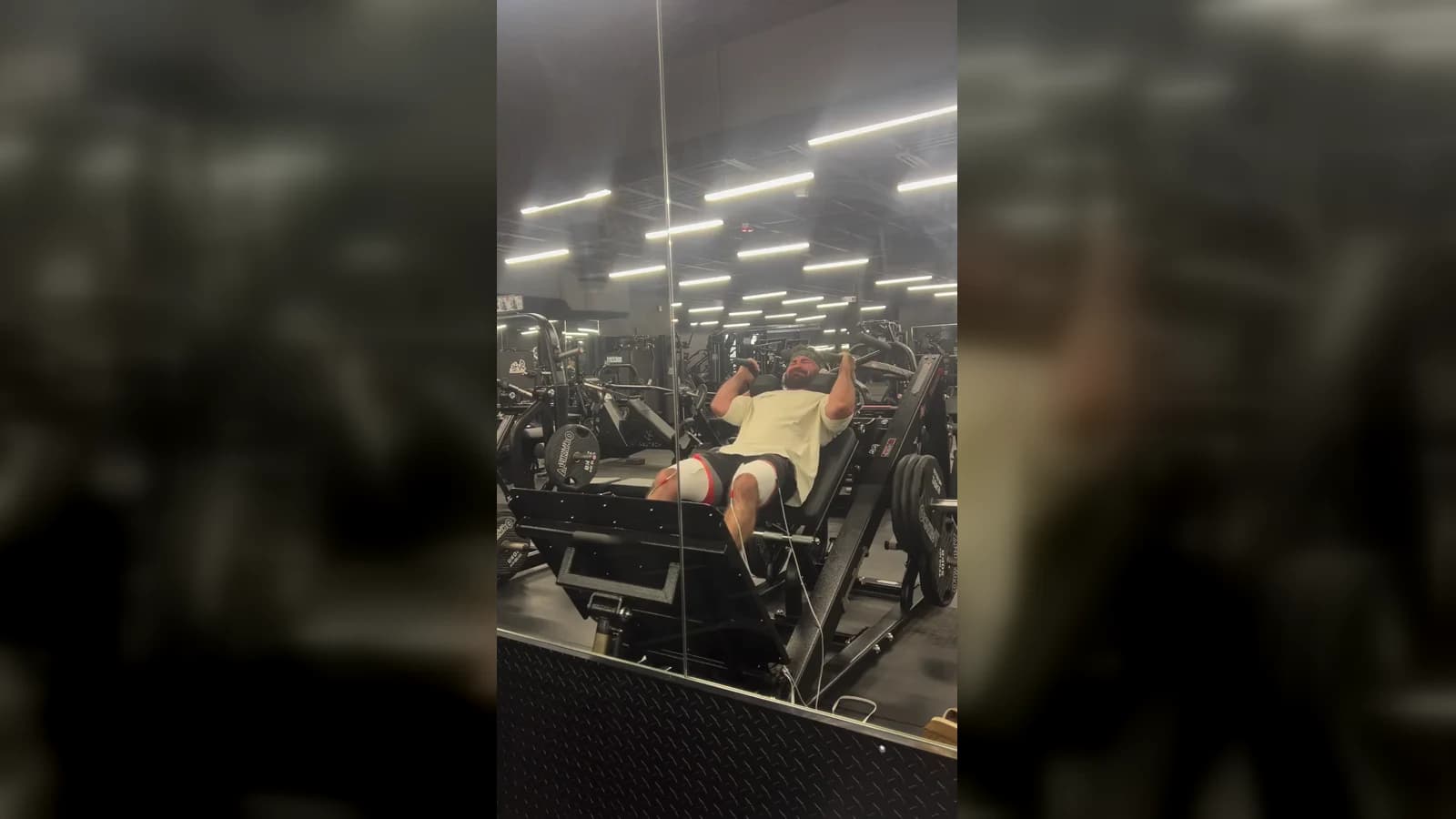
Patellar tendon pain is especially frustrating for a bodybuilder because it can affect nearly every useful quad exercise. Squats hurt. Leg press hurts. Split squats hurt. Even leg extensions can become hard to load.
The usual reaction is to bounce between extremes: ignore it and keep pushing, or stop training legs completely. There is usually more room between those choices.
Does the Pattern Sound Like the Patellar Tendon?
Patellar tendinopathy commonly presents as pain at the lower edge of the kneecap that increases with knee-extensor demand. A clinical review in JOSPT describes localized, load-related pain as a hallmark pattern while also noting that imaging changes can exist in people without symptoms.
That is why a scan alone is not the answer. We look at pain location, squat and jump tolerance, strength, recent training changes, and whether another source of anterior knee pain better explains the problem.
Bodybuilders also spend far more time under controlled resistance than most field-sport athletes. The provoking task may be a deep hack squat or a hard set of extensions rather than sprinting and jumping.
Find the Dose the Tendon Can Handle
Tendons respond to load. The challenge is choosing an amount that is heavy enough to matter and recoverable enough to repeat.
We may start with isometrics or a controlled range if the tendon is highly irritable. From there, squats, split squats, presses, and extensions are progressed through range and load. A randomized clinical trial found better 24-week outcomes from a progressive tendon-loading program than from eccentric exercise alone in people with patellar tendinopathy.
There is no single magic exercise. A systematic review of load monitoring and therapeutic exercise supports combining progressive exercise with control of the loads that aggravate symptoms.
Your Leg Day Is More Than One Exercise
Changing the squat while leaving the rest of the week untouched often fails. We need the entire knee-extensor dose:
- Hard squat and hack-squat sets
- Leg press and split-squat volume
- Leg extensions, especially near failure
- Cardio that loads the knee repeatedly
- Posing practice
- Sudden increases in frequency, volume, or depth
The tendon experiences the sum. Removing one movement may not help if three other exercises keep the same demand high.
Modify Without Babying the Knee
A useful modification keeps the quad working. Depending on the presentation, that may mean changing range, tempo, foot position, exercise order, or the number of hard sets.
We can use symptoms during the session and the next morning to judge the response. A mild, stable ache that settles may be acceptable. A sharp increase, worsening movement, or a strong next-day flare tells us the dose was too high.
The goal is not to make every set painless forever. It is to build a knee that can handle the training the athlete actually wants to do.
Where StemWave and ARPwave Fit
StemWave can be used as a focused standalone treatment for a localized ache below the kneecap, or after the athlete completes the exercise portion of a session. It may help reduce symptoms and improve the local treatment experience, but the loading plan still drives the longer-term return to heavy leg training.
ARPwave is used during exercise. We may pair electrical stimulation with quad work, isometrics, or a squat pattern to create a demanding active session while controlling the external load.
They are separate services with different purposes. Either may be used when it fits the athlete's presentation.
When the Knee Needs a Broader Evaluation
Large swelling, locking, giving way, inability to bear weight, a traumatic pop, fever, or pain that is severe at rest does not fit the usual straightforward tendon picture. Get assessed rather than treating the spot and hoping.
Persistent pain also deserves a closer look when sensible load changes do not improve the trend.
The Bottom Line
Patellar tendon pain does not automatically mean the end of leg training. It means the current dose exceeds what the tendon is tolerating.
Find the workable entry point, keep the quad strong, and progress toward the ranges and loads that matter. Explore Tampa bodybuilding rehab and recovery, or book a free consultation with Jason.
THE NEXT STEP
See Jason's Tampa services for lifters, including physical therapy, bodywork, ARPwave, StemWave, and focused recovery sessions.
Explore Bodybuilding Rehab & RecoveryRELATED POSTS
Elbow and Distal Biceps Pain During Curls and Pulling
Pain at the front of the elbow can be a manageable training irritation or a tendon injury that needs prompt attention. The mechanism and loss of strength matter.
 By Jason Modafari
Shoulder Pain During Pressing: What Lifters Should Check
Bench, incline, and overhead pressing can irritate the shoulder for different reasons. The right response starts with the exact position, load, and symptom pattern.
By Jason Modafari
Bodywork for Bodybuilders: Useful Relief Without the Hype
Bodywork can improve how a lifter feels and moves, but it should have a clear job. Here is how to use hands-on care without pretending it replaces training.
By Jason Modafari