MY ELBOW HURTS WHEN I THROW. SHOULD I STOP THROWING?
The short version
Sharp, escalating, performance-limiting, or neurologic elbow symptoms are reasons to stop and get evaluated. Mild soreness still needs a workload decision, not blind toughness.

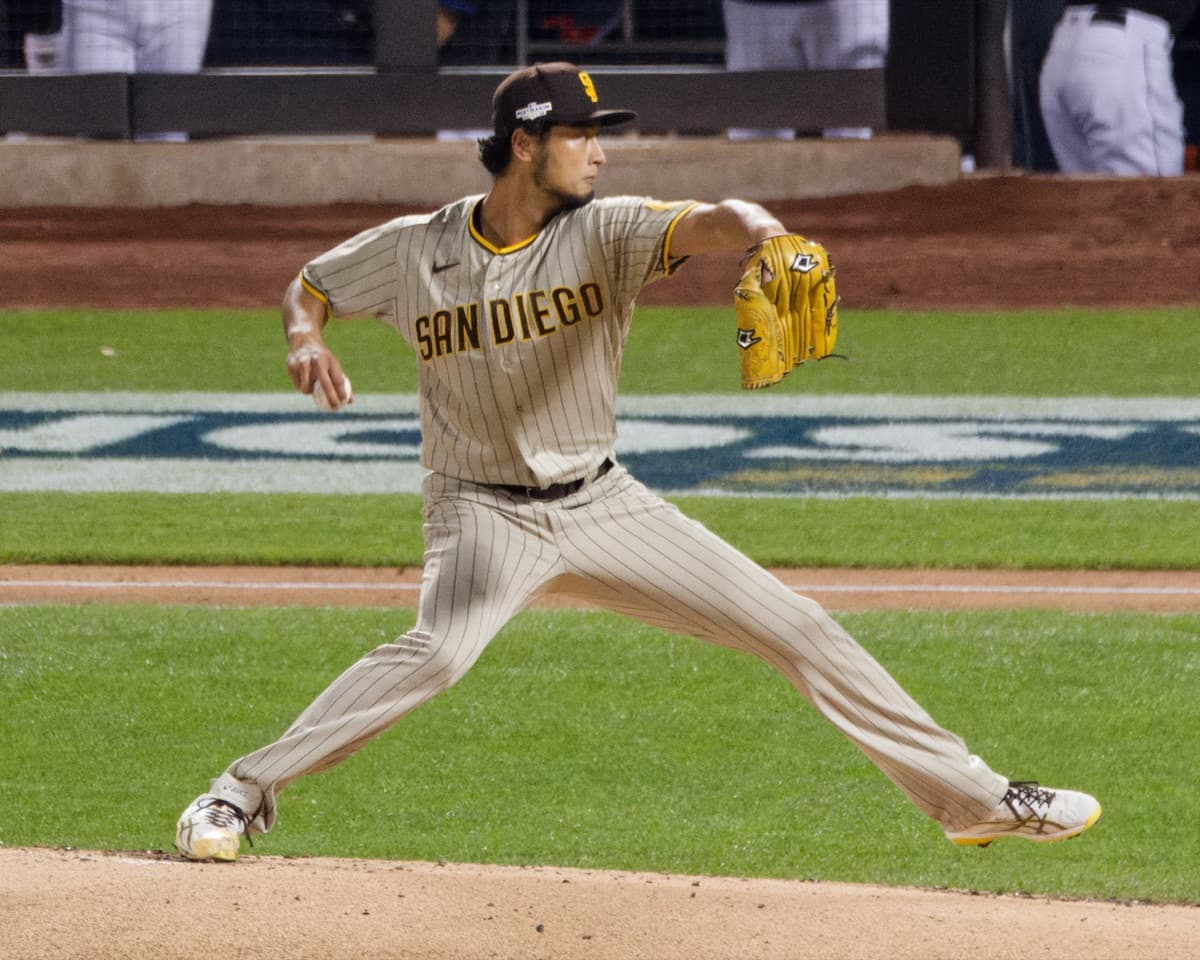
If your elbow hurts while throwing, the useful question is not whether pitchers are “supposed” to be sore. It is whether the current symptom suggests a tissue is failing to tolerate the dose.
Some post-throwing muscle soreness is common. Sharp medial pain, a pop, numbness, lost velocity, or pain that worsens with each throw is not normal training noise. Continuing to throw through those signs gives you less information and potentially a larger injury.
Stop the Session When the Signal Is Clear
End high-intensity throwing when you experience:
- a pop or sudden sharp pain
- increasing pain from throw to throw
- numbness or tingling into the hand
- loss of command or velocity with pain
- a feeling of instability
- pain that changes the delivery
- swelling, locking, or inability to straighten the elbow
That does not mean every case needs an emergency room. It means the arm should not keep absorbing game-speed stress while the cause is unknown.
What If It Is Only Mild Soreness?
Context decides what mild soreness means. Where is it? When did it begin? Did workload jump? Does it settle by the next morning? Is motion normal? Can you grip, pronate, and train without reproducing it?
A low, stable symptom after an unusual workload may respond to a temporary reduction and recovery. A recurring symptom at the same velocity or pitch count is a pattern. Repeated patterns deserve an evaluation even if the pain score never becomes dramatic.
Use the next morning as a checkpoint. Compare pain, elbow extension, grip, and the way the arm feels during normal movement. A symptom that settles fully is different from one that leaves the elbow stiff or painful before the next scheduled session.
Do not rely on a pain scale alone. A two-out-of-ten ache paired with lost command and velocity may be more concerning than a four-out-of-ten muscle soreness that resolves normally.
Location Narrows the Question, Not the Diagnosis
Pain on the inside may involve the UCL, flexor-pronator mass, ulnar nerve, or a growth-plate injury in younger throwers. Posterior pain can fit valgus extension overload, an olecranon stress problem, or another joint condition. Lateral pain brings a different group of structures into play.
Our pitcher elbow pain guide maps the major patterns. An examination is still needed to decide which one explains your symptoms.
A 2022 clinical review of elbow rehabilitation covers the overlapping UCL, valgus-extension, and tendon presentations seen in overhead athletes and emphasizes criteria-based advanced rehab. The overlap is why self-diagnosis from a pain map is unreliable.
Do Not Use Pain Relief as a Return Test
Ice, medication, soft-tissue work, needling, or a few days off may reduce symptoms. That is useful, but symptom change does not prove that the elbow can tolerate the old workload.
The return decision should consider motion, force, fast arm capacity, recent throwing volume, and response to a progressive throwing dose. If the pain returns every time intensity rises, repeating the same rest-and-retry cycle is not a plan.
What to Do in the First 48 Hours
Record what happened before memory edits the story: pitch type, velocity or intent, throw count, exact location, whether there was a pop, and what changed in performance. Stop high-intent throwing. Continue lower-body or other training only if it does not reproduce the elbow symptoms.
You do not need to attack the area with aggressive stretching or soft-tissue work. Keep comfortable motion and arrange an evaluation when the warning signs or persistence justify it. Medication decisions belong with a qualified medical professional, especially because masking pain can make a throwing test falsely reassuring.
Questions a Good Evaluation Should Answer
Which tissue best explains the symptoms? Is the elbow stable? Are nerve signs present? Does the athlete need imaging or an orthopedic opinion? What training can continue? What criteria will allow throwing to restart?
Those answers are more useful than a generic command to rest for two weeks.
When to Seek Care
Get prompt medical assessment after a pop, obvious instability, bruising, persistent neurologic symptoms, or major loss of motion. Schedule a sports evaluation when pain persists, repeatedly returns, or changes performance.
A proper evaluation does not automatically lead to an MRI or surgery. It can identify whether a short workload adjustment is reasonable or whether the athlete needs imaging, structured rehab, or an orthopedic opinion.
If the concern is medial elbow pain, start with what a UCL injury feels like. If you are already returning from injury, use a criteria-based throwing progression instead of testing the arm at full intensity.
Stopping one throwing session does not make an athlete soft. It protects the chance to make the next decision with evidence.
THE NEXT STEP
Compare the major causes of throwing-elbow pain and see how testing guides treatment and return to play.
Explore Throwing Elbow RehabRELATED POSTS
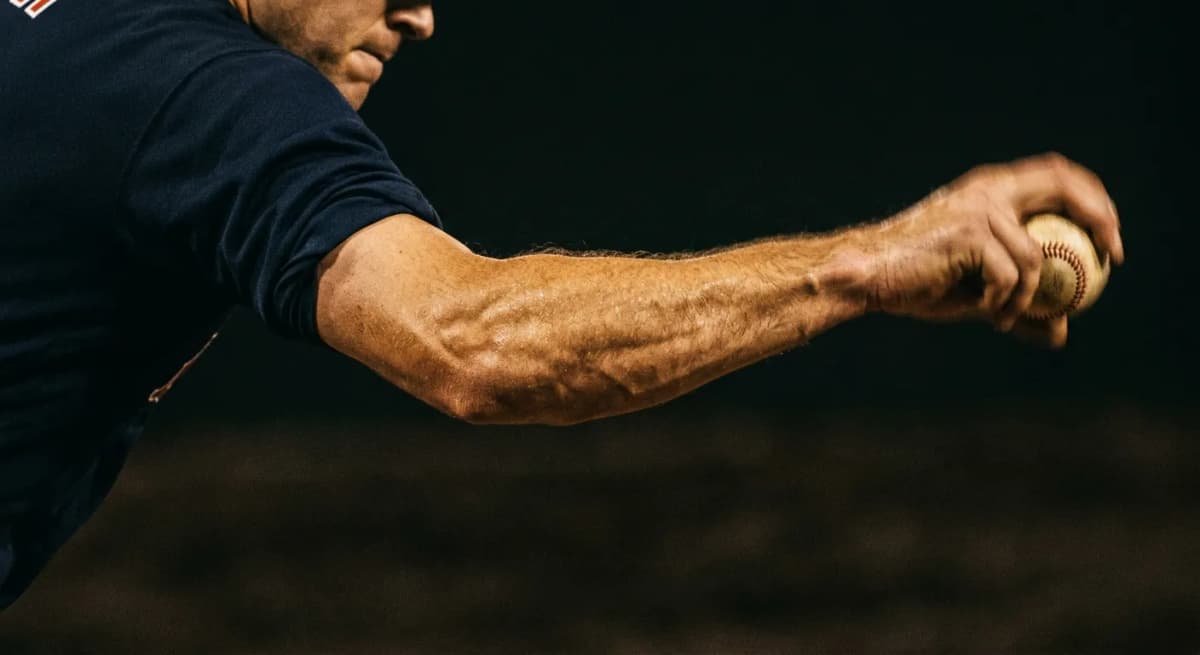
What Does a UCL Injury Feel Like?
UCL pain is usually felt on the inside of the throwing elbow, but location alone cannot tell you whether the ligament is irritated, partially torn, or the wrong suspect entirely.
 By Dylan Newcomer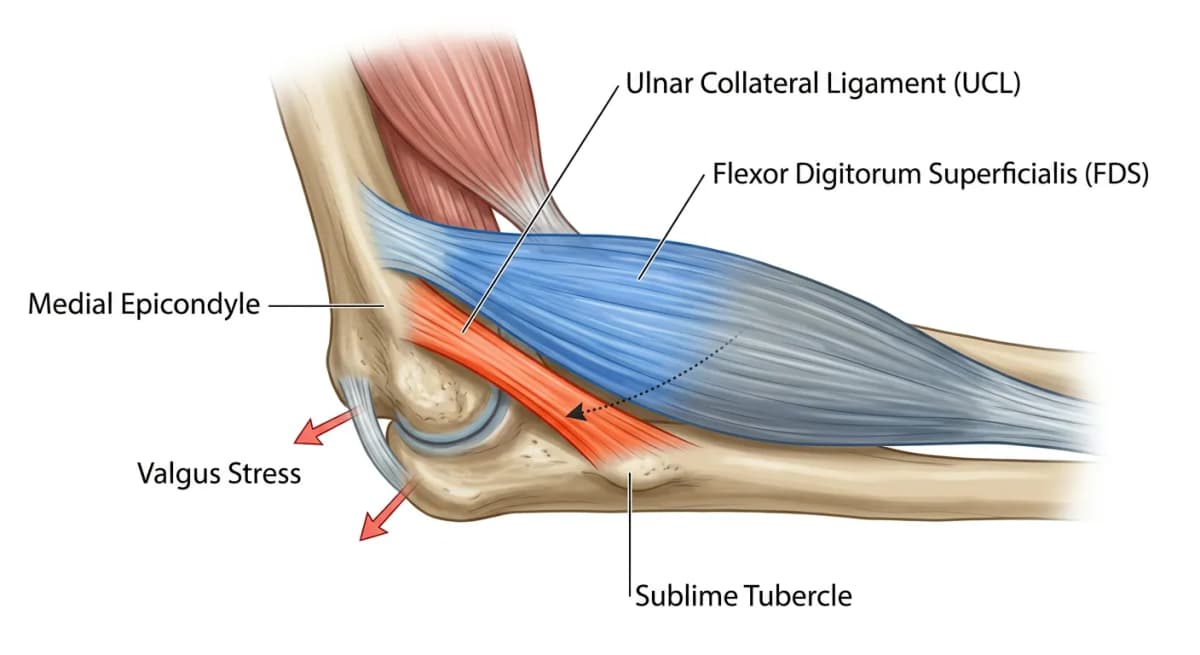
Can a Partial UCL Tear Heal Without Surgery?
Some partial UCL tears can return to high-level throwing without surgery. Tear location, tissue quality, symptoms, timing, and the demands of the athlete all change the answer.
 By Jason Modafari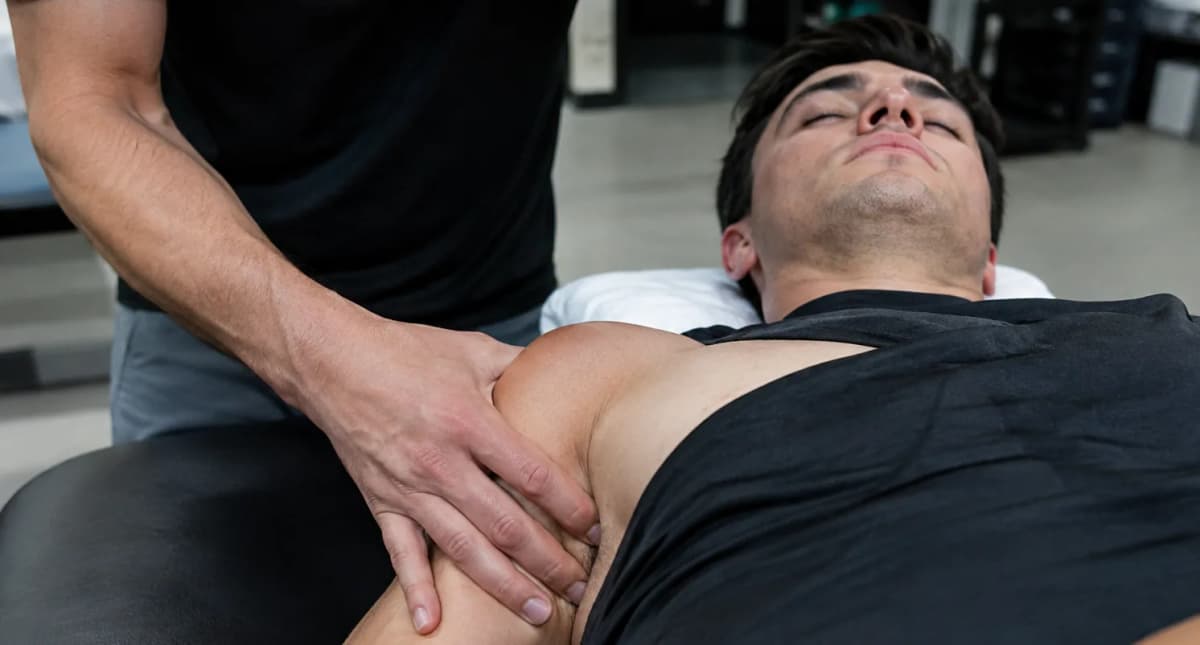
Dry Needling for Throwing Shoulder Pain: Creating a Better Window to Train
Dry needling can reduce pain and guarding in a throwing shoulder, improve motion, and make strength work more productive. We use that response inside a full return-to-throwing plan.
By Jason Modafari