HOW FAST SHOULD THROWING VELOCITY PROGRESS DURING REHAB?
The short version
Velocity should rise in planned bands after the athlete tolerates the current dose. Radar data, volume, symptoms, mechanics, and next-day recovery belong in the same decision.

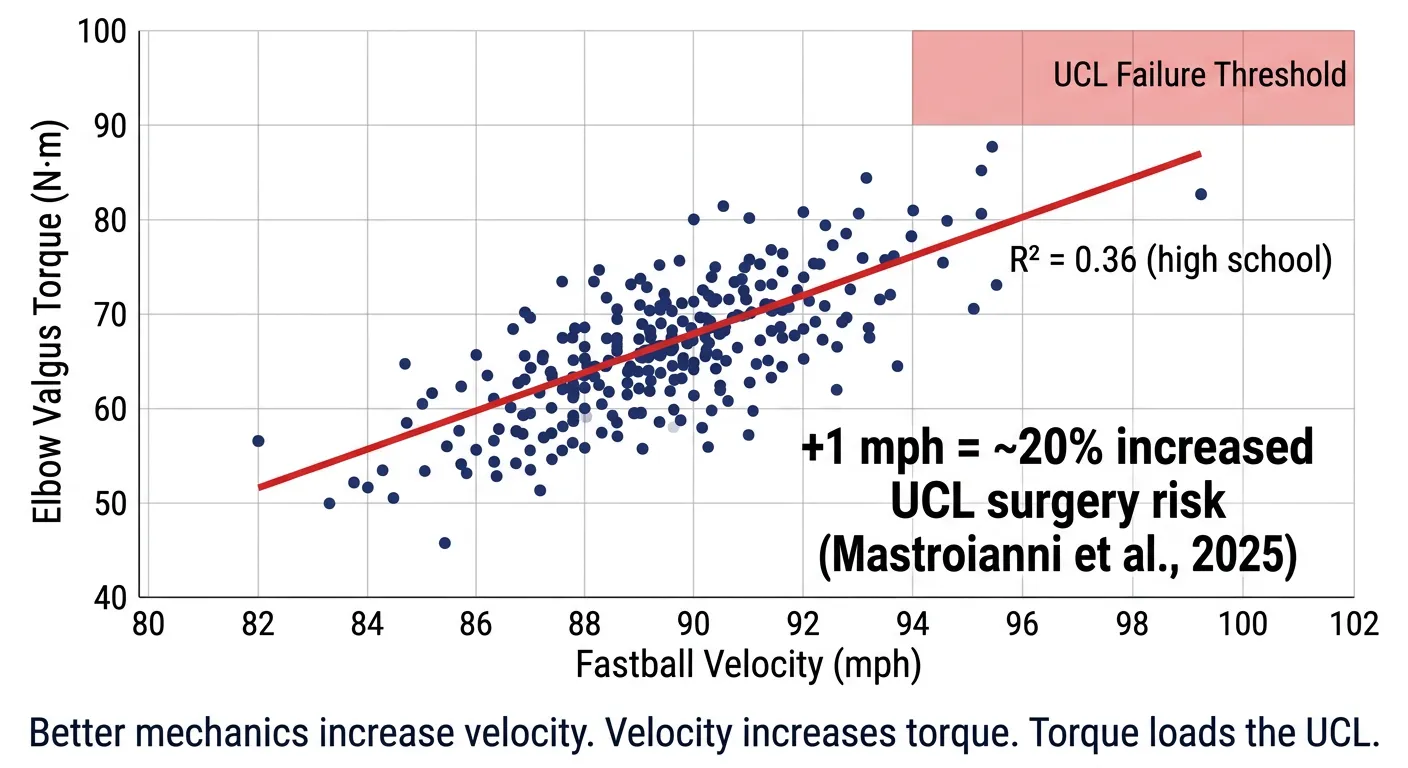
“Throw at 70 percent” sounds precise until a radar gun shows what the athlete actually did.
Most pitchers are not reliable at estimating submaximal effort, especially after months away from throwing. Some move faster than they think because the arm feels fresh. Others protect the elbow and remain well below the intended stimulus. Velocity gives the program an external anchor.
Velocity Is a Dose, Not a Grade
A radar number tells us one part of the throwing stress. It does not tell us how many throws occurred, the distance, the drill, the mound slope, the athlete's fatigue, or the quality of recovery.
We use velocity beside volume and context. Ten throws at a new high velocity are different from 35. A brief peak is different from holding the band across a bullpen.
A 2025 systematic review of published interval throwing programs found substantial variation and little formal validation. A separate biomechanical review found that torque generally rises across interval throwing, but distance and partial-effort instructions do not create identical stress for every pitcher. Those findings support structured progression while arguing against a universal velocity schedule.
Establish an Honest Starting Point
The opening sessions after injury or surgery should be deliberately easy. The goal is to identify a workload the athlete tolerates, not to discover today's maximum.
We record throw count, distance, target and actual velocity, symptoms, and next-day response. If the athlete cannot reproduce the intended low band, we coach the task or adjust the plan before adding speed.
Progress in Bands
Rather than chasing one mile-per-hour increase each session, we often use velocity ranges. The athlete earns the next band by completing the current work with acceptable command, no meaningful symptom escalation, and normal recovery.
As intensity rises, volume may hold or temporarily fall. Increasing both together can create a workload jump that the elbow or shoulder has never tested.
There is no validated universal weekly velocity increase that fits every injury and athlete. Tissue-healing stage, preinjury velocity, time away, position, and symptoms all matter.
An athlete returning from a mild workload-related shoulder problem may progress differently from an athlete after UCL reconstruction. A position player also has a different throwing menu from a starting pitcher. Percentages should reference the athlete's realistic current or preinjury velocity, and the measurement method should remain consistent.
Volume and Velocity Must Be Read Together
Velocity is attractive because one number is easy to graph. Throw count is equally important. Total throwing stress rises when either intensity or volume rises, and a program can create a large jump without a personal-record throw.
We count warm-up throws and drill throws when they contribute meaningful load. In a bullpen, we distinguish total pitches from high-intent pitches. We also account for the rest of the week: lifting, plyometrics, long toss, defensive work, and games.
A common programming error is to hold a beautiful velocity progression on paper while untracked team activity multiplies the real dose.
Watch What Happens Inside the Session
A rising warm-up followed by stable output is different from early velocity followed by a steep drop. Declining command, changing mechanics, or increasing pain can show that the session has reached the athlete's current capacity.
The response later that day and the following morning is part of the same test. An athlete who finishes well but loses motion or has focal pain the next day did not fully tolerate the dose.
High Intent Requires More Recovery
The final velocity bands carry a disproportionate demand. This is where athletes are tempted to accelerate because the arm finally feels normal.
We usually protect the spacing between higher-intent sessions and adjust weight-room volume around them. The athlete needs exposure to speed, but also enough recovery to adapt to it.
What to Do When Velocity Stalls
Do not force the next band automatically. First ask whether pain, fatigue, apprehension, command, or a true force deficit is limiting output. Review sleep, recent workload, body weight, and the timing of strength training.
A temporary plateau can be normal after time away. Repeated regression, focal pain, or a growing loss of motion is different and may require clinical reassessment.
The radar gun should clarify the question. It should not pressure the athlete to win every rehab session.
Velocity Does Not Equal Pitching Readiness
Touching a target once is not the same as commanding pitches, holding velocity across a bullpen, recovering, and repeating the work. Being cleared to throw is not the same as being ready to pitch.
Velocity progression belongs inside a complete return-to-throwing program that includes strength, workload, mound progression, pitch mix, and competition exposure. The radar gun makes the dose clearer. It does not make the decision by itself.
THE NEXT STEP
See how we progress velocity, volume, pitch mix, mound work, bullpens, and readiness for competition.
Explore Return to ThrowingRELATED POSTS
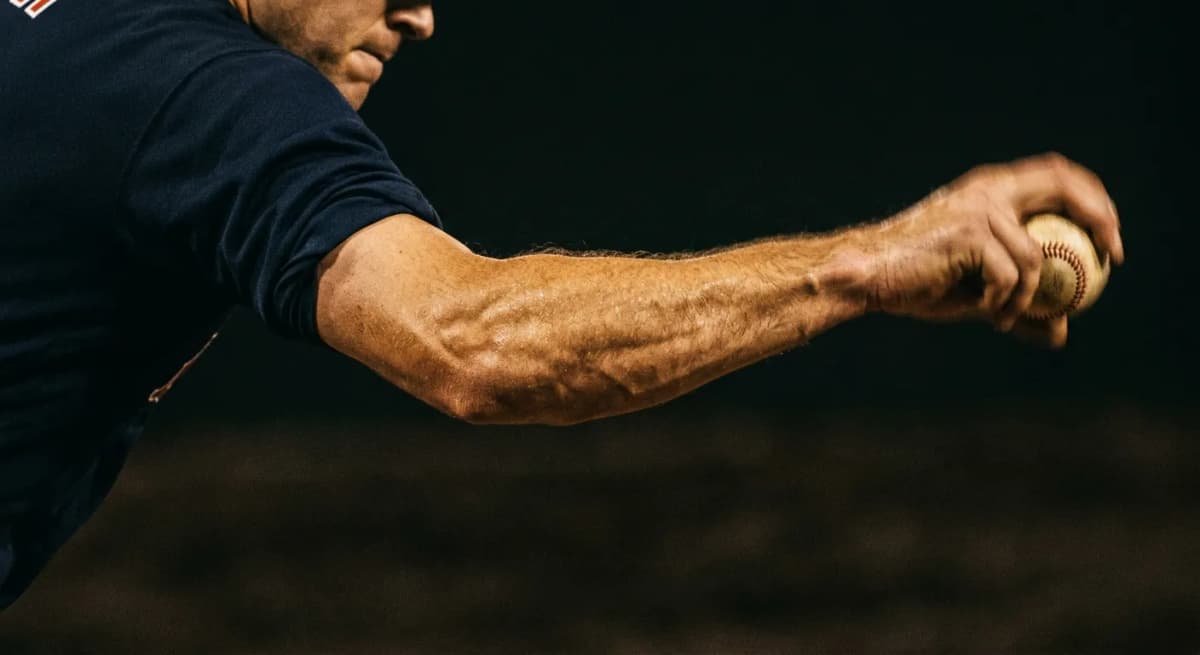
What Does a UCL Injury Feel Like?
UCL pain is usually felt on the inside of the throwing elbow, but location alone cannot tell you whether the ligament is irritated, partially torn, or the wrong suspect entirely.
 By Dylan Newcomer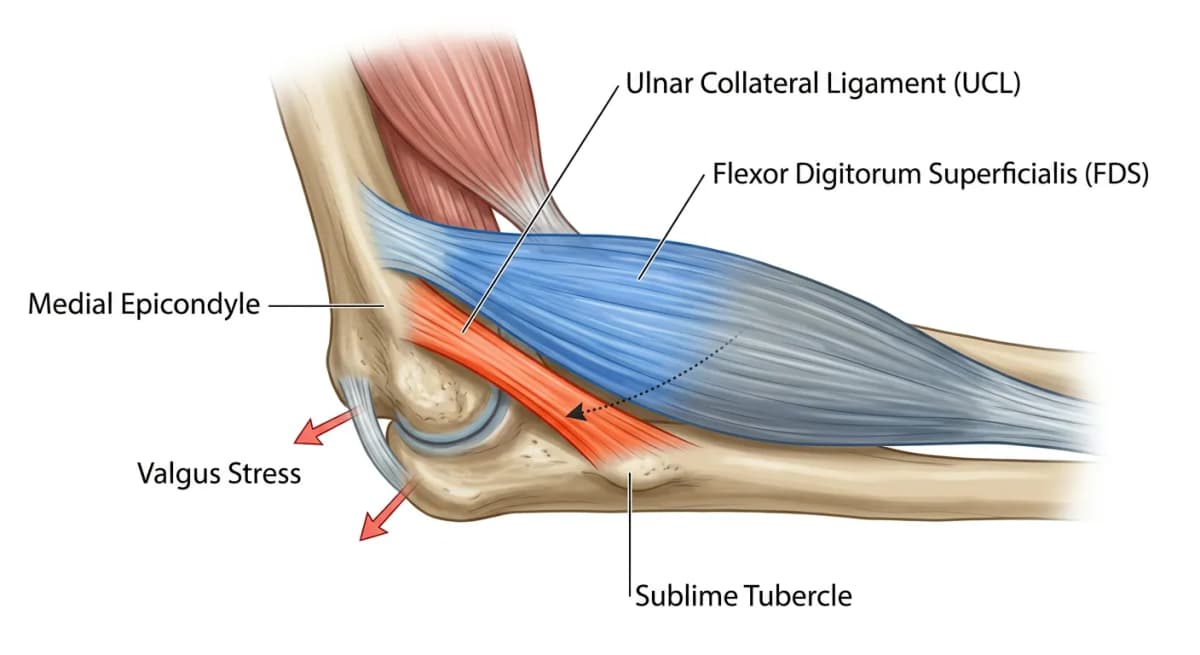
Can a Partial UCL Tear Heal Without Surgery?
Some partial UCL tears can return to high-level throwing without surgery. Tear location, tissue quality, symptoms, timing, and the demands of the athlete all change the answer.
 By Jason Modafari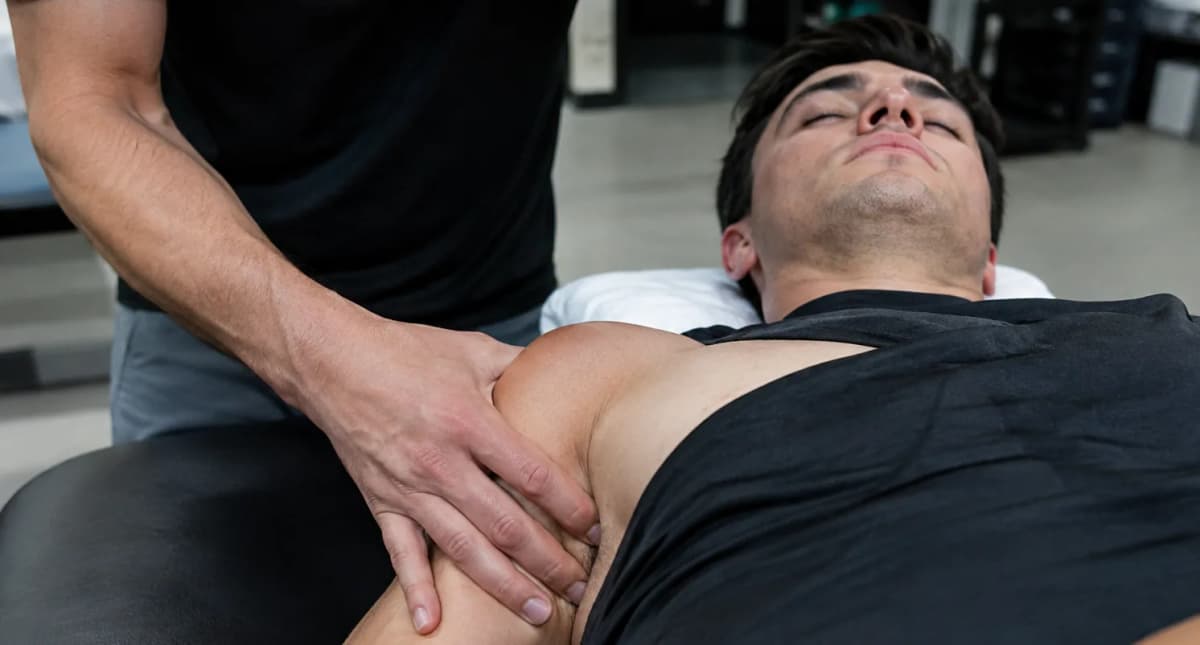
Dry Needling for Throwing Shoulder Pain: Creating a Better Window to Train
Dry needling can reduce pain and guarding in a throwing shoulder, improve motion, and make strength work more productive. We use that response inside a full return-to-throwing plan.
By Jason Modafari