ARPWAVE FOR BODYBUILDERS: WHY THE WORK HAPPENS UNDER LOAD
The short version
ARPwave is used during exercise, not as a passive add-on. Here is how electrical stimulation can change the challenge of a set and where it fits for bodybuilders.

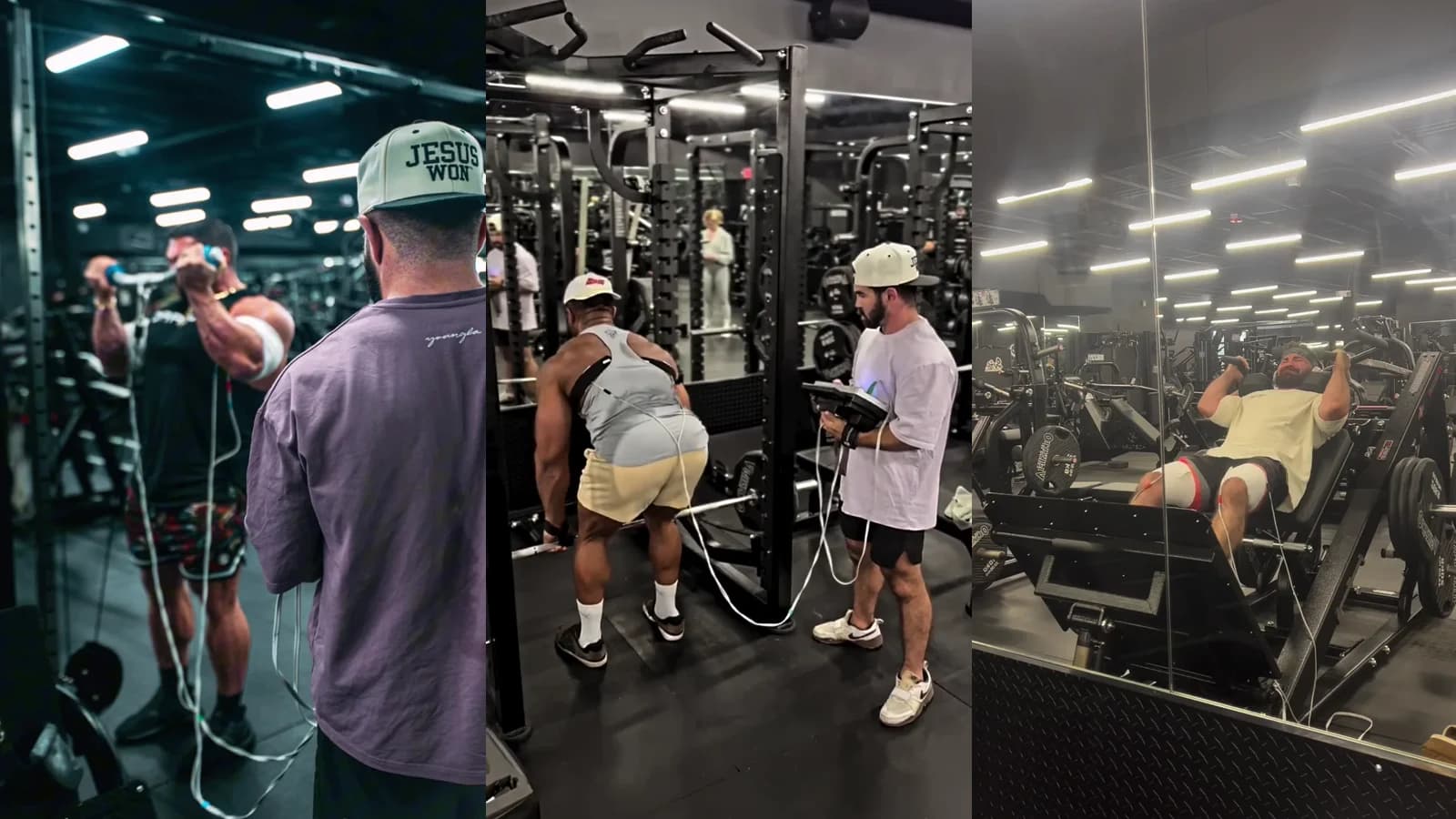
ARPwave is easy to misunderstand if you have only seen the electrodes and wires. The important part is not that current is passing through a muscle. The important part is what the athlete does while that current is running.
In our Tampa sessions, ARPwave is paired with exercise. You may be pressing, pulling, squatting, holding an isometric, or working through a range that has been difficult to access. The electrical stimulation changes the demand of the set while the athlete still has to create force and control the movement.
That makes it a training session, not thirty minutes of lying still with pads attached.
What ARPwave Changes During Exercise
Neuromuscular electrical stimulation creates a contraction by stimulating motor nerves beneath the electrodes. When that input is added to an exercise, the muscle has to manage the external load and the electrical stimulus at the same time.
The set may feel far harder than the weight suggests. That can be useful when we want a strong local training effect without loading a bar as heavily, or when pain and guarding have made it hard to recruit a muscle normally.
Research on NMES, the broader category of electrical stimulation, supports its ability to drive strength adaptations. A systematic review comparing NMES with conventional strength training found similar strength gains when training volume was matched. A later meta-analysis of NMES added directly to resistance training found small additional gains in strength and muscle mass compared with lifting alone.
ARPwave is a specific system, and the research on the branded device is not as deep as the larger NMES literature. We judge the session by what changes in front of us: force, range, comfort, control, and the quality of the work the athlete can complete.
Where It Can Fit for a Bodybuilder
ARPwave can make sense when one area repeatedly fails to contribute during a lift. A quad may stay quiet after knee surgery. One side of the back may not produce well during a row. An athlete may protect a painful shoulder and shift the press everywhere else.
It can also be used as its own high-effort training exposure. For a bodybuilder managing joint irritation or a sensitive tendon, the combination of electrical stimulation and active exercise may provide a demanding session without chasing the heaviest possible external load.
Common goals include:
- Improving the contraction of a muscle that has been difficult to recruit
- Training through a tolerable range while symptoms are being managed
- Creating a hard local stimulus with less weight on the bar or machine
- Restoring output after surgery, pain, or a period of reduced training
- Challenging control in the exact position where a lift breaks down
What a Session Looks Like
We start with the movement or output that matters. That could be a pulldown, press, squat pattern, isometric hold, or isolated contraction. We test it before the current is applied so there is a baseline.
Electrode placement and intensity depend on the goal. The current is raised to a meaningful level, then the athlete performs the selected exercise with coaching. Load, tempo, range, and rest periods are adjusted as the response changes.
The session is not meant to be comfortable in the spa sense. It should still be controlled. Sharp pain, poor movement, or a loss of useful output is a reason to change the setup rather than prove toughness.
It Does Not Replace the Rest of Training
The device does not know your weekly volume, stage prep, exercise history, or which tissue is irritated. Those decisions still matter.
If ARPwave helps a quad produce more force, we still need to carry that force into squats, split squats, and the rest of the athlete's program. If it makes shoulder work more tolerable, the next question is whether pressing volume and strength can progress outside the session.
The best use is specific. Pick a problem. Apply the stimulus during the work. Retest. Then decide whether the response earns another session.
Who Should Be Screened First
Electrical stimulation is not appropriate for every person or every body area. Implanted electronic devices, changes in sensation, skin conditions, recent medical procedures, and other health factors can change whether it is appropriate. That screening happens before the first working set.
If there was a sudden injury, major weakness, a visible deformity, or progressive neurologic symptoms, the priority is a proper evaluation rather than forcing a training session.
The Bottom Line
ARPwave gives bodybuilders a way to train under electrical stimulation with the exercise itself at the center of the session. It can be used to drive recruitment, create a difficult local stimulus, and help an athlete keep productive work in the program when ordinary loading is not giving the response we want.
It is available as a focused service in Tampa. See bodybuilding rehab and recovery with Jason, or book a free consultation to talk through whether an ARPwave session fits your current training problem.
THE NEXT STEP
See Jason's Tampa services for lifters, including physical therapy, bodywork, ARPwave, StemWave, and focused recovery sessions.
Explore Bodybuilding Rehab & RecoveryRELATED POSTS
Patellar Tendon Pain During Squats and Leg Training
Pain below the kneecap does not always require shutting down leg training. Load, range, exercise choice, and the next-day response show us where to start.
 By Jason Modafari
Elbow and Distal Biceps Pain During Curls and Pulling
Pain at the front of the elbow can be a manageable training irritation or a tendon injury that needs prompt attention. The mechanism and loss of strength matter.
By Jason Modafari
Shoulder Pain During Pressing: What Lifters Should Check
Bench, incline, and overhead pressing can irritate the shoulder for different reasons. The right response starts with the exact position, load, and symptom pattern.
By Jason Modafari