SHOCKWAVE THERAPY FOR CHRONIC TENDON PAIN: HOW IT CAN RESTART PROGRESS
The short version
Shockwave gives a stubborn tendon a focused mechanical stimulus that may reduce pain and support tissue remodeling. We pair it with progressive loading to turn symptom change into better function.


Chronic tendon pain can feel stuck. The athlete has rested, stretched, changed shoes, modified training, and worked through a strengthening plan, yet the same spot still hurts when the load gets high enough.
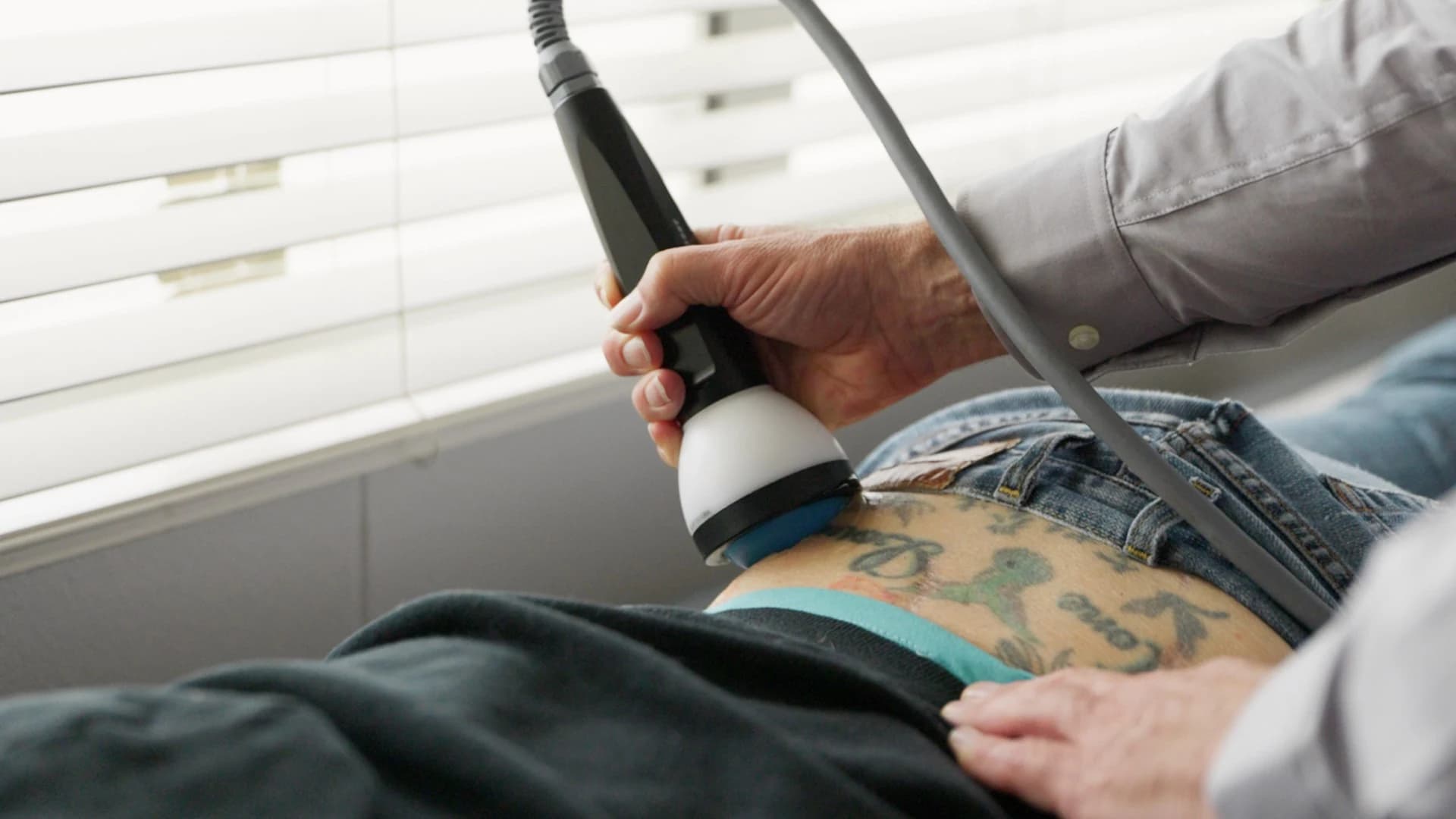
Shockwave gives us another way to challenge that plateau. It delivers a focused mechanical stimulus to the painful tissue without an injection or incision. For the right tendon problem, that stimulus can reduce pain, improve function, and help the athlete tolerate the loading that had stalled.
What Shockwave Therapy Is
Extracorporeal shockwave therapy delivers acoustic pulses through the skin to a targeted tissue. Radial and focused devices create and deliver energy differently, which is one reason studies and clinic experiences do not always match.
A session usually involves locating the symptomatic tissue, applying gel, and delivering a set number of pulses at a tolerable intensity. The treatment takes only part of the visit, so we can reassess the area and keep working on strength or movement in the same session. Temporary soreness or bruising can occur.
Where the Evidence Is Strongest
Shockwave has been studied across plantar fasciopathy, Achilles and patellar tendinopathy, lateral elbow tendinopathy, calcific shoulder conditions, and other musculoskeletal problems.
A 2024 systematic review of shockwave for tendinopathy found the clearest benefits in lower-limb and calcific tendon conditions. A separate 2024 analysis of randomized trials also reported pain benefits across several tendinopathies, though the size of the benefit differed by diagnosis.
Condition-specific evidence is more helpful. The research for plantar heel pain is generally more established than for many newer uses. Our articles on Achilles and plantar fascia pain and tennis and golfer's elbow examine those applications separately.
How Shockwave May Work
Tendon cells respond to mechanical force. Shockwave appears to use that property through mechanotransduction, the process by which a physical stimulus triggers cellular and chemical signaling.
A systematic review of biological effects in tendons describes proposed changes in blood-vessel formation, cell activity, extracellular matrix turnover, inflammatory signaling, and lubricin production. Human tendon research also suggests that shockwave may prompt remodeling by helping the tissue clear damaged matrix components. Pain relief may come from changes in local nociceptive signaling as well as the longer tissue response.
Those mechanisms are still being studied, and dose matters. The clinical outcome is more direct: lower pain, better load tolerance, and progress in the activity the patient wants back.
Why We Pair It With Loading
Shockwave and strength work solve different parts of the problem. The treatment can settle pain and provide a new biological stimulus. Progressive resistance builds the tendon's ability to accept force, while running, jumping, gripping, or throwing restores tolerance for the athlete's actual demands.
The combination is where our process becomes valuable. If shockwave reduces pain during a heel raise, we can load the calf more productively. If gripping feels better, we can progress wrist and forearm strength. The modality creates room. Training fills it.
Who May Be a Reasonable Candidate?
Shockwave is most appealing for persistent, well-localized tendon or fascia pain that has improved slowly or stalled during a credible loading plan. It may also be considered when pain keeps blocking the exercise dose needed to make progress.
It may not be appropriate over certain acute injuries, growth plates, malignancy, active infection, or in people with specific bleeding or medical risks. This is a clinical decision, not a menu add-on.
Why Tendon Diagnosis and Stage Matter
“Tendinitis” is often used for any pain near a tendon. Persistent tendon pain does not always involve active inflammation, and the painful structure may not be the tendon at all. A partial tear, bone stress injury, joint problem, nerve irritation, or referred pain changes the treatment.
Even within tendinopathy, location matters. Insertional Achilles pain experiences compression near the heel in deep dorsiflexion. Midportion Achilles pain usually sits several centimeters higher. A patellar tendon irritated by repeated jumping has different sport demands from a common wrist-extensor tendon irritated by gripping. Using the same shockwave settings and exercise sheet for all of them is not evidence-based care.
We pair the history with pain location, loading tests, force, range of motion, and the athlete's weekly demand. Imaging is not routinely required, but it can help when symptoms, examination, and expected progress do not match.
How We Decide Whether to Continue
Before the first session, choose an outcome. That may be pain during a calf raise, grip force, morning heel pain, number of tolerated jumps, or running volume. Recheck it across several weeks rather than judging treatment by how sore the area feels immediately afterward.
We also track the exercise dose. If shockwave is added while loading is removed, improvement or failure becomes difficult to interpret. A clean trial keeps the strength plan visible and changes as few other variables as possible.
An adequate trial should produce a trend we can see: easier first steps in the morning, stronger grip, more comfortable calf raises, a return to running, or a higher training volume. If that trend never appears, we reconsider the dosage or the diagnosis.
How We Use It at Athletic Potential
We begin with evaluation. If shockwave fits, we use it as a planned series alongside strength, movement, workload, and return-to-sport work. We track function rather than treating tenderness alone.
Dylan provides sports rehabilitation in Kent, Washington, and Jason provides it in Tampa, Florida. In both locations, shockwave is used to help a stubborn rehab process start moving again, with enough structure around it to make the change last.
THE NEXT STEP
See how hands-on treatment, progressive strength work, and return-to-sport planning fit into one rehabilitation process.
Explore Sports Physical TherapyRELATED POSTS
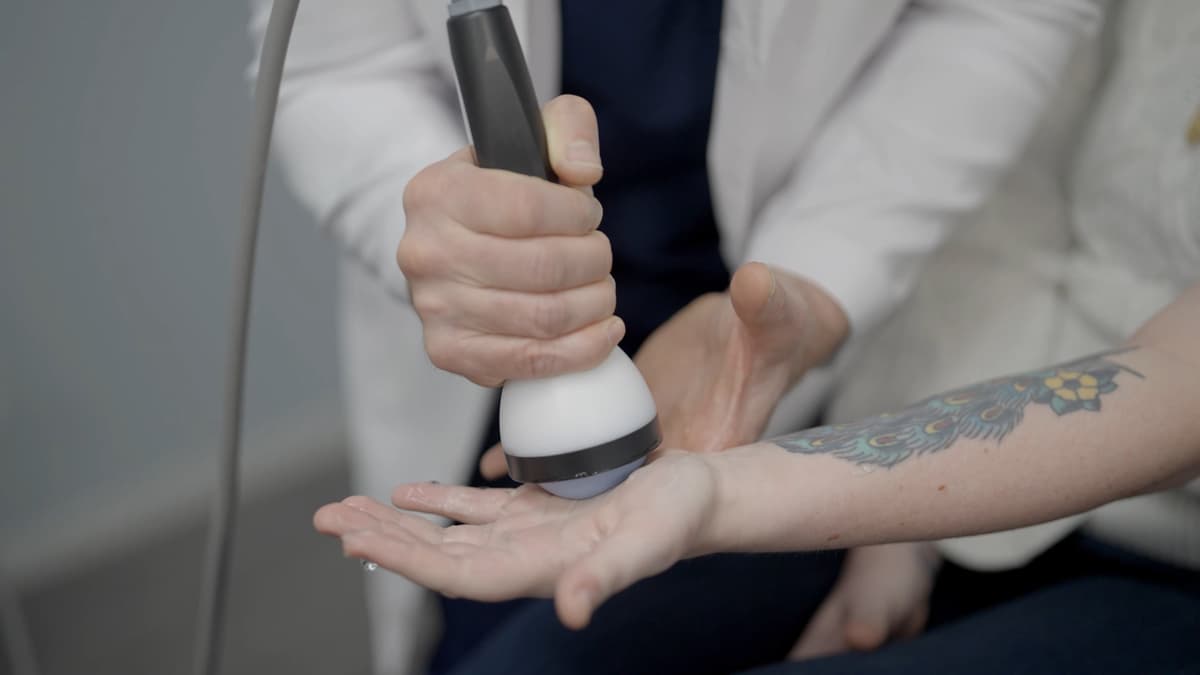
Shockwave Therapy for Tennis and Golfer's Elbow
Shockwave can reduce persistent elbow tendon pain and improve grip tolerance. We combine it with wrist, grip, and forearm loading that prepares the arm for work or sport.

 By Dylan Newcomer and Jason Modafari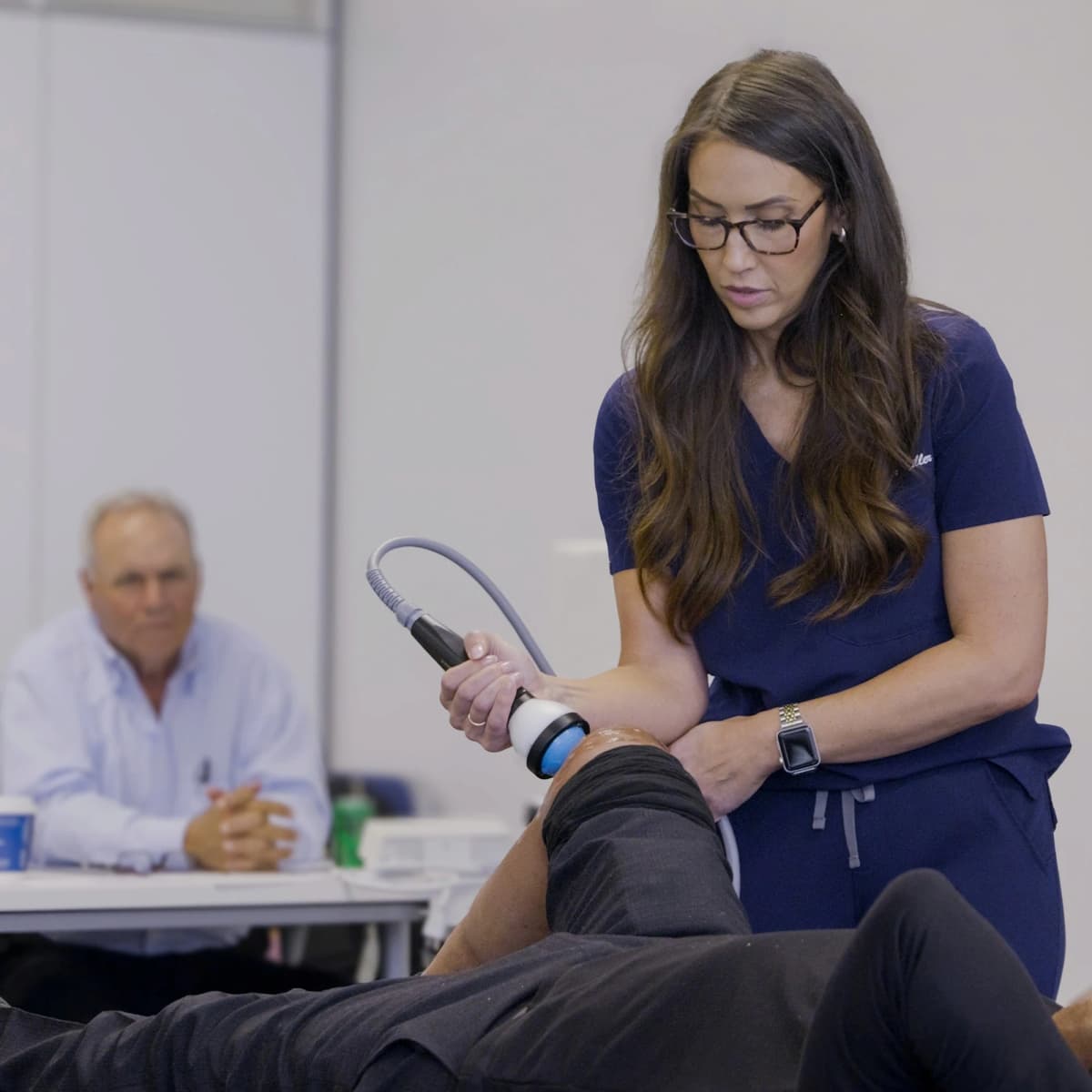
Shockwave Therapy for Achilles and Plantar Fascia Pain
Shockwave can reduce pain and improve function in selected Achilles and plantar heel conditions. We pair it with calf, foot, and running progressions so the relief carries into daily life and sport.
By Dylan Newcomer and Jason Modafari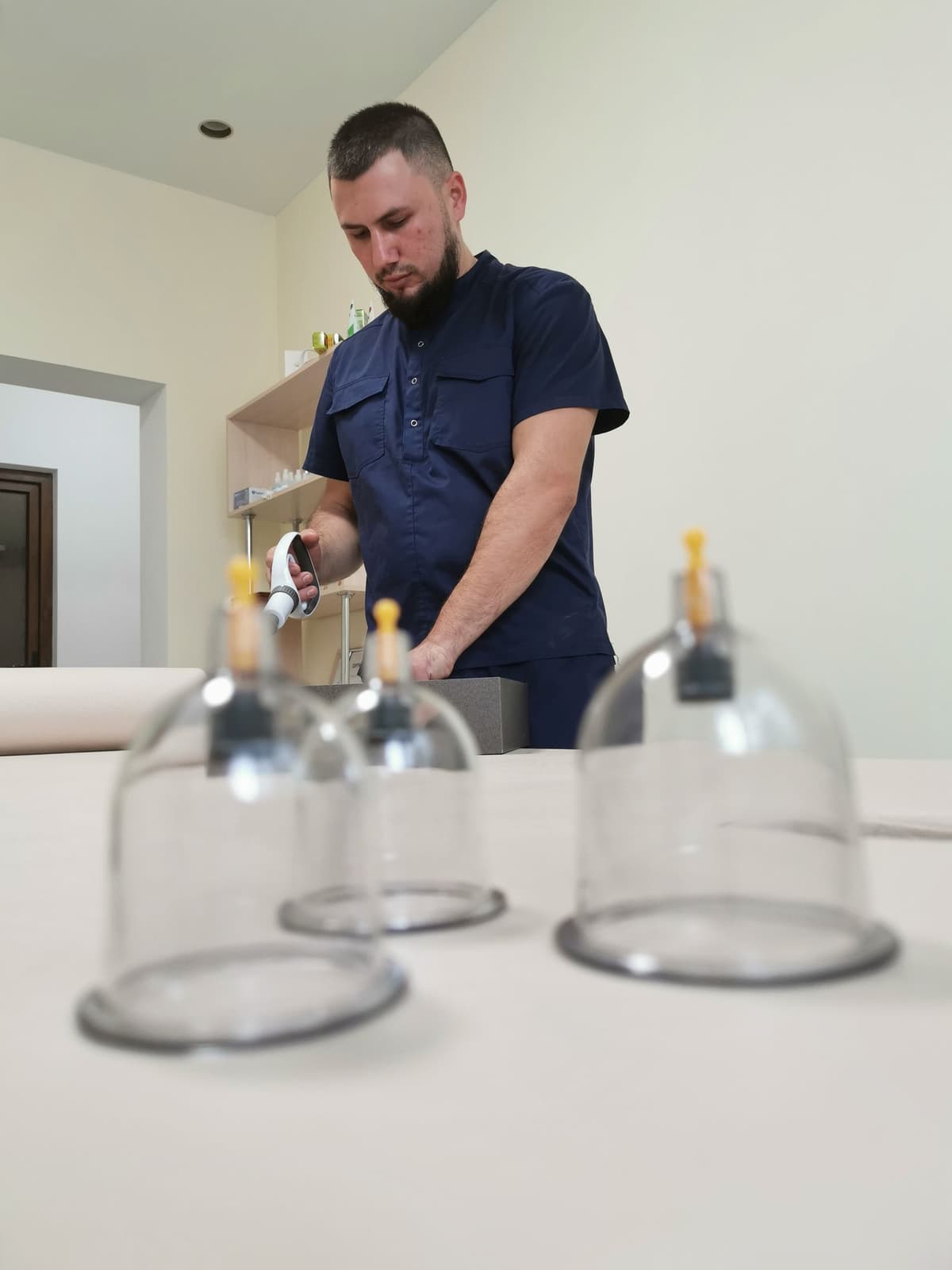
Dry Needling vs Cupping vs Manual Therapy: Which Tool Fits Your Rehab?
Dry needling, cupping, and manual therapy can each reduce pain or improve movement. We choose the tool that creates the best opening for strength and sport-specific work.
By Jason Modafari