BASEBALL INJURIES BEYOND THE THROWING ARM: OBLIQUE, BACK, HIP, GROIN, AND KNEE REHAB
The main point
Baseball rehab also has to prepare athletes to rotate, sprint, field, hit, slide, and handle position-specific lower-body demands.

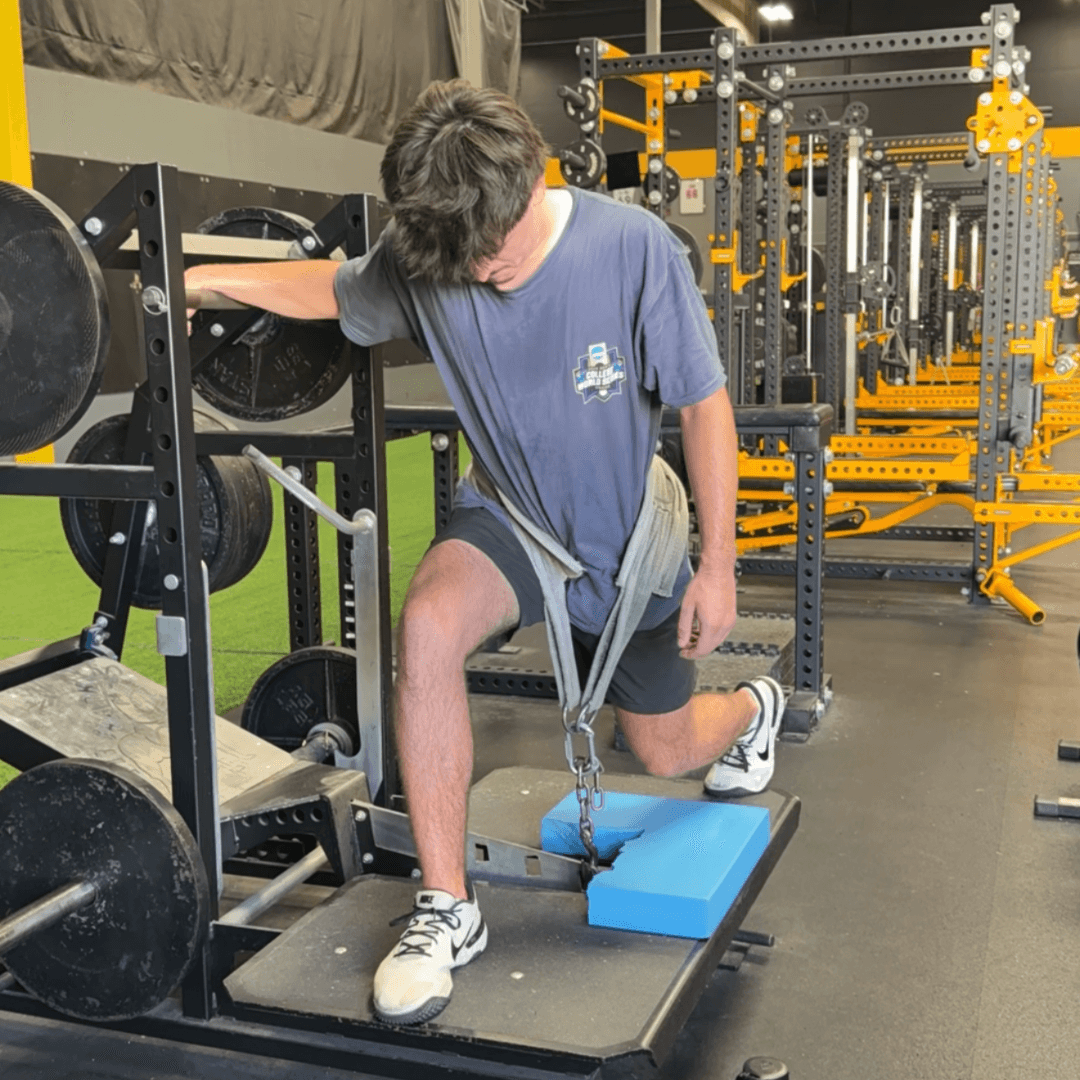
Table of Contents
- The position changes the job
- Oblique and abdominal injuries
- Low back pain in baseball
- Hip and groin pain
- Knee and ACL rehab for baseball
- General fitness is useful, but the final stage must look like baseball
- How we decide what returns first
- Warning signs that need medical review
- Baseball rehab includes the whole player
Baseball injury coverage tends to stop at the shoulder and elbow. The game does not.
A player still has to rotate at high speed, sprint from a standing start, decelerate, change direction, field in low positions, absorb ground contact, slide, and repeat those tasks across a long season. Pitchers have to accept force on the lead leg and control the trunk after ball release. Catchers live in deep hip and knee positions. Position players may go from long periods of low activity into one maximal sprint.
That is why a baseball rehab plan for an oblique, back, hip, groin, knee, or ACL injury needs more than general pain relief.
The position changes the job
“Return to baseball” is too broad to guide rehab.
A catcher needs repeated squatting, blocking, lateral movement, throws from a compact position, and tolerance for a dense game schedule. An infielder needs low fielding positions, fast first steps, crossover movement, and throws from several arm slots. An outfielder needs long sprints, deceleration, and high-intent throws. A pitcher has a repeated single-leg landing and large rotational demand.
The same diagnosis can create different problems across those roles.
Professional baseball injury data support the importance of position. Catchers experience more hip, groin, knee, foot, and head or neck injuries than expected during defensive play, while pitchers carry a larger proportion of shoulder and elbow or forearm injuries (professional baseball position study, 2022).
Oblique and abdominal injuries
An oblique strain can hurt during hitting, throwing, sprinting, coughing, or rolling in bed. The pain often sits near the lower ribs or along the side of the trunk. Because rotation uses the trunk as a force-transfer region, athletes may feel the injury on both offense and defense.
A case series from one Japanese professional organization reported 28 internal oblique strains in 23 players. Most injuries were near the muscle's insertion on the lower ribs. The mean return time was about 28 days, with a wide range, and five players later sustained another internal oblique strain (Komatsu et al., 2022).
That average should not become a deadline. Injury size, exact location, side, batting and throwing demands, symptoms, and the athlete's role all affect the plan.
What oblique rehab needs to restore
Early rehab may use breathing, isometrics, controlled trunk motion, and lower-body training that does not reproduce sharp pain. Loading then expands into:
- resisted rotation and anti-rotation
- force transfer between the hips and trunk
- faster medicine-ball work
- sprinting and change of direction
- swinging and throwing exposure
- repeated efforts under fatigue
A player can feel comfortable during a slow cable rotation and still be underprepared for a full-speed swing. Speed and repetition have to return before competition.
Low back pain in baseball
Back pain can develop during lifting, hitting, fielding, prolonged standing, or repeated extension and rotation. The source may be muscular, joint-related, disc-related, bone stress, or referred from another area. Numbness, progressive weakness, bowel or bladder changes, saddle numbness, fever, or major trauma changes the urgency.
For many athletes, the first useful step is identifying which movements and loads change symptoms. The plan can then keep tolerable training in place while restoring capacity.
A 2026 cross-sectional study of collegiate baseball players found chronic low back pain in 29 of 153 surveyed athletes, with 118 included in the final analysis. Reduced standing trunk flexion and lower lead-leg hip internal rotation were associated with chronic low back pain (Nakao et al., 2026).
Association is not proof of cause. The findings still support examining the hips and trunk instead of treating the painful area in isolation.
What back rehab should include
Depending on the presentation, rehab may rebuild:
- trunk flexion, extension, and rotation tolerance
- hip motion that the athlete needs for the delivery or swing
- heavy hinging, squatting, carrying, and pulling
- unilateral lower-body strength
- sprinting and fielding positions
- rotational power
- volume tolerance across practice and games
The spine is supposed to move and load. The right starting dose depends on the injury and symptoms.
Hip and groin pain
Hip and groin symptoms can come from adductor injury, hip flexor injury, joint irritation, femoroacetabular impingement, core muscle injury, or referred pain. The location and behavior matter. A sharp groin pain during sprinting is a different case from a deep pinch at the bottom of a catcher's squat.
In a professional baseball database covering 2011 through 2014, 1,823 hip and groin injuries accounted for about 5 percent of injuries. Ninety-six percent were extra-articular. Most extra-articular injuries were treated without surgery, while intra-articular problems more often required surgery and much more time away (Coleman et al., 2016).
A clinical review of hip and groin injuries in baseball describes the role of the proximal chain in throwing velocity, control, and bat speed, while covering femoroacetabular impingement, core muscle injury, and osteitis pubis (Mlynarek and Coleman, 2018).
What hip and groin rehab should build
The program may include:
- adductor and hip-flexor strength through several ranges
- hip rotation that fits the athlete's anatomy and position
- single-leg strength and frontal-plane control
- acceleration, deceleration, and lateral movement
- low fielding or catching positions
- rotational force transfer
- sprint volume and game-density exposure
One symmetrical range target does not fit every hip. We care about the motion the athlete has, the motion the task requires, and whether the athlete can control and load it.
Knee and ACL rehab for baseball
Baseball is less reactive than basketball or soccer, but the knee still faces sprinting, cutting, base running, sliding, fielding, landing, and hitting demands. Catchers also accumulate a large amount of deep-knee-flexion exposure.
After ACL reconstruction, restoring knee extension and quadriceps strength comes first. The later stages need baseball-specific work:
- first-step acceleration
- deceleration into a base or fielding position
- crossover and lateral movement
- reactive ground-ball work
- sliding preparation when appropriate
- hitting and throwing while the lower body accepts force
- catching exposure for catchers
Return-to-sport testing should inform the plan, but one hop-test score cannot recreate the field. The athlete needs practice exposure and enough weekly volume to handle the role.
Our ACL rehab guide covers the broader reconstruction process. The baseball-specific layer translates those milestones into the athlete's position.
General fitness is useful, but the final stage must look like baseball
Squats, deadlifts, split squats, presses, rows, carries, and conditioning build a large part of the athlete's base. They are valuable because they create force and capacity in controlled settings.
Competition adds speed, uncertainty, awkward positions, and fatigue. The transition might use sprint progressions, medicine-ball work, fielding drills, base-running exposures, throwing, or hitting according to the injury and role.
Rehab becomes incomplete when the athlete leaves the clinic strong but has not faced the task that caused concern.
How we decide what returns first
The order depends on tissue healing and task stress. An athlete with an oblique strain may tolerate lower-body lifting before swinging. A player after ACL reconstruction may hit off a tee before sprinting or cutting. A pitcher with back pain may perform controlled catch before full-effort mound work.
We choose the next exposure by asking:
- What tissue is healing?
- Which movement or load still causes symptoms?
- What can the athlete train safely now?
- Which strength or motion deficit is limiting the next task?
- What position-specific demand has not been tested?
- How will we measure the response later that day and the next morning?
The answer changes as the athlete progresses.
Warning signs that need medical review
Prompt assessment is appropriate after a traumatic pop, inability to bear weight, large swelling, loss of motion, visible deformity, persistent numbness, progressive weakness, locking, or pain that is worsening despite reducing the provoking load.
Back pain with bowel or bladder changes, saddle numbness, fever, unexplained weight loss, or severe night pain needs urgent medical attention.
Baseball rehab includes the whole player
The throwing arm receives extra attention because its workload is unusual. The rest of the body still has to produce and absorb the forces of baseball.
A useful plan identifies the injured tissue, keeps the athlete training where possible, rebuilds strength and speed, and restores the exact demands of the position. That may end with a bullpen. It may end with a stolen-base effort, a full day behind the plate, repeated ground balls, or a high-intent swing.
Athletic Potential provides baseball physical therapy, ACL rehabilitation, and full-body sports rehab in Kent, Washington and Tampa, Florida. Book a free consultation to tell us about the injury and the position you need to play.
THE NEXT STEP
Find the clinical or performance path that best matches your injury and sport.
Explore Sports RehabRELATED POSTS
Workload, Fatigue, and Pain: What to Track Before Adding More
Training numbers are useful, but they do not tell the whole story. Combine workload, recovery, symptoms, and performance when adjusting a rehab or throwing plan.
 By Dylan Newcomer
What Does a UCL Injury Feel Like?
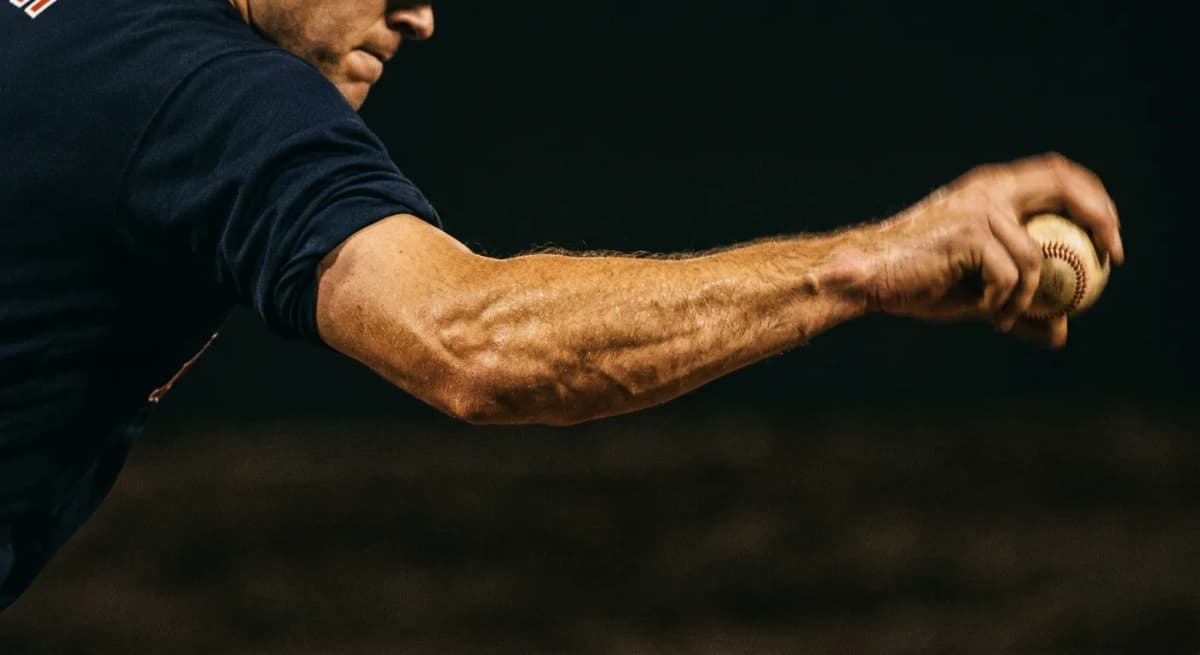
UCL pain is usually felt on the inside of the throwing elbow, but location alone cannot tell you whether the ligament is irritated, partially torn, or the wrong suspect entirely.
By Dylan Newcomer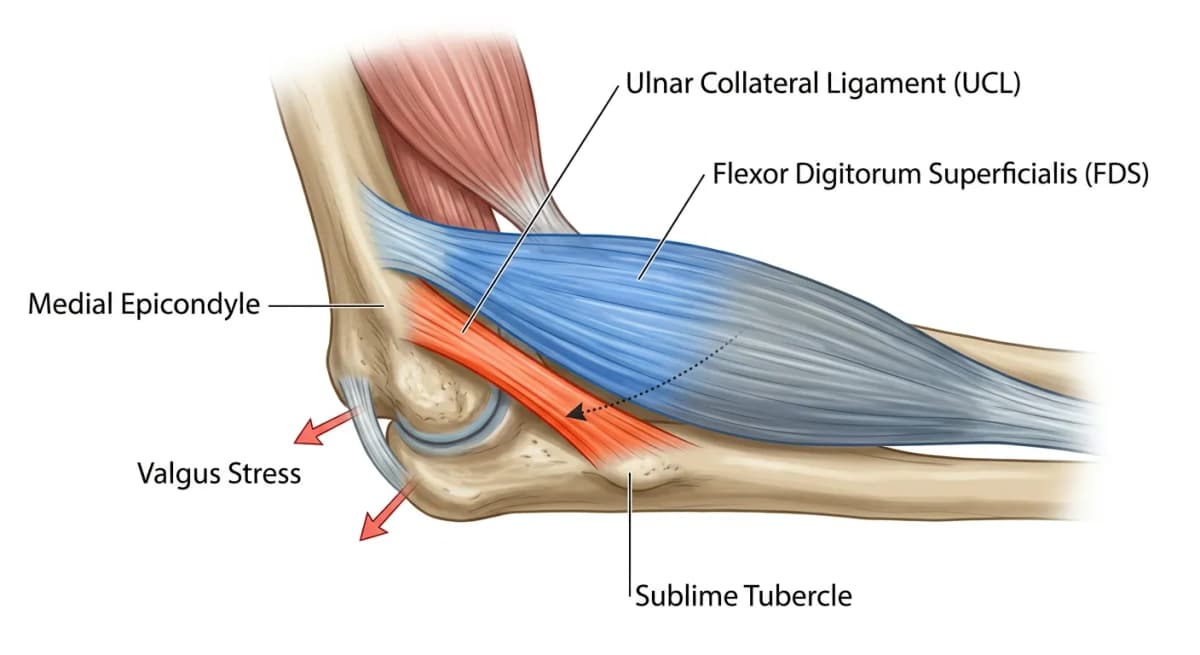
Can a Partial UCL Tear Heal Without Surgery?
Some partial UCL tears can return to high-level throwing without surgery. Tear location, tissue quality, symptoms, timing, and the demands of the athlete all change the answer.
 By Jason Modafari