ARPWAVE THERAPY IN SPORTS REHAB: HOW WE USE ELECTRICAL STIMULATION
The short version
ARPwave pairs electrical stimulation with active movement. We use it to improve muscle recruitment, reduce pain-limited movement, and help athletes produce better work during rehab.

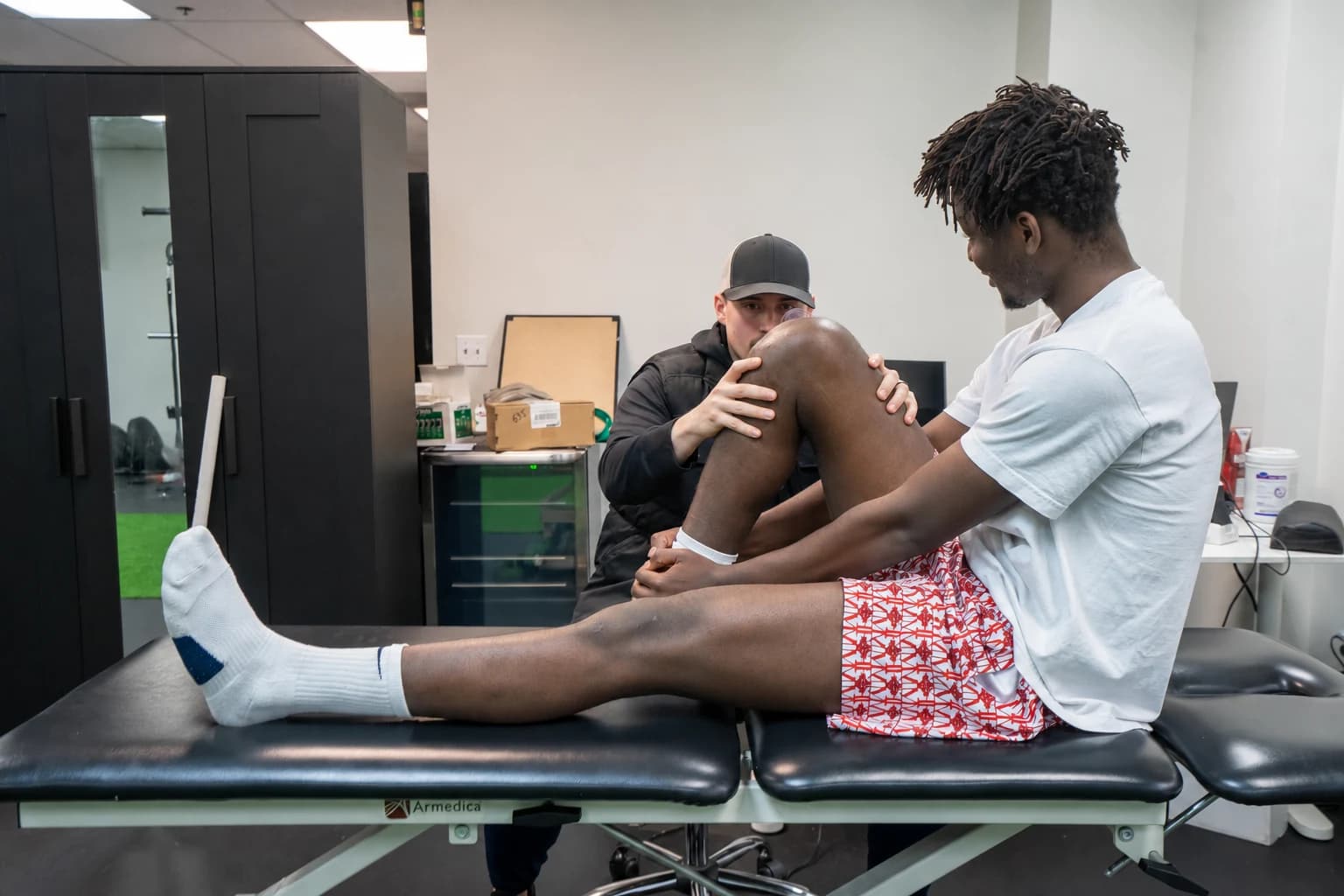
Sometimes an athlete knows exactly what to do and still can't get a muscle to produce. The quadriceps stays quiet after knee surgery. A painful calf won't accept force. A guarded shoulder loses strength as soon as it reaches the position that matters.
ARPwave gives us another way into that problem. The device delivers electrical stimulation through skin electrodes while the patient moves, contracts, or performs an exercise. We can pair a strong external signal with active effort and coach the movement in real time.
The goal is better output. A stronger contraction, a less painful pattern, or access to a range the athlete was avoiding gives us something useful to train.
What the Session Involves
Electrodes are placed on the skin and the current creates a sensory or muscular response. Placement, intensity, body position, and the exercise all change according to the goal. Jason may pair the stimulation with active motion, isometrics, or loaded strength work.
Sessions can feel intense, but the patient remains part of the process. The current supplies an extra stimulus while the athlete works against it, through it, or with it. That active pairing is one reason we find it more useful than putting stimulation on a muscle while someone lies still.
The sensation can be strong and is not appropriate for every person. Medical history, implanted electronic devices, skin condition, sensation, and other contraindications must be screened.
Why Electrical Stimulation Can Help
Neuromuscular electrical stimulation, or NMES, depolarizes motor nerves beneath the electrodes and creates a muscle contraction. It also sends a large amount of sensory information back toward the spinal cord and brain. Those peripheral and central inputs may help explain why stimulation can affect both muscle output and motor control.
Electrical stimulation also recruits muscle differently from a voluntary contraction. Depending on the setup, it can bring motor units into the contraction that the patient is struggling to access on command. That makes it useful when pain, swelling, surgery, or guarding has lowered voluntary output.
The clinical research supports the broader category. A 2025 systematic review after ACL surgery found better quadriceps strength when NMES was added to standard rehabilitation, with the largest effect when it started early. A review in trained athletes also found potential strength and performance benefits across varied protocols.
What ARPwave Adds to the Session
Traditional NMES is often used for repeated contractions in a fixed position. ARPwave can be paired with movement, which lets us challenge a muscle in the pattern where the athlete loses force or confidence.
For a knee, that may mean quad sets followed by squats or step-downs. For a calf, we may combine stimulation with an isometric hold and then a loaded heel raise. Around the shoulder, the current can accompany controlled rotation or strength work through a painful range.
The immediate feedback is valuable. We can see whether the athlete produces more force, reaches farther, or performs the task with less pain. If the response is good, the rest of the session builds on it.
Where the Evidence Boundary Sits
Independent peer-reviewed research on the branded ARPwave system remains limited. The stronger evidence belongs to NMES as a category, so we ground our use in what electrical stimulation is known to do and in the response we can measure during care.
We don't need a claim that the device finds the hidden source of every injury. A better contraction, less painful movement, and more productive training are worthwhile outcomes on their own.
Where It May Fit
ARPwave may be useful when pain, inhibition, or poor muscle recruitment makes it difficult to produce a strong contraction. It can also add a demanding stimulus without requiring a large external load, which may be useful early after surgery or during a sensitive stage of rehab.
We test the response. Did force improve? Did the athlete tolerate a movement that was previously limited? Could we complete better strength work afterward? Those answers decide how much space ARPwave earns in the plan.
Why Settings and Dosage Matter
Electrical-stimulation studies vary in waveform, frequency, pulse duration, duty cycle, electrode placement, intensity, and whether the patient exercises at the same time. Those choices influence force, fatigue, comfort, and the sensory response.
A light tingling sensation and a strong muscle contraction are different doses. We choose the dose for the job, then adjust it around the patient's tolerance and the quality of the movement.
What We Measure During a Trial
The target depends on the problem. After knee surgery, it may be quadriceps force or the ability to perform a better loaded squat. With an inhibited calf, it may be heel-raise output. For pain-limited movement, it may be a specific task before and after treatment.
We care about carryover. A stronger contraction while the current is running is useful. Repeated sessions should also improve voluntary force, movement, and function when the device is off.
Safety and Fit
A device should not be used simply because it is available. Skin intolerance, altered sensation, certain implanted electrical devices, pregnancy-related precautions, and other medical factors may change safety. The clinician should follow device guidance and screen the individual rather than relying on a generic list online.
It also should not delay imaging, medical review, or another diagnosis when progressive weakness, significant trauma, neurologic change, or systemic symptoms are present.
Carry the Gain Into Sport
ARPwave works best when it improves the quality of active rehab. We may use it to find a stronger contraction, make movement more tolerable, or add a different challenge to an exercise. Then the athlete carries that output into lifting, running, jumping, or throwing.
Athletic Potential provides one-on-one care in Kent, Washington and Tampa, Florida. We use ARPwave when the response earns it a place in the plan and keep the larger goal in view: stronger movement that holds up without the machine.
THE NEXT STEP
See how hands-on treatment, progressive strength work, and return-to-sport planning fit into one rehabilitation process.
Explore Sports Physical TherapyRELATED POSTS
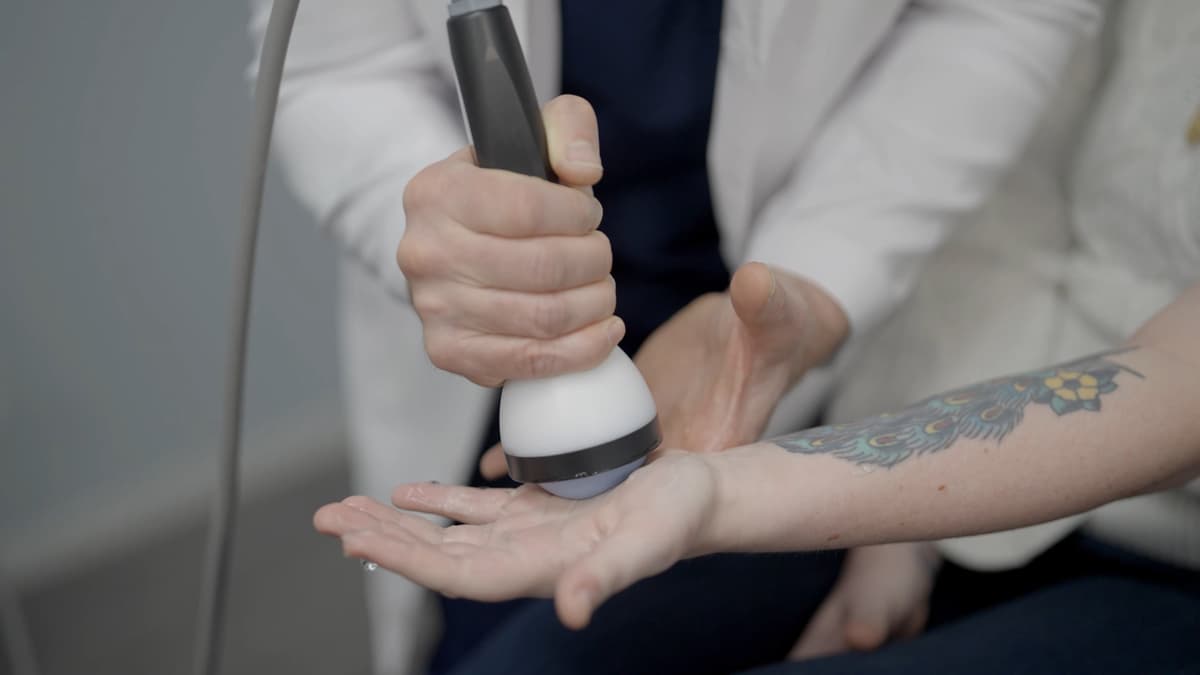
Shockwave Therapy for Tennis and Golfer's Elbow
Shockwave can reduce persistent elbow tendon pain and improve grip tolerance. We combine it with wrist, grip, and forearm loading that prepares the arm for work or sport.

 By Dylan Newcomer and Jason Modafari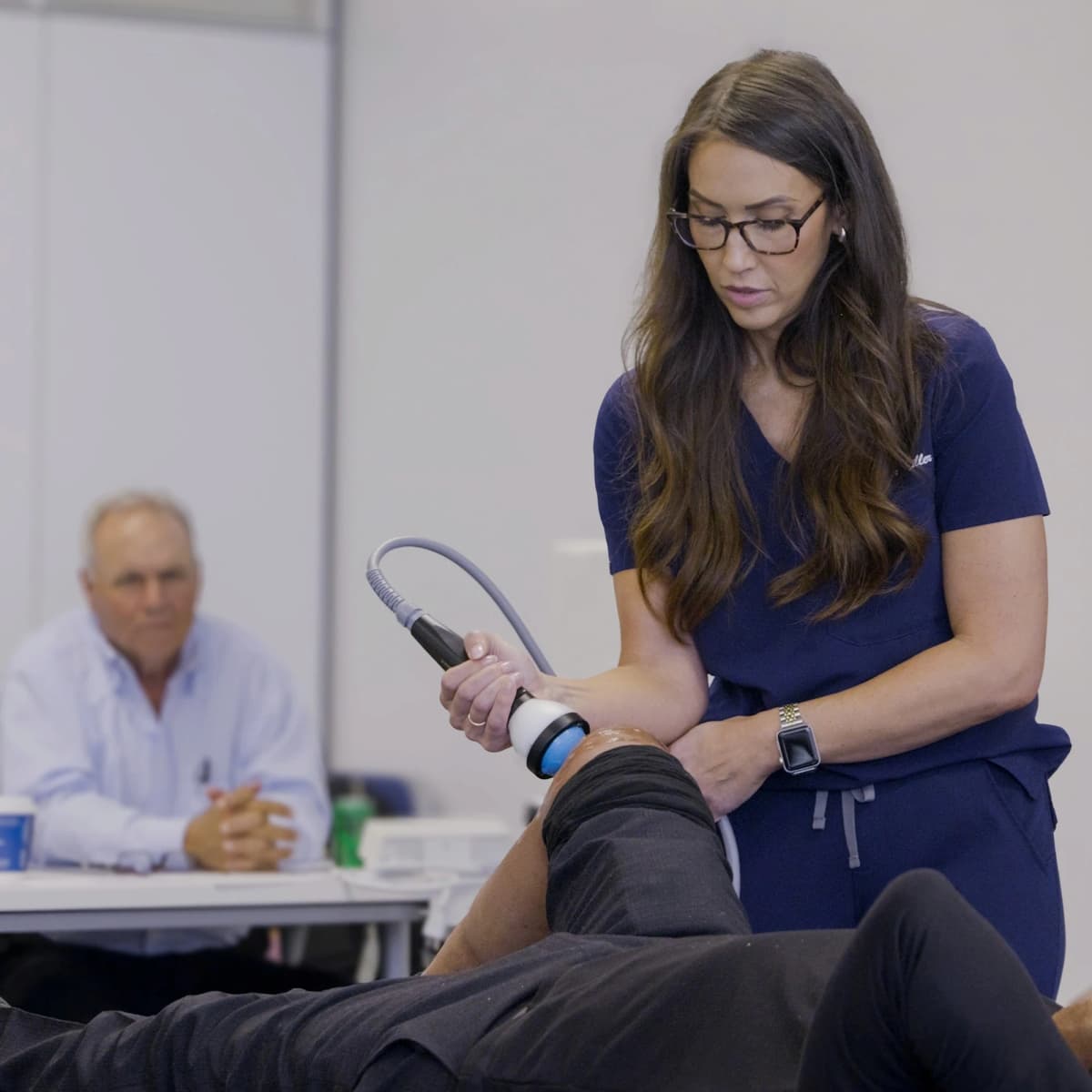
Shockwave Therapy for Achilles and Plantar Fascia Pain
Shockwave can reduce pain and improve function in selected Achilles and plantar heel conditions. We pair it with calf, foot, and running progressions so the relief carries into daily life and sport.
By Dylan Newcomer and Jason Modafari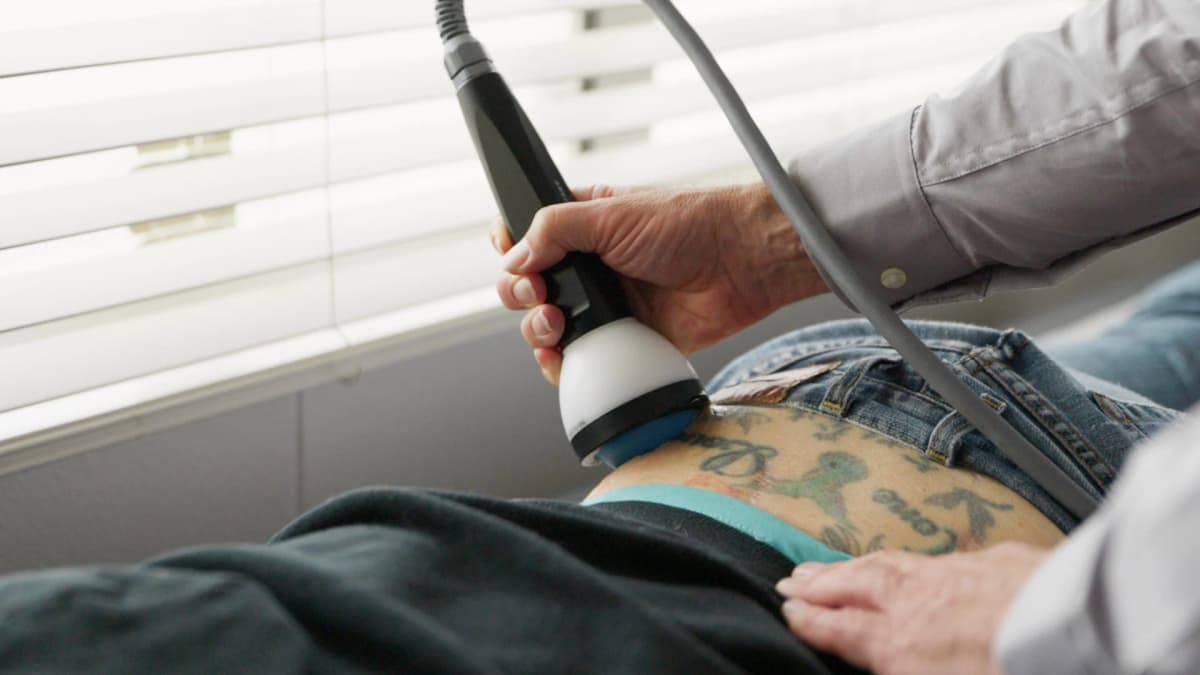
Shockwave Therapy for Chronic Tendon Pain: How It Can Restart Progress
Shockwave gives a stubborn tendon a focused mechanical stimulus that may reduce pain and support tissue remodeling. We pair it with progressive loading to turn symptom change into better function.
By Dylan Newcomer and Jason Modafari