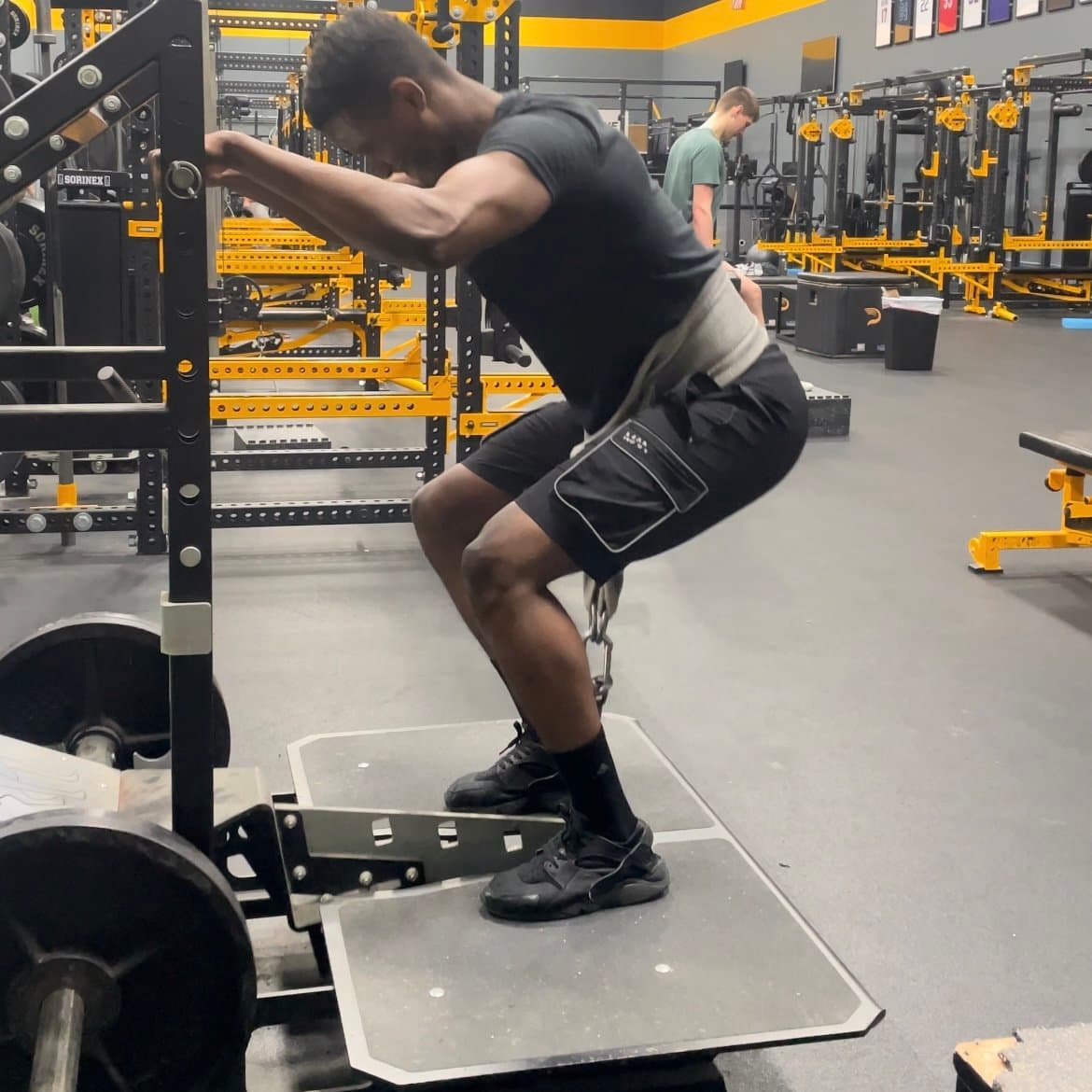
REHAB THAT LOOKS LIKE TRAINING.
Getting hurt changes how you train. It rarely means you stop. We build modified, progressive programs that keep you strong while the injury heals, so returning to full training doesn't start with months of rebuilding what you lost.
Book a Free Consult“Just Rest” Is Bad Advice
Here is what complete rest after an injury actually does: you lose muscle and cardiovascular fitness, your joints stiffen, and your tolerance for load drops. When you finally try to come back 6, 8, 12 weeks later, you are weaker than when you got hurt, so now you have the original injury plus the deconditioning stacked on top of it.
The research on early, controlled loading is consistent: it accelerates tissue healing. Tendon remodels in response to tension, muscle maintains itself in response to stimulus, and joints tolerate more when they move regularly, none of which complete rest provides.
The reasonable middle ground is a deload: reduced load and modified exercise selection while the injured tissue settles, with everything else still training. That is what we program.
WHAT “REST” ACTUALLY COSTS YOU
Our Philosophy
Rehab Is Training in the Presence of an Injury
In practice, that means a shoulder injury gets you a complete training program, with the shoulder as one piece of it. Your legs and core keep training at full capacity, your conditioning continues, and the injured area gets its own progression, loaded at what it can tolerate today and advanced week over week as the tissue adapts.
By the time the injury resolves, your squat, your work capacity, and your conditioning have kept moving the whole time, which means the day you're cleared is a return to sport, not the start of getting back in shape.
What Training Around an Injury Looks Like
Every injury is different, but the principle is the same: find what you can do, and do it well.
Shoulder Injury
What you can still do:
- +Squat and deadlift variations
- +Single-leg work (lunges, step-ups, split squats)
- +Core training (planks, Pallof press, carries)
- +Cardio (bike, running, rowing with modification)
- +Modified pressing (neutral grip, limited ROM)
Your legs, core, and conditioning do not need to suffer because your shoulder is irritated.
Knee Injury
What you can still do:
- +Upper body pressing and pulling
- +Hip hinge movements (RDLs, hip thrusts)
- +Isometric quad work at tolerable ranges
- +Core and rotational training
- +Upper body conditioning (battle ropes, sled push with arms)
Knee injuries are frustrating, but half your body is completely unaffected. Train it.
Low Back Pain
What you can still do:
- +Machine-based leg work (leg press, leg curl)
- +Upper body training (most movements tolerated)
- +Walking and light cardio
- +McGill Big 3 and progressive core stability
- +Hip mobility work and glute activation
Back pain responds well to movement. The worst thing you can do is stop moving entirely.
The Rest-Only Path vs. The Train-Through Path
Doctor says "rest for 6 weeks"
We identify what you CAN train and build a program around it immediately
Lose strength, gain weight, feel terrible
Maintain fitness in unaffected areas while injured tissue heals
Return to training deconditioned and fragile
Return to full training already strong, with the injury resolved
Re-injure yourself because you lost the base
Build toward a more resilient return by maintaining what you safely can
The Mental Side of Getting Hurt
If you train regularly: lifting, playing sports, running, or just staying active. An injury lands harder than the physical damage alone. Training is your routine, your stress relief, and for many people a genuine piece of identity. Take it away for two months and you feel like a different person.
There's the anxiety about losing progress, the frustration of watching your training partners carry on without you, and the quieter worry that this might be the injury that sidelines you for good. Those responses are normal, and they make the physical problem harder to solve when they go unaddressed.
Keeping you in the gym addresses both problems at once. Training in modified form maintains your routine and your sense of yourself as an active person while the tissue heals, and in our experience, that does as much for adherence and recovery as any individual exercise selection.
A modified program is still a program: sets, loads, and progressions tracked week to week, with the injured area rebuilt alongside everything else. You stay a person who trains. The injury just becomes one variable in the plan.
This Is For You If
You got injured and refuse to just sit on the couch for 6 weeks
You have been told to "stop lifting" and want a second opinion
You are post-surgery and want to maintain as much fitness as possible during recovery
You are dealing with a nagging issue that flares up every time you train
You are afraid of re-injury and want someone to help you build back with confidence
You are an active adult who values training and refuses to accept "just take it easy"
Common Questions
Training After Injury
Related Pages
Active Adults
PT for hikers, gym-goers, parents, and anyone who wants to move without pain.
Learn more →Weekend Warrior Rehab
Strength work for the rec league competitor whose weekly training does not match their weekend intensity.
Learn more →Online Strength Programming
Post-rehab or healthy. Individualized programming from PTs who understand your body.
Learn more →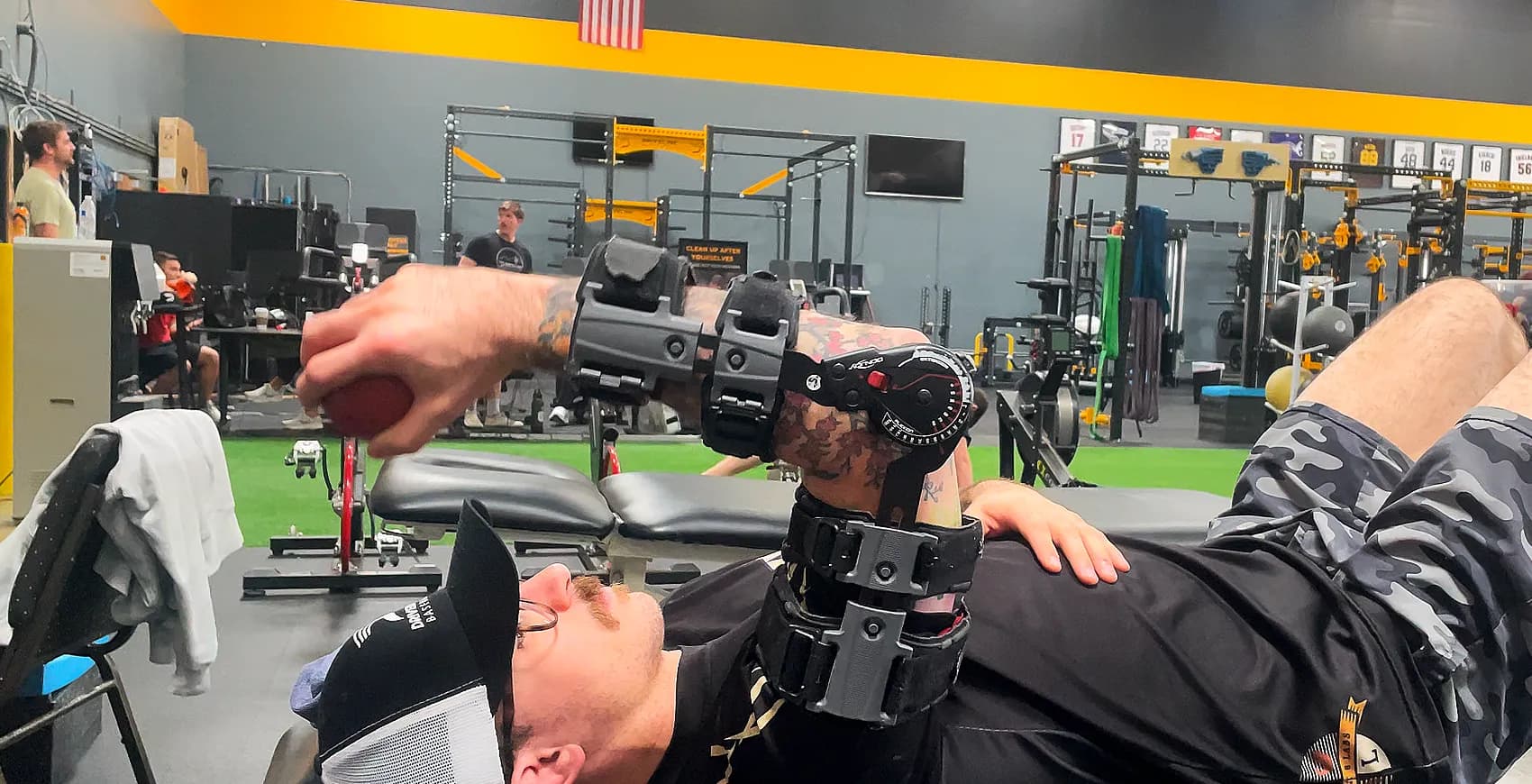
KEEP THE STRENGTH YOU BUILT.
An injury does not have to derail your training. Book a free 15-minute call and we'll map out what you can load right now, what needs to be modified, and how the injured area gets rebuilt alongside it.
Book a Free Consult