FOREARM PAIN WHILE PITCHING: UCL, FLEXOR, OR SOMETHING ELSE?
The short version
Pain below the inside of the elbow can come from the flexor-pronator group, UCL, ulnar nerve, or overlapping injuries. The pattern and loading tests matter more than the label.

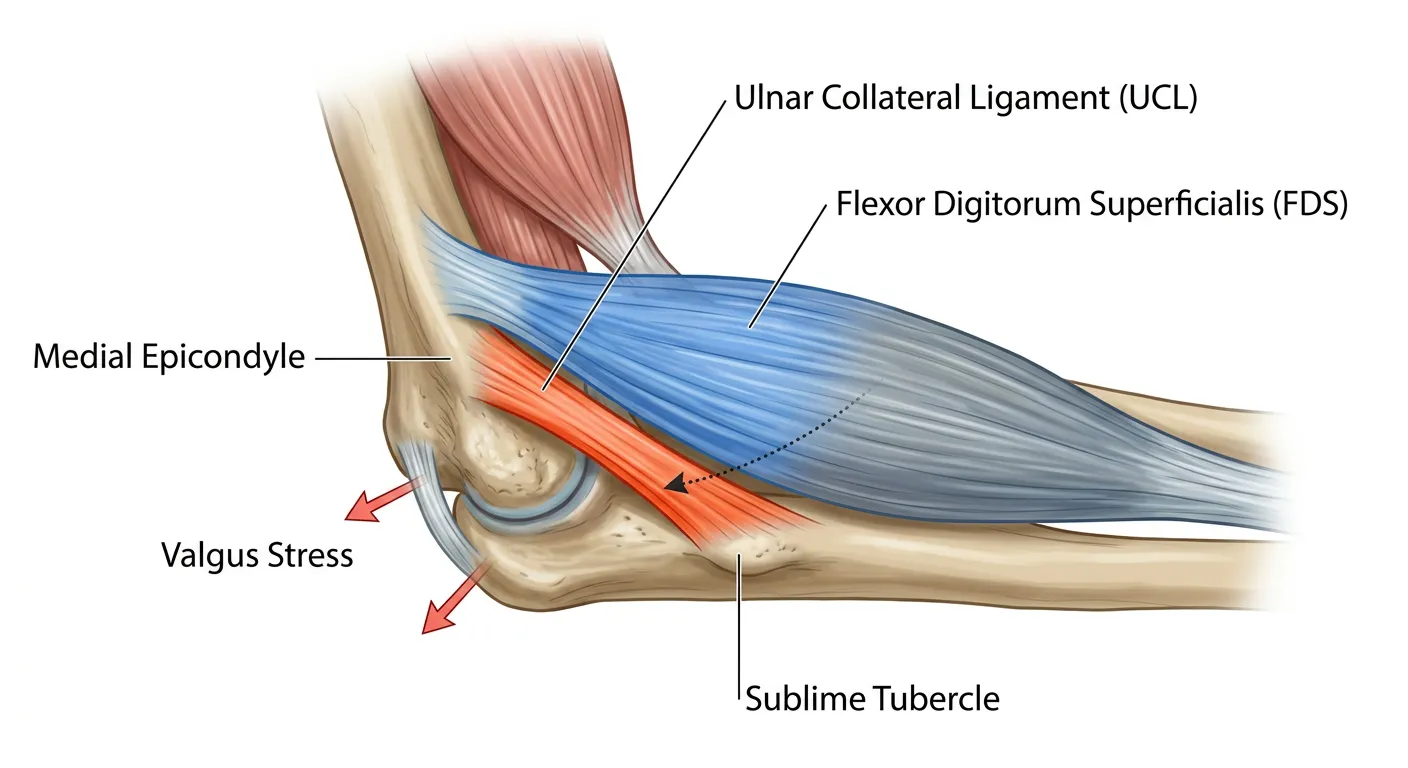
Pitchers often point a few inches below the medial epicondyle and call it forearm tightness. Sometimes that is accurate. Sometimes the pain sits next to a UCL injury. Sometimes both tissues are involved.
The anatomy is crowded, and throwing loads the structures together. Guessing from location alone is unreliable.
The Flexor-Pronator Pattern
The flexor-pronator mass originates near the inside of the elbow and helps flex the wrist and fingers, pronate the forearm, and dynamically stabilize against valgus stress.
A muscular or tendinous problem may hurt with resisted wrist flexion, finger flexion, or pronation. Tenderness may sit in the muscle mass rather than directly along the ligament. Symptoms can worsen with gripping or repeated throws.
That still does not rule out the UCL. The flexor-pronator group can be injured alongside the ligament, and it may become symptomatic because it is working harder to stabilize an insufficient elbow.
The UCL Pattern
UCL symptoms often localize closer to the ligament between the medial epicondyle and ulna. Pain may appear as the arm reaches maximum external rotation or as throwing intent rises. Instability, a pop, lost velocity, and pain with valgus stress increase concern.
The UCL symptom guide explains this pattern, but no one symptom confirms a tear.
The Ulnar Nerve Pattern
Burning, electric pain, tingling into the ring and small fingers, or symptoms triggered by sustained elbow flexion bring the ulnar nerve higher on the list. Some athletes feel the nerve move over the medial epicondyle.
Ulnar nerve subluxation may be painless, so the snap itself is not enough. The evaluation should identify whether the nerve is irritated and whether another elbow injury is contributing.
Why Testing the Whole Arm Matters
We compare grip, finger and wrist flexion, pronation, elbow strength, shoulder force, and motion. We use ligament stress tests and neurologic screening. We also ask exactly when symptoms appear in the delivery and what workload preceded them.
Imaging may help when a ligament tear, stress injury, or significant tendon injury is suspected. The scan still needs clinical context. Throwing athletes can have adaptive findings that are not the current pain source.
Injury Location Changes the UCL Conversation
If imaging confirms a partial UCL tear, proximal and distal injuries do not carry the same nonoperative prognosis. A 2023 meta-analysis found much higher return rates for proximal than distal tears. The grade, chronicity, tissue quality, and stability still matter.
That is why “small tear” is not enough information. A small injury in an unfavorable location may behave worse than a larger but repairable pattern elsewhere.
Workload History Often Reveals the Trigger
We count more than game pitches. Warm-up throws, long toss, flat grounds, pull-downs, position-player throws, and high-intent drills all contribute. A pitcher may report no pitch-count violation while his total weekly high-intent volume has changed sharply.
Recent velocity gains matter too. More speed generally means more elbow torque. Tissue may be healthy yet underprepared for the new output.
Red Flags That Need Prompt Review
A pop, bruising, major loss of velocity, obvious instability, persistent numbness, hand weakness, or inability to straighten the elbow warrants prompt assessment. Younger throwers with medial pain also require attention to the growth plate.
Continuing to test these symptoms with full-intent throws adds risk without clarifying the diagnosis.
What Rehab Looks Like
For an isolated flexor-pronator issue, rehab usually progresses from symptom-tolerable isometrics to heavier wrist, finger, and pronation work, then faster contractions and a throwing progression. Shoulder, trunk, and lower-body training continue.
If the UCL is involved, injury location and stability influence whether nonoperative UCL rehab is reasonable. Neurologic findings may require additional medical assessment.
The return to throwing should rebuild volume and intensity separately. Pain-free wrist curls do not prove readiness for high-velocity pitching.
When to Stop Guessing
Persistent medial forearm pain, recurrent symptoms at higher intent, weakness, tingling, a pop, or performance loss deserves a baseball-specific evaluation. The purpose is not to attach the scariest label. It is to distinguish tissues that need different decisions.
Athletic Potential evaluates throwing elbow pain and builds the strength and workload progression back to pitching in Kent, Washington and Tampa, Florida.
THE NEXT STEP
Compare the major causes of throwing-elbow pain and see how testing guides treatment and return to play.
Explore Throwing Elbow RehabRELATED POSTS
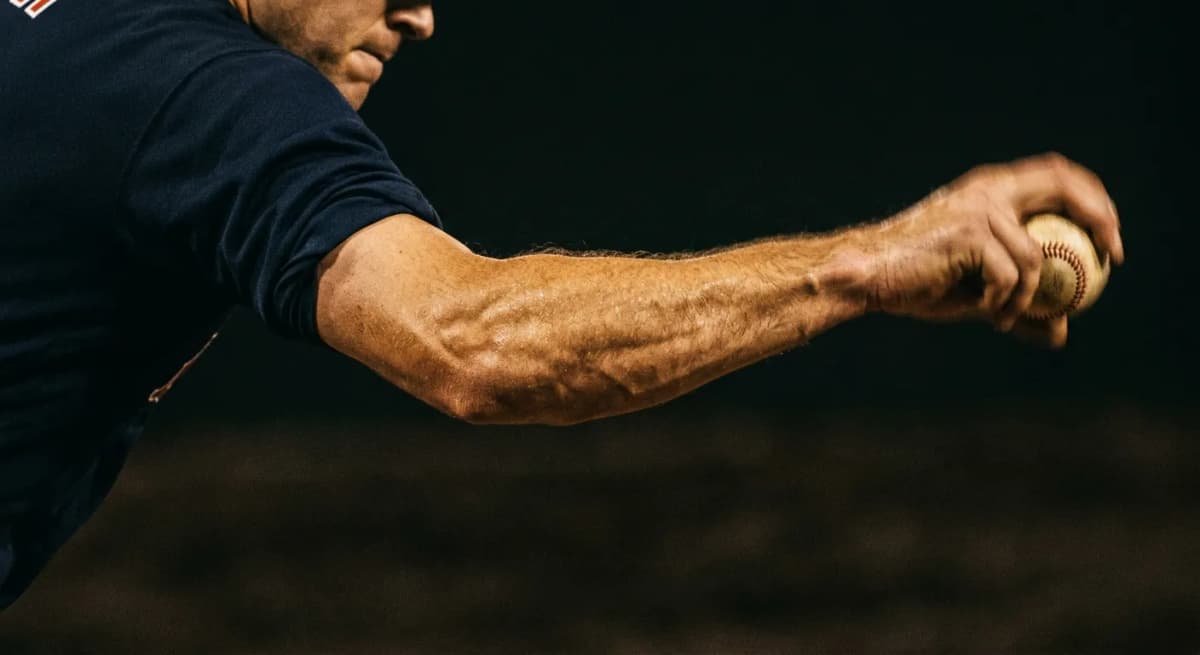
What Does a UCL Injury Feel Like?
UCL pain is usually felt on the inside of the throwing elbow, but location alone cannot tell you whether the ligament is irritated, partially torn, or the wrong suspect entirely.
 By Dylan Newcomer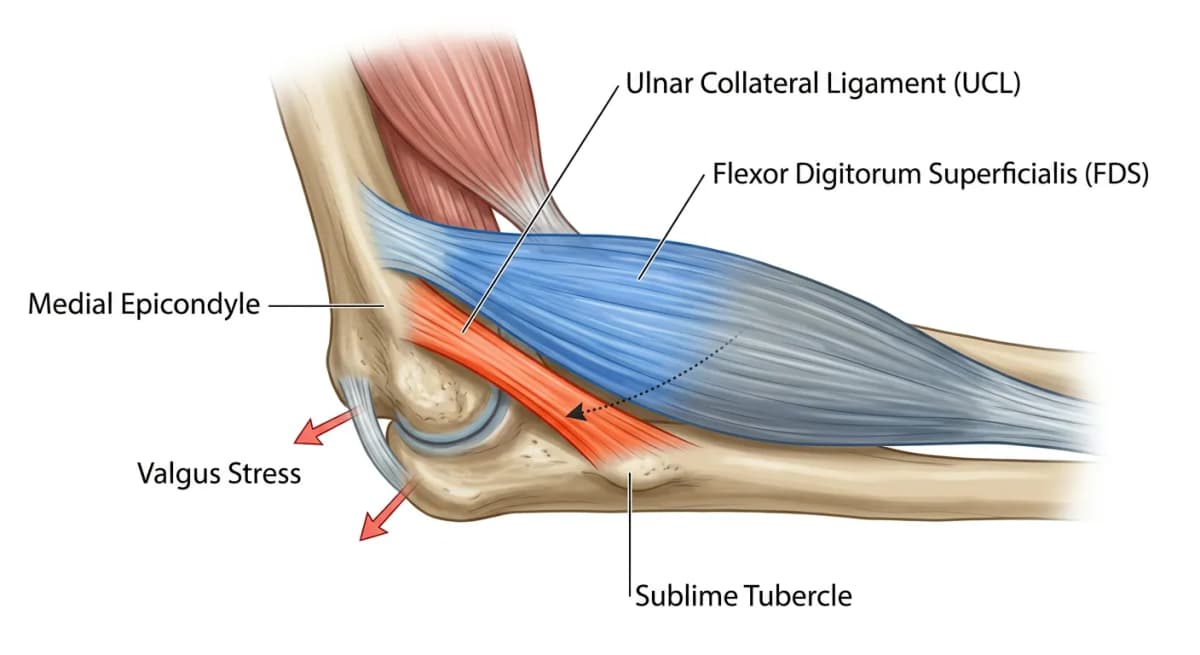
Can a Partial UCL Tear Heal Without Surgery?
Some partial UCL tears can return to high-level throwing without surgery. Tear location, tissue quality, symptoms, timing, and the demands of the athlete all change the answer.
 By Jason Modafari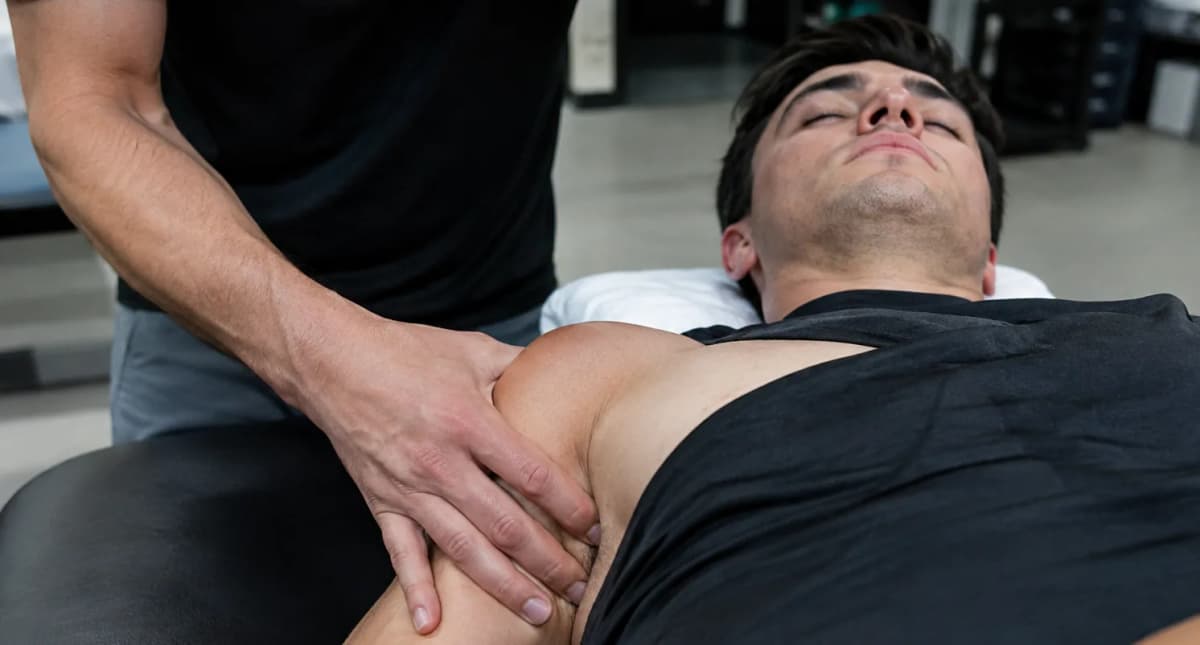
Dry Needling for Throwing Shoulder Pain: Creating a Better Window to Train
Dry needling can reduce pain and guarding in a throwing shoulder, improve motion, and make strength work more productive. We use that response inside a full return-to-throwing plan.
By Jason Modafari