UCL REHAB WITHOUT SURGERY: WHAT DOES IT ACTUALLY LOOK LIKE?
The short version
Nonoperative UCL rehab is a criteria-based progression from calming the elbow to heavy strength work, plyometrics, throwing, mound exposure, and proof that the arm can recover.

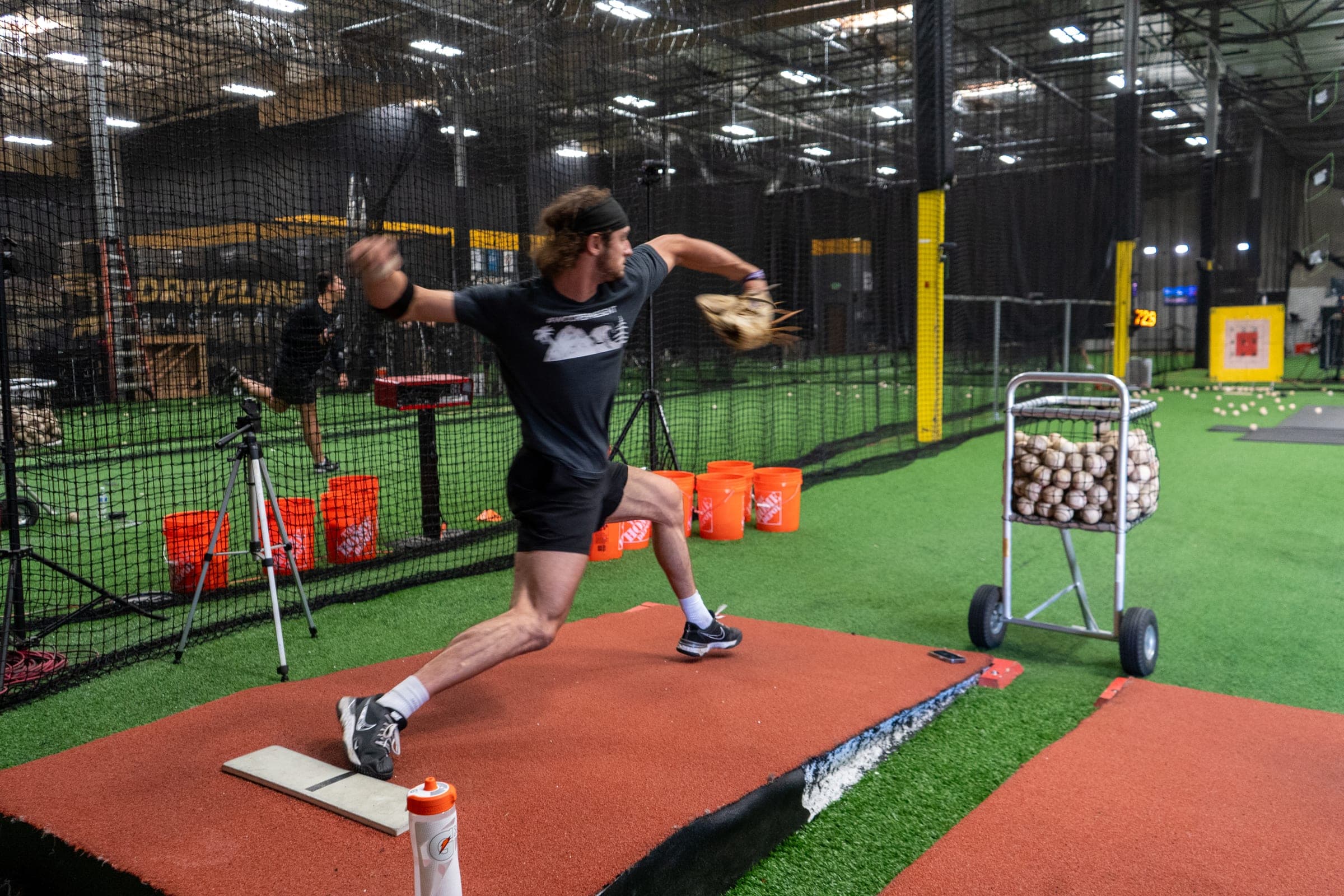
Table of Contents
- First, Make Sure Nonoperative Care Fits the Injury
- Phase 1: Settle Irritability Without Deconditioning the Athlete
- Phase 2: Build the Structures That Share the Load
- Phase 3: Add Speed Before Throwing
- Phase 4: Earn the Start of Throwing
- Phase 5: From Catch Play to Pitching
- What About PRP?
- How Long Does It Take?
The worst nonoperative UCL plan is also the most common: stop throwing, wait until the elbow feels better, and then start throwing again.
That sequence may remove the thing that hurts. It does not change why the arm could not tolerate throwing in the first place.
A serious plan treats rest as a short-term tool, not the intervention. The work is rebuilding capacity from the hand to the ground and then exposing that system to throwing in doses it can adapt to.
First, Make Sure Nonoperative Care Fits the Injury
Before mapping out exercises, we need a defensible diagnosis. Injury grade and location matter. So do instability, tissue quality, neurologic symptoms, the athlete's position, and the time available.
In a 2023 meta-analysis, nonoperative care produced an overall return-to-sport rate near 80 percent. Proximal tears returned far more often than distal tears. Those results support conservative care for selected athletes, not for every UCL image.
The initial plan should include communication with sports medicine or an orthopedic surgeon when the injury is significant. Rehab and surgical consultation are not competing paths. A good medical team can pursue conservative care while keeping the decision points clear.
Phase 1: Settle Irritability Without Deconditioning the Athlete
Early goals are straightforward: protect the healing tissue, regain comfortable motion, and keep the rest of the athlete trained.
Throwing usually pauses. Painful valgus loading and aggressive stretching are reduced. Elbow flexion and extension progress within the tissue's tolerance. Lower-body strength, aerobic conditioning, and nonprovocative trunk work can often continue immediately.
The arm does not need to be treated as fragile. It needs the correct dose. Early isometrics for wrist flexion, finger flexion, pronation, elbow flexion, and shoulder rotation can maintain force without asking the ligament to absorb a pitch.
Criteria to move forward may include low and stable symptoms, improving motion, no worsening neurologic signs, and tolerance of early resistance without a next-day flare.
Phase 2: Build the Structures That Share the Load
The UCL does not work alone. The flexor-pronator mass contributes dynamic stability, while the shoulder, trunk, and lower body affect how force reaches the elbow.
This phase should progress beyond light bands. We load finger and wrist flexion, pronation, grip, elbow flexion and extension, shoulder rotation, rowing and pressing patterns, and scapular control. We train the lower body hard enough to matter. We also restore individual shoulder motion rather than chasing a generic symmetry target that ignores throwing adaptations.
Research on the throwing elbow supports the importance of the muscular system. A 2021 biomechanics review described how the flexor-pronator group and joint compression help account for the difference between measured pitching torques and the lower failure loads seen in isolated cadaveric ligaments.
This does not mean stronger muscles make the ligament invincible. It means a rehab plan that ignores them is incomplete.
Phase 3: Add Speed Before Throwing
Pitching is fast. A slow strength test cannot tell us everything about the arm's ability to accept and redirect force at game speed.
We introduce medicine-ball work, upper-extremity plyometrics, perturbations, rapid forearm actions, and deceleration drills. The dosage starts well below failure. Quality and next-day response determine progression.
This is also where we examine whether the athlete can produce force without compensating through the elbow. A trunk or lower-body deficit may not be the singular cause of a UCL injury, but it still influences the demands placed on the arm and deserves training.
Phase 4: Earn the Start of Throwing
“Six weeks have passed” is not a return-to-throw criterion.
Before throwing, we want acceptable pain, stable motion, force measures that make sense for the athlete, tolerance of fast arm work, and no concerning response to cumulative training. The exact benchmarks change with position and level.
The first throwing sessions are deliberately unremarkable. Easy catch. Controlled volume. Clear intent targets. Enough rest to see the full response. We change one major variable at a time instead of increasing distance, throws, and effort together.
If the athlete cannot recover from low-intensity catch, the answer is not to force the calendar forward. It is to determine whether the dose was wrong, the tissue still lacks capacity, or the original diagnosis needs another look.
Phase 5: From Catch Play to Pitching
A pitcher must progress through more than distance throwing. High-intent flat grounds, mound work, pitch design, bullpens, live hitters, and game innings all create different demands.
Velocity is useful because it makes intent visible. Workload data helps us compare the current week with what the arm has recently tolerated. Neither number replaces the athlete's response. Pain during throwing, loss of command, altered movement, and prolonged soreness are all information.
Read our complete return-to-throwing guide for how we organize intensity and volume. The question at every step is the same: did the athlete tolerate the work and recover in time to repeat it?
What About PRP?
Some physicians use PRP for partial UCL injuries. A 2024 systematic review found a 75 percent return-to-sport rate across five studies, but also found substantial variability and poor study quality. The 2023 meta-analysis did not find a significant return-to-sport advantage for programs that included PRP.
That evidence leaves room for individualized medical decisions. It does not justify selling an injection as the solution. Rehab still has to build capacity and prove it through throwing.
How Long Does It Take?
There is no responsible universal timeline. A low-grade proximal injury caught early may move faster than a distal partial tear with months of symptoms. A position player and starting pitcher do not need the same endpoint.
Timelines help organize expectations. Criteria protect the athlete when the calendar and the tissue disagree.
The decision to continue nonoperative care should be revisited if symptoms persist, throwing stalls repeatedly, or performance cannot return. That may lead to a surgical opinion and a discussion of repair versus reconstruction. Until then, the plan should be active, measurable, and built around the actual demands of baseball.
Athletic Potential provides nonoperative UCL rehabilitation and throwing progression in Kent, Washington and Tampa, Florida. The aim is not merely to avoid surgery. It is to return an athlete to a level of throwing his elbow can repeatedly support.
THE NEXT STEP
See how diagnosis, tissue capacity, medical options, and throwing progression fit together after a UCL injury.
Explore UCL RehabRELATED POSTS
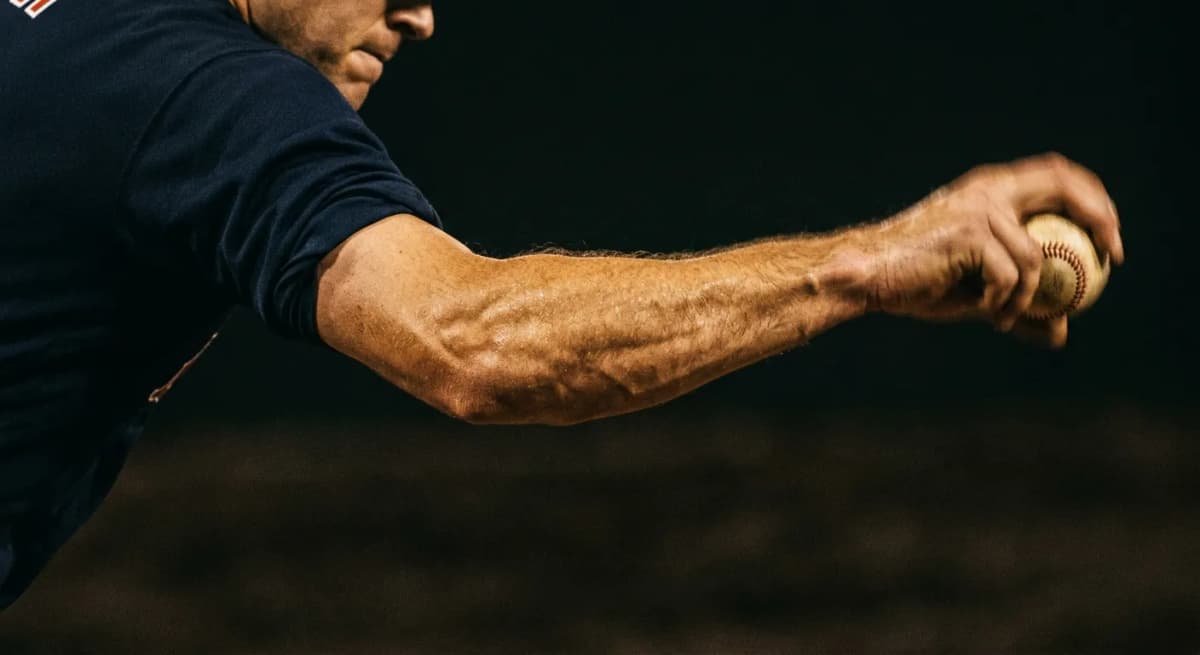
What Does a UCL Injury Feel Like?
UCL pain is usually felt on the inside of the throwing elbow, but location alone cannot tell you whether the ligament is irritated, partially torn, or the wrong suspect entirely.
 By Dylan Newcomer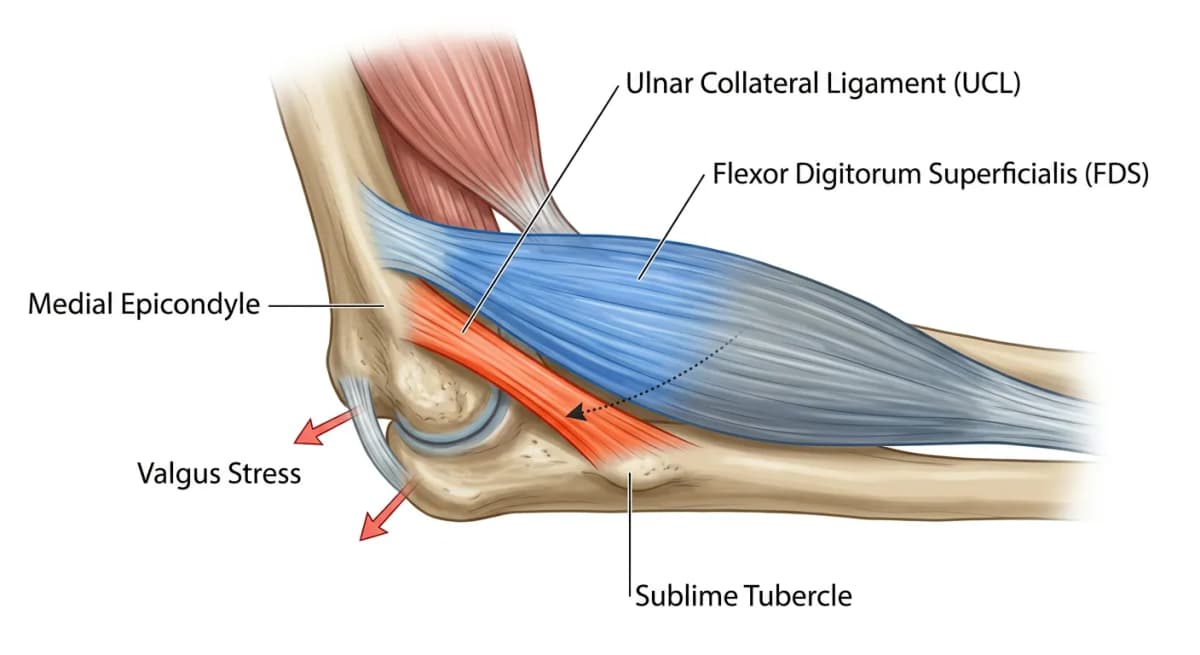
Can a Partial UCL Tear Heal Without Surgery?
Some partial UCL tears can return to high-level throwing without surgery. Tear location, tissue quality, symptoms, timing, and the demands of the athlete all change the answer.
 By Jason Modafari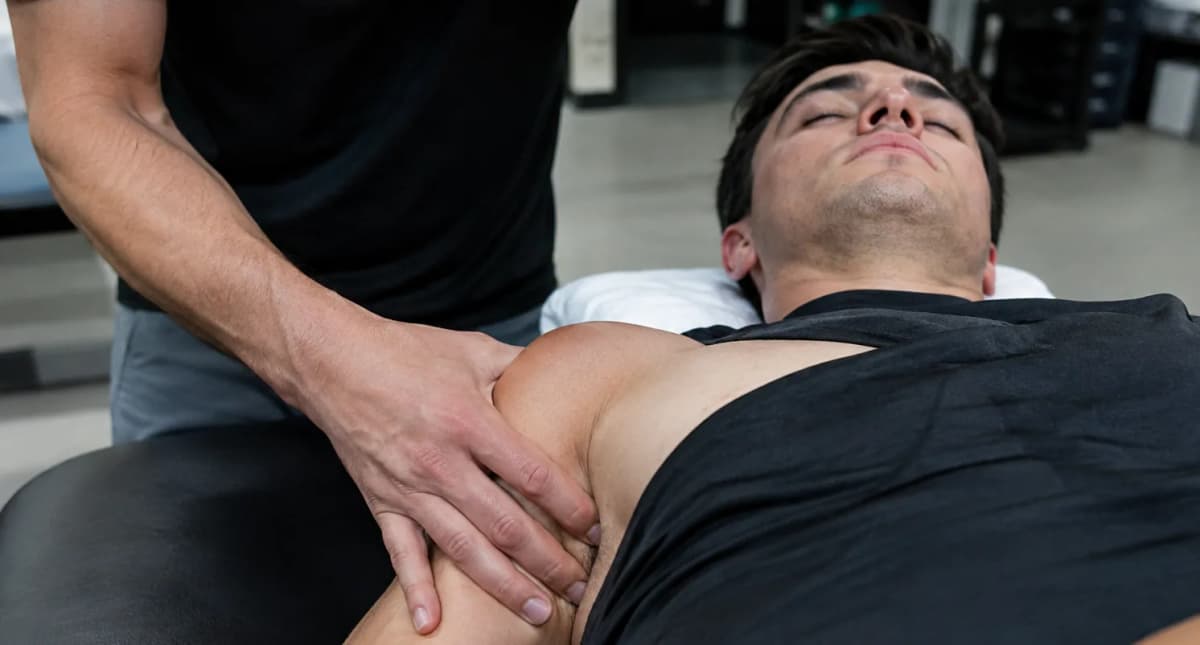
Dry Needling for Throwing Shoulder Pain: Creating a Better Window to Train
Dry needling can reduce pain and guarding in a throwing shoulder, improve motion, and make strength work more productive. We use that response inside a full return-to-throwing plan.
By Jason Modafari