WHY FOREARM STRENGTH MATTERS AFTER UCL INJURY AND TOMMY JOHN SURGERY
The short version
The forearm cannot replace the UCL, but the flexor-pronator group is part of the elbow's dynamic defense. Rehab has to train force, tissue tolerance, speed, and fatigue resistance.

Table of Contents
Most forearm programs for pitchers look like an accessory circuit added after the “real” workout: wrist curls, a rubber band around the fingers, maybe a rice bucket.
That can be useful. It is not enough to prepare the medial elbow for competitive throwing.
The flexor-pronator muscles cross the inside of the elbow and contribute active stability against valgus load. After a UCL injury or reconstruction, they deserve the same planning we give the shoulder and lower body: progressive force, adequate intensity, multiple joint positions, fast contractions, and exposure to fatigue.
The Forearm and UCL Share a Job
The anterior bundle of the UCL is the primary static restraint to valgus stress. Static does not mean solitary.
The flexor carpi ulnaris, flexor digitorum superficialis, and pronator teres sit beside and over the ligament. Cadaveric and imaging research supports their contribution to medial stability. A 2021 review of the UCL loading paradox argued that muscular and joint contributions help explain how pitchers tolerate calculated elbow torques that exceed the failure capacity of an isolated ligament.
The practical implication is modest but important: the forearm cannot make a torn ligament whole, yet a poorly prepared flexor-pronator system leaves less active support available during a throw.
Grip Strength Is Only One Piece
Grip is easy to test, so it often becomes a stand-in for the whole forearm. Pitching asks for more.
Finger flexion contributes force to the ball and crosses the medial elbow. Wrist flexion and pronation help control the forearm. The elbow must manage rapid changes in force across different degrees of flexion. These qualities need to be measured and trained rather than assumed from one hand-squeeze number.
We often compare sides, but symmetry is not the only target. A throwing arm develops sport-specific adaptations. The better question is whether the athlete has enough absolute capacity for his velocity and workload, and whether force holds up across repeated efforts.
Early Loading: Find a Dose the Tissue Accepts
After surgery, the protocol and surgeon's tissue-healing constraints lead. After a nonoperative injury, irritability and stability guide the opening phase.
Isometrics can introduce tension without large ranges. Wrist and finger flexion, pronation, grip, and elbow flexion can begin at tolerable angles. We track discomfort during the set and, more importantly, what happens later that day and the next morning.
Pain-free is not the only acceptable response, but worsening pain, swelling, neurologic symptoms, or a progressive loss of motion means the dosage needs review.
Heavy Strength Is Different From Arm Care
High-repetition band work is useful for warm-ups and lower-load endurance. It does not replace heavy resistance.
As healing permits, the athlete should perform wrist flexion, pronation, gripping, finger flexion, pulling, pressing, and elbow work at loads that demand real adaptation. Tempo and range can change the challenge without immediately chasing maximal weight.
The rest of the chain matters too. The shoulder, trunk, hips, and legs help produce and redirect force. An isolated forearm program attached to an undertrained athlete misses the point.
Fast Force and Deceleration Come Next
A pitcher does not have three seconds to develop force during delivery. Later rehab has to move beyond slow lifting.
Medicine-ball throws, rebounder drills, rapid pronation patterns, plyometric push-up variations, and controlled catching tasks can bridge the gap. These drills should progress in speed and complexity only after the athlete owns the force required to perform them.
We also need the ability to repeat force. A forearm that tests well fresh may stop protecting the elbow as an outing accumulates. That is one reason single-set strength measures cannot be the only return-to-throw benchmark.
Throwing Is the Highest-Specificity Forearm Exercise
Eventually, no exercise can reproduce throwing as well as throwing.
The return-to-throwing process exposes the arm to increasing volume and intensity while we monitor recovery. If medial pain returns only when velocity rises, that is useful information. If the arm feels good during a bullpen but loses force or motion the following day, that matters too.
Forearm work continues during the throwing program, but its dosage changes. The goal is to support throwing, not bury an already-fatigued arm under extra volume.
What Forearm Strength Cannot Do
It cannot guarantee injury prevention. It cannot stabilize a grossly incompetent ligament enough to make surgery unnecessary. It cannot rescue an athlete from unlimited workload.
It also should not be sold as proof that one muscle “protects” the UCL by itself. The elbow works as a system, and current evidence does not give us a single magic exercise or threshold.
What the evidence does support is a rational role for active stabilizers. A systematic review of pitching biomechanics found diminished flexor carpi ulnaris activity in pitchers with elbow injury, although the broader literature remains limited and heterogeneous. That is enough to take forearm function seriously, not enough to oversell it.
A Better Standard
After UCL injury or Tommy John surgery, “doing forearms” should mean more than checking off wrist curls.
It should mean measuring force, progressing meaningful loads, training the fingers and pronators as well as the wrist, restoring rapid force, building repeatability, and integrating the work with the athlete's throwing schedule. The result is not an invincible ligament. It is a better-prepared arm with more ways to manage the demands placed on it.
THE NEXT STEP
See how diagnosis, tissue capacity, medical options, and throwing progression fit together after a UCL injury.
Explore UCL RehabRELATED POSTS
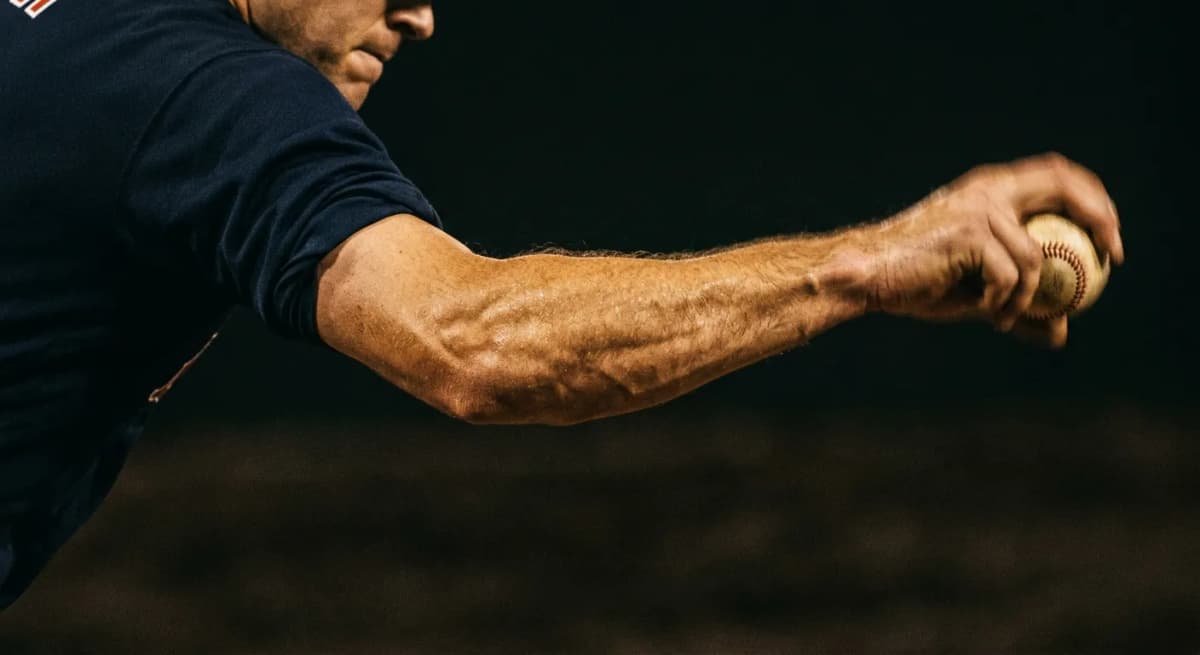
What Does a UCL Injury Feel Like?
UCL pain is usually felt on the inside of the throwing elbow, but location alone cannot tell you whether the ligament is irritated, partially torn, or the wrong suspect entirely.
 By Dylan Newcomer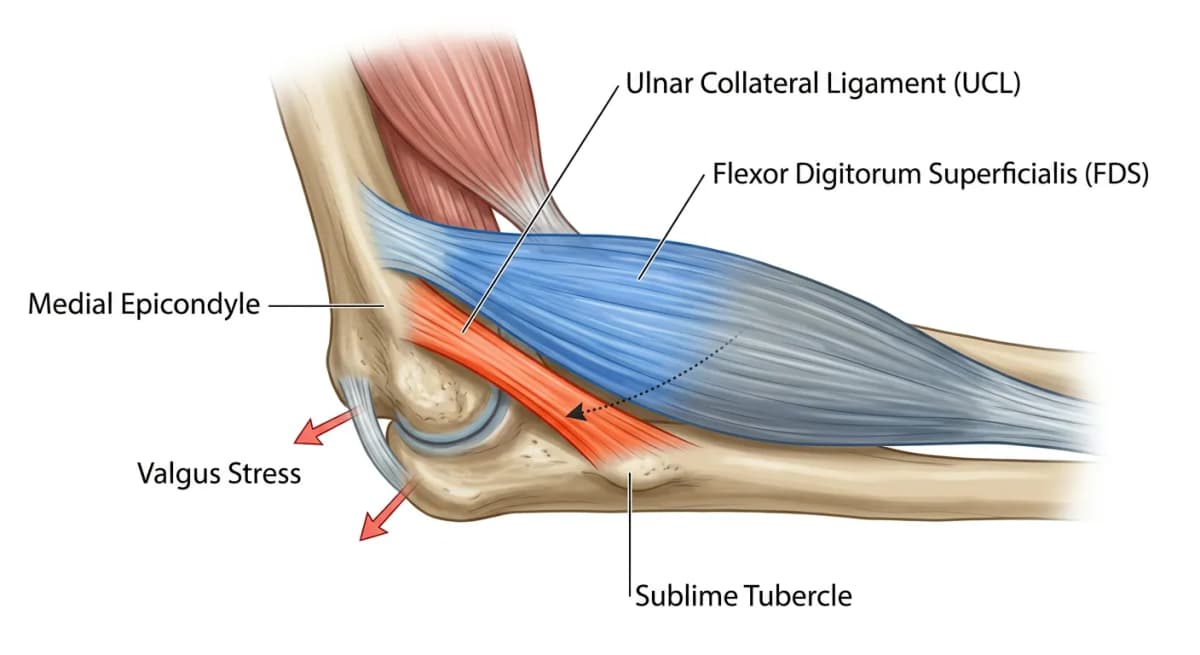
Can a Partial UCL Tear Heal Without Surgery?
Some partial UCL tears can return to high-level throwing without surgery. Tear location, tissue quality, symptoms, timing, and the demands of the athlete all change the answer.
 By Jason Modafari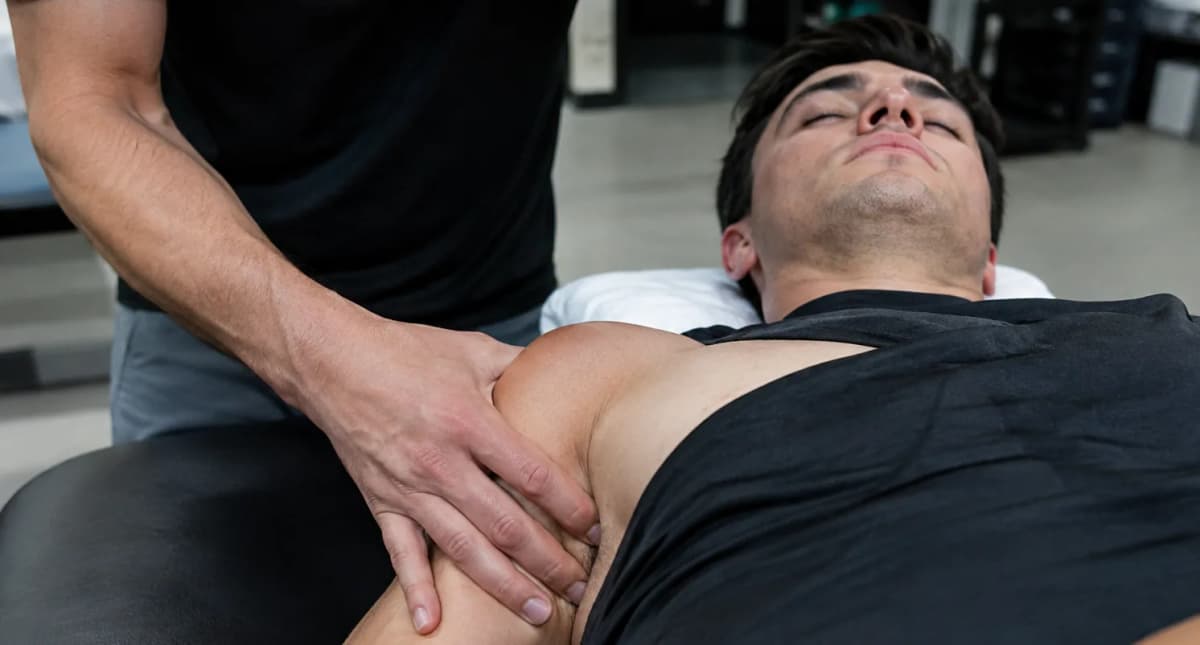
Dry Needling for Throwing Shoulder Pain: Creating a Better Window to Train
Dry needling can reduce pain and guarding in a throwing shoulder, improve motion, and make strength work more productive. We use that response inside a full return-to-throwing plan.
By Jason Modafari